
 |
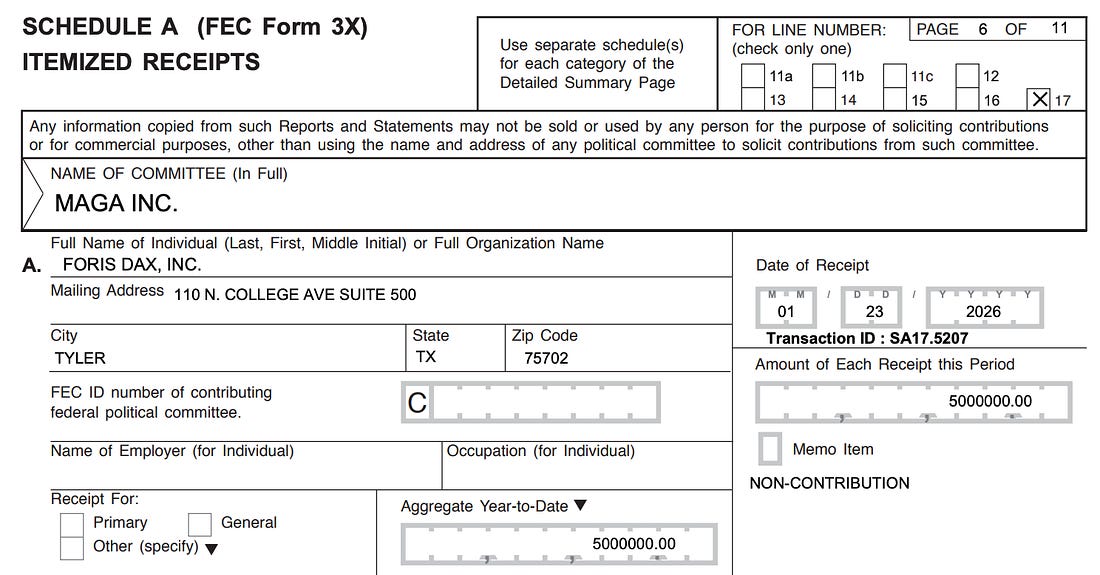
In a document quietly filed with the Federal Election Commission on Friday night, MAGA Inc., the primary Super PAC supporting President Trump, revealed that it received a $5 million donation from Crypto.com on January 23, 2026. The donation was made in the name of Crypto.com’s parent company, Foris Dax, Inc.¹
 |
25 days later, on February 17, the Trump administration’s Commodities Futures Trading Commission (CFTC), intervened on Crypto.com’s behalf in high-stakes lawsuit in federal court.
Last year, Crypto.com sued the Nevada Gaming Control Board, arguing that it has the right to offer “prediction markets” on the outcome of sporting events without obtaining a Nevada gaming license. In October 2025, a federal court denied Crypto.com an injunction, and the company is now appealing the decision.
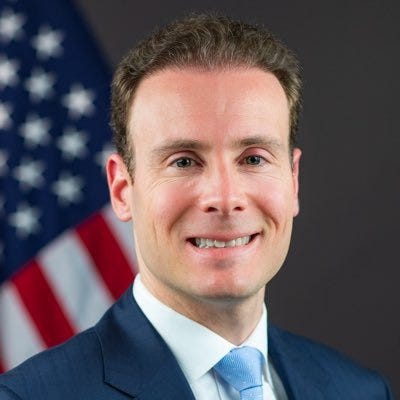
In addition to filing a formal amicus brief in support of Crypto.com’s appeal, CFTC chairman Mike Selig published an op-ed supporting Crypto.com’s position in the Wall Street Journal and posted a video supporting Crypto.com on X.
The timing of CFTC’s intervention raises serious ethical questions.
Selig, during his November 2025 confirmation hearing, was asked whether he believed it was legal for prediction markets to offer contracts on sporting events without complying with state law. Selig testified that the issue is “working its way through the courts, and so I will respect the decisions of those courts.”
He was also asked directly if he considered placing a bet on the outcome of a football game to be “gambling,” which would place it outside the jurisdiction of the CFTC:
Senator SCHIFF. Well, I mean, let me just ask—maybe even break it down more simply. If you and I bet on who wins the Bills game tomorrow, would you consider that gambling?
Mr. SELIG. Senator, on this issue, I would look to the courts, so I would look to what the courts say about that issue.
In a matter of weeks, Selig went from telling Senators under oath that he would defer to the courts on the issue to arguing on behalf of Crypto.com that the courts have erred.
He publicly announced he was considering intervening in the case during a public appearance on January 29 — less than a week after Crypto.com’s $5 million contribution to MAGA Inc. “I’ve directed CFTC staff to reassess the commission’s participation in matters currently pending before the federal district and circuit courts,” Selig said during his first public remarks as CFTC chairman.
On February 5, Selig explicitly stated that he believed it was legal for prediction markets to offer bets on sports, regardless of whether the company complied with state law.

Few companies have spent more money to ingratiate themselves politically with Trump than Crypto.com. Including the $5 million in January, Crypto.com has donated a total of $35 million to MAGA Inc. since 2025. It is the Super PAC’s largest donor, accounting for more than 10% of total funds.
Prior to its support for MAGA Inc, Crypto.com’s only political giving was a $1 million donation to Trump’s second inauguration in 2025.
Crypto.com has also formed an extensive partnership with Trump Media and Technology Group (TMTG), Trump’s money-losing media conglomerate that has recently pivoted into cryptocurrency and nuclear fusion. Among other integrations, Crypto.com and TMTG announced in October that Crypto.com would integrate its prediction market with Truth Social, TMTG’s social network. The joint venture will be called Truth Predict. President Trump is TMTG’s largest shareholder.
Crypto.com’s thin legal argument
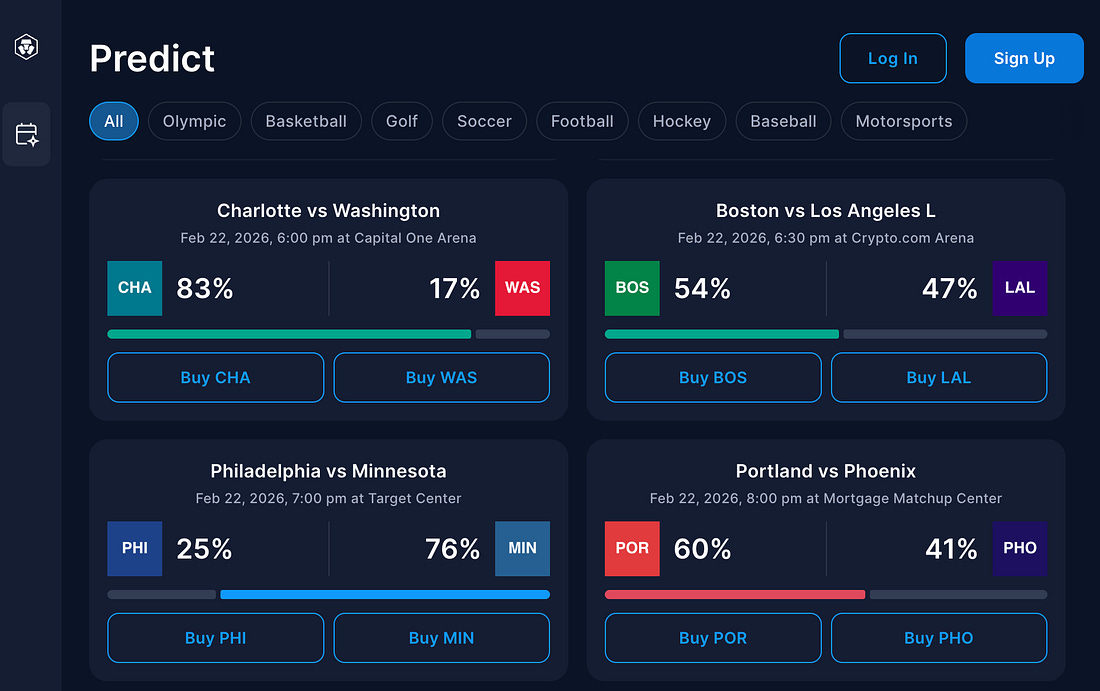
Crypto.com and other prediction markets — and now the CFTC — argue that creating markets for sporting events is fundamentally different than sports gambling. In practice, however, it looks identical.
 |
The CFTC has jurisdiction over event-related contracts or “swaps” that provide “for any purchase, sale, payment, or delivery… that is dependent on the occurrence, nonoccurrence, or the extent of the occurrence of an event or contingency associated with a potential financial, economic, or commercial consequence.” (Emphasis added.)
The traditional example of this is a contract to buy corn at a certain price in the future. This serves as an economic hedge against price fluctuations that can affect producers of tortilla chips, for example.
There are theoretical arguments that betting on the outcome of a sporting event could serve as an economic hedge. The CFTC, in its brief in support of Crypto.com, tries to make this argument:
Broadly speaking, sporting events are economic enterprises that generate billions of dollars in economic activity and materially affect both regional and national markets… For these reasons, hotels likely adjust pricing models, restaurants expand staffing to accommodate increased demand, vendors increase supply orders, and cities allocate resources to accommodate projected crowds. All of these decisions pose economic risk, which is precisely the type of economic exposure that derivatives markets are designed to mitigate.
Of course, this is not how prediction markets on sporting events are used. No one is wagering on a basketball game to hedge against hotels raising prices. They are used by people who want to gamble on sports, particularly in states where sports gambling is not currently legal. On popular prediction markets like Kalshi, sports betting accounts for over 90% of all trading volume.
Utah Governor Spencer Cox (R) mocked Selig’s position on X. “I don’t remember the CFTC having authority over the ‘derivative market’ of LeBron James rebounds,” Cox wrote. “These prediction markets you are breathlessly defending are gambling—pure and simple.”
The district court noted that, under Crypto.com’s interpretation, if every bet on a sporting event qualified as a “swap” subject to the exclusive jurisdiction of the CFTC. That would mean it would no longer be permissible for people to place sports bets in casinos. “Had Congress intended such a sea change in the regulatory landscape, it surely would have said so,” the district court wrote.
The designation of the $5 million from Foris Dax as a “NON-CONTRIBUTION” in the image refers to the fact that it is a donation to a Super PAC, which is not subject to FEC contribution limits or the prohibition on corporate contributions.
