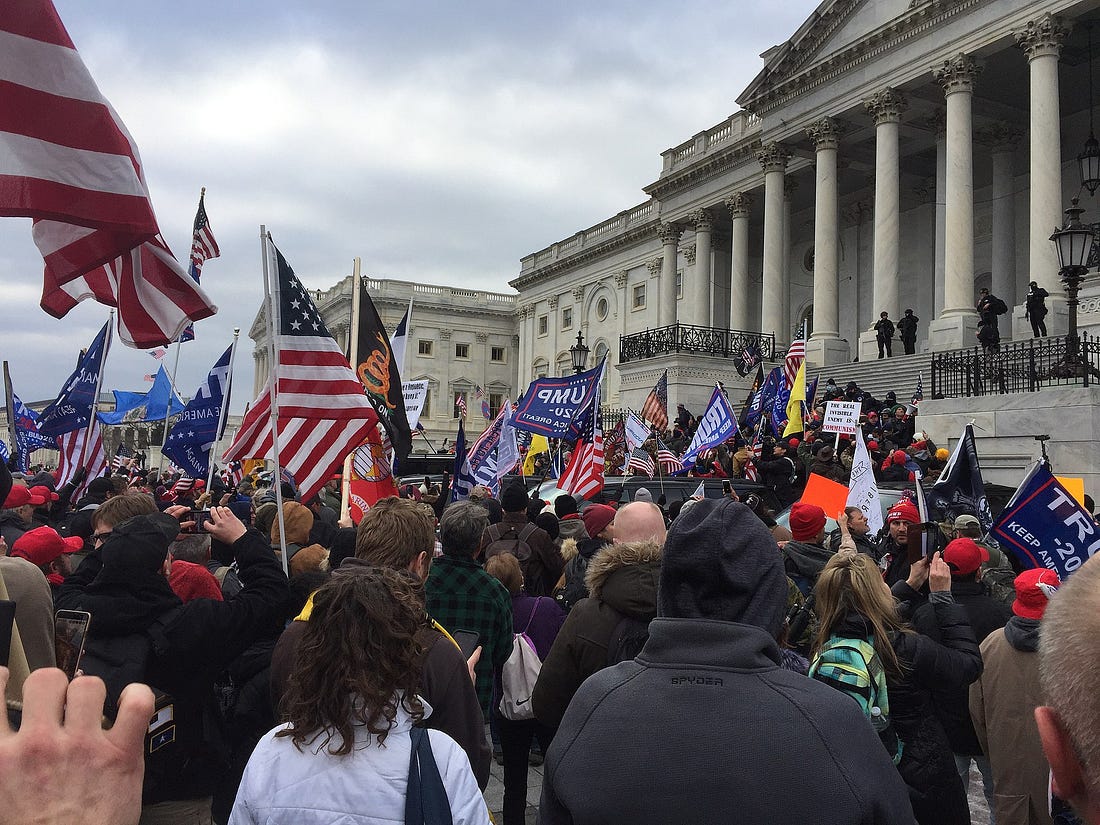
Trump is trying to steal, rig, or vitiate the 2026 midterms in November. He’s suggested canceling elections; he’s said he wants to put elections under federal control (so he can make sure they are not free and fair); his allies have called for sending armed troops to polling places (to target people who don’t support Trump.)
We know Trump has tried to overthrow elections in the past; we know he wants to do the same in the future. Many thoughtful commenters are telling us we should be alarmed, and they are correct; democracy is under assault.
It’s also true, though, that Trump’s schemes and authoritarian fantasies have in many cases already been undermined or vastly complicated by the fact that he is extremely unpopular. His approval just went under 39% in the fiftyplusone tracker, the lowest level of his second term; over the last week the Republicans lost a Louisiana special in a deep red district with a 37 point swing to Democrats, and a deep red Texas special with a 32 point swing.
People sometimes talk as if authoritarians can simply ignore public opinion. But even dictators need to worry when they lose legitimacy…and Trump isn’t a dictator yet. His path to absolute power is greatly complicated by the fact that the large portions of the electorate loathe him—a recent poll showed 47% of the electorate strongly disapproves of him—and are willing to crawl over broken glass to vote against him and his party.
—
This newsletter is only possible because of paid subscriptions. If you value my work, please consider donating so I can continue to write as the journalism industry collapses around us.
Gerrymandering is going badly for Trump
Gerrymandering was Trump’s first and best effort to steal the 2026 elections—and that effort has largely foundered on the big ugly rock of mass Trump hatred.
Trump’s initial plan was to push through an unprecedented mid-century partisan gerrymander, capitalizing on the fact that the Supreme Court has gutted the Voting Rights Act and signaled that disenfranchising non white voters is fine and dandy with the robed racist christofascists in charge. Initially, the plan seemed to go well; the Texas GOP passed a massive partisan gerrymander in summer 2025 that is expected the net Republicans 5 House seats. Other red states were set to follow suit.
Trump and the GOP were counting on the fact that most blue states have passed anti-gerrymandering legislation making it difficult for blue states to retaliate. But they underestimated just how unpopular the gerrymanders, and Trump, would be—and not solely with Democrats. Blue California quickly passed a ballot initiative allowing the state to create its own gerrymander, picking up 5 blue seats and cancelling out Texas’ effort. Then Indiana Republicans balked at drawing their own gerrymander in part because it was unpopular with their (mostly GOP) constituents. Then Virginia—a formerly purple state which saw a sweeping Democratic victory in 2025 in reaction to Trump—drew up an extremely partisan Democratic gerrymander.
Other red states, like Missouri, have gerrymandered Trump a seat or two, but according to pollster G. Elliott Morris, “[T[rump creating the incentive and permission structure for democrats to do insane 2010-era gerrymandering of their own may turn out to be one of the biggest self-owns of all time. [D]ems are now pretty likely to emerge with an advantage from the 2025-26 redistricting wars.”
Again, the reason Democrats have been able to fight back so effectively is because Trump support has cratered, and intense anti Trump sentiment has been overwhelming. Blue state voters are eager to crush Republican power and have voted away anti-gerrymandering barriers. Republicans, in contrast, have not been especially motivated to fight for gerrymanders in places like Indiana.
An additional factor may be a fear that gerrymanders may backfire. GOP gerrymanders are designed to reduce margins in very red districts in order to create more safe Republican districts. But in a situation where you are getting 30 point swings towards Democrats, no Republican district is all that safe. One concern in Indiana may have been that gerrymandering would allow Ds to pick up more rather than less seats given the approaching blue wave. Analysts believe Republicans may find they don’t get as many pickups as they expected, even in Texas, thanks to the collapse of GOP support.
More, with Ds currently at a +5 on the generic ballot, they have a clear path to control the chamber even with GOP tampering. One model suggests that with a 5 point lead Democrats can expect to pick up 26 seats—and currently Republicans only have a 4 seat majority.
Gerrymandering is noxious, but it’s legal and the rules around it are well-established and accepted. It was by far the easiest way for Trump to cheat his way to victory in the midterms. His failure here has been a major blow to him and a major win for democracy. All his other scheme are much riskier.
Voter suppression efforts can backfire
Having lost on gerrymandering, Trump and the GOP have now turned to voter suppression. The biggest measure here is the SAVE act, a monstrous attack on democracy which requires people to show proof of citizenship at the polls. It is likely to disenfranchise 21 million people. They also mandate reckless voter roll purges and allow the prosecution of election officials who make mistakes in good faith—encouraging poll workers to disenfranchise voters to protect themselves.
House Republicans passed SAVE last year (with 4 D votes) and are pushing through a slightly amended bill in hopes of getting a Senate vote. However, the prospects in the Senate look dim. The bill has little to no Democratic support and would not reach the 60 vote threshold to pass. House conservatives want the Senate to ditch the filibuster, but that looks less and less likely; Alaska GOP Senator Lisa Murkowski just spoke out against the bill.
Even were the bill to pass, though, there’s a non-zero chance that it would hurt Republicans rather than helping them. The GOP has grown used to building its voter suppression efforts on the assumption that Democratic voters are less engaged and less likely to vote.
This was more or less true before the Trump era, but there have been substantial changes as more educated voters have pivoted to Democrats. You can see this in special elections where voting turnout is lower and only the most impassioned and educated voters tend to turn out. This used to give the GOP an advantage. But these days Democrats are blowing the doors off even when they are vastly outspent. Putting up more barriers and shrinking the electorate by, say, restricting mail-in ballots could well create a smaller electorate which favors Democrats.
The GOP tries in these bills to tilt the playing field by targeting groups like Native Americans and students, groups which lean Democratic. But other provisions could well backfire. For instance, the current version of the SAVE act imposes major burdens on women who change their name in marriage. Women in general lean Democratic. But married women supported Trump by 5 points in 2024; unmarried women in contrast voted for Harris by 23 points. The Republican bill is in this case apparently designed to disenfranchise their own voters.
This does not mean that we shouldn’t worry about the effects of these bills. Disenfranchising anyone is bad and wrong; the effects of these bills are unpredictable and even at best they erode democracy in brutal and evil ways. Nonetheless, a huge blue wave is hard to overcome with voter suppression, in part because of sheer numbers, but also because it’s very difficult to disenfranchise your more impassioned opponents without disenfranchising your own less engaged constituents.
Lawfare and violence
With gerrymandering and voter suppression looking less and less likely to be effective, the Republicans are left with the 2020 insurrection remedies—ginned up lawsuits and naked violence, either at the polls or afterwards in a coup attempt.
There’s no doubt that Trump would like to try a replay of 2020. The FBI’s raid on a Georgia election center to seize records related to 2020 was a clear sign that Trump wants to push more fake voter fraud claims. And of course, as noted above, Trump’s been muttering about federalizing elections or canceling them altogether.
Part of the reason Trump was able to get as far as he did with the 2020 coup was that the vote was fairly close, so he could concentrate his intimidation efforts on a handful of states like Georgia and Arizona. This sort of narrow focus is going to be much harder in a Congressional election—and much, much harder in a Congressional election where Democrats win by 20 seats or more. Even if Trump did somehow, someway cancel elections, he wouldn’t have a GOP majority. So far 30 GOP members are retiring in anticipation of a blue wave. Only 21 Democrats are. In a House with no new members, there’d be a narrow D majority come 2026.
The Senate is likely to be much closer, and it’s quite easy to imagine Trump trying to steal a crucial narrowly won OH seat from Sherrod Brown with the help of a complicit state party in order to prevent Democratic control of the Senate. It’s also pretty easy to imagine Trump sending armed federal gunman to arrest local officials who refuse to comply, or to arrest senator elect Sherrod Brown himself. These are nightmare scenarios, and it’s very, very bad that they are plausible.
It’s important to remember that Trump’s position after a blue wave will have eroded even more; his intra-party support is likely to be at an all-time low and his room for maneuver to be much circumscribed. Can he count on state party support in those circumstances? Will he have many allies willing to back him?
Along the same line, ICE’s popularity is in free fall, and the idea of using ICE agents to patrol polling booths is very unpopular. That creates the possibility for backlash, and means that Republican pols at the state level are likely to be leery of deploying federal thugs in this way. That’s no guarantee—but it’s a better place to be than we were at in early 2025, when support for ICE was relatively high. Violence is a response to an inability to win popular support, but violence also depends in part on a certain level of legitimacy—as Trump discovered in his first coup.
Democracy is precarious
I am not in any way saying here that people shouldn’t worry. People should absolutely worry; Trump is a terrifying fascist authoritarian and our democracy right now looks very fragile.
There is, though, massive popular disgust with and opposition to Trumpism. The giant orange asshole is less powerful than he was in early 2025; it’s quite possible he’ll be less powerful than that after elections in November. There has already been a great deal of effective resistance to his attack on elections. There is every reason to believe that that effective resistance will continue, and that it can prevail.