
The Decaying Legal Culture in the Defense Department
Trump and Hegseth will leave the uniformed military damaged by illegality, and Congress will be complicit
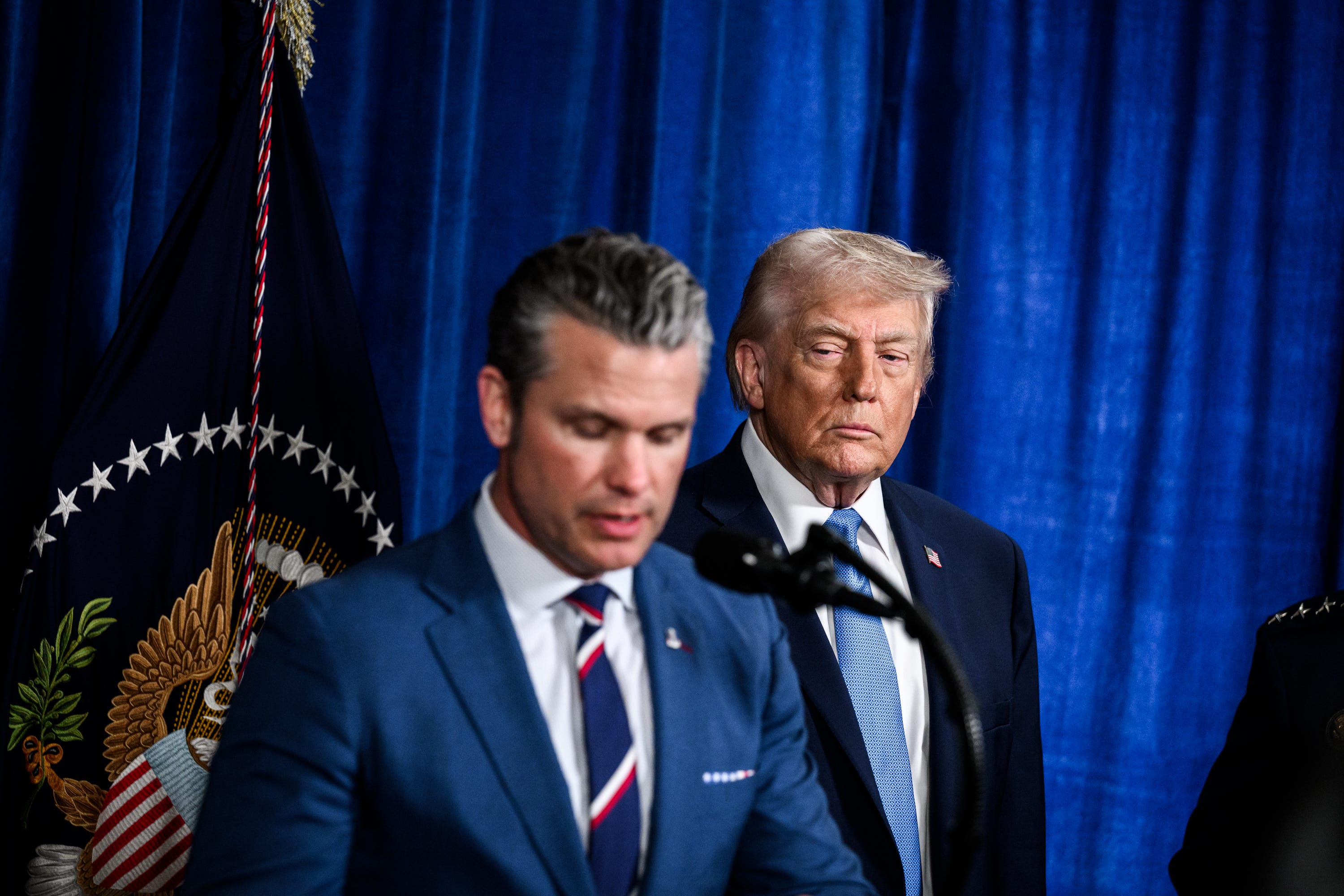
Secretary of Defense Pete Hegseth came to office openly hostile to his department’s legal culture and determined to change it. He is succeeding. One result is persistent lawbreaking by the Department of Defense in derogation of the rule-of-law culture that the department has fostered since Vietnam. The courts, which have done an admirable job of checking the administration’s legal violations, cannot help here, since these matters are beyond judicial review. That leaves Congress, which, largely due to Republican control, has been sadly passive in Trump 2.0. When the reckoning comes, the Armed Services Committees in Congress will have a lot of explaining to do.
Law and DOD
After the atrocities and discipline difficulties in Vietnam and the demoralization that set in afterwards, the U.S. military sought to restore honor, order, and morale through a commitment to the laws of war. It established a law of war program in 1974 and gave lawyers an enhanced role in operations. This proved important when the “CNN effect” broadcast military mistakes and abuses instantly and globally. The reality and perception of lawful action became a military imperative, and lawyers were central.
Criticisms and defenses of this transformation have tended to come in cycles. Some complained that DOD lawyers hampered NATO actions in Kosovo. Abu Ghraib and other post-9/11 abuses, which had devastating adverse strategic consequences, evinced the value of legal compliance. Critics later attacked counterinsurgency practice, where commanders seeking to win the “hearts and minds” of the civilian populace adopted rules of engagement far stricter than the laws of war required, which increased risk to U.S. troops. Because military lawyers helped craft the ROEs and briefed them, they were sometimes blamed for them.
Amid this back and forth, a broad consensus emerged that the heightened role for law and lawyers after Vietnam and 9/11 was, on balance, vital for military effectiveness. The consensus had a moral dimension. American soldiers use technological advantage and overwhelming firepower to kill, maim, and destroy. Compliance with law, especially the laws of war that mark when and how military force can be employed, is what justifies the otherwise-horrific acts. As military lawyer General Mark Martins once told me, “To those in our military ranks . . . the rule of law is important because it legitimates violent conduct that otherwise would be both criminal and dishonorable.”
Pete Hegseth has long dissented from this view. As an infantry officer in Iraq, he bristled at lawyerly caution in the face of violent insurgents, at the release of detainees suspected of killing Americans due to lack of evidence, and at war crimes investigations of his unit’s conduct. In his book The War on Warriors, he railed against legal shackles on American warfighters and denigrated the “jagoff” lawyers in the military. And he was publicly and privately involved in Trump’s first-term pardons of persons convicted of war crimes.
Before seeing how Hegseth has implemented his views as SecDef, we need a short detour into the Trump 2.0 model of legal interpretation.
Trump 2.0 Legal Interpretation
Article II gives the president ultimate authority to interpret law for the executive branch. He can decide what the law means, and his decisions, if he insists, are binding on everyone in the executive branch.
In practice, presidents have delegated this interpretive power to the attorney general and other top administration lawyers, who in turn delegate it throughout the bureaucracy to ensure compliance with the law. Administrations have organized this system differently. But with fleeting exceptions, every one before Trump 2.0 accepted two core principles: There is space between the president’s every wish and what the law permits. And, relatedly, executive branch lawyers should not merely rubber stamp presidential initiatives.
The system has always been imperfect because the law is often unclear and government lawyers face pressure to approve presidential action. But the basic arrangement has been that government lawyers interpret law with some independence from the president, and that some policies are blocked or modified when lawyers identify clear legal problems. Presidents embraced this arrangement because legal compliance demands it and because systemic inattention to law leads to bad policy or undesirable political or legal risk.
Until Trump 2.0, that is. The Trump administration since January 2025 has rejected this system root and branch.
First, it has sought to ensure that the senior ranks of lawyers are filled with loyalists. I don’t mean loyalists in the sense in which past administrations typically hired people supportive of the president’s program and in line with the president’s outlook and politics. I mean lawyers who are willing to do whatever the president (or a senior proxy) asks, including in legal decision making, despite what law and professional norms say.
Second, the administration has issued formal directives to eliminate lawyers’ independent judgment. The most important one says:
No employee of the executive branch acting in their official capacity may advance an interpretation of the law as the position of the United States that contravenes the President or the Attorney General’s opinion on a matter of law, including but not limited to the issuance of regulations, guidance, and positions advanced in litigation, unless authorized to do so by the President or in writing by the Attorney General.
Since the president is indifferent or hostile to law, and since the attorney general is a sieve for the president, this directive makes the president’s policy whims—which he thinks by definition are lawful (“I . . . have the right to do anything I want to do”)—the governing rule.
Third, the administration has fired, threatened, or sidelined lawyers in the government who express disagreement with the party line established in the White House (or who were connected to past legal actions against Trump). Every lawyer not directly subject to this regime gets the message.
The Crackdown on Independent Legal Advice in DOD
Hegseth has used these techniques, and variations, to diminish what he sees as DOD lawyers’ baleful influence.
Right out of the box he fired the top Judge Advocates General of the Army and Air Force and made clear that the acting Navy TJAG would be replaced as well. The moves were widely seen to signal hostility to independent legal advice in the Pentagon. Hegseth acknowledged as much, describing the fired lawyers as potential “roadblocks to orders that are given by a commander in chief.” He also said that he was changing the standard military lawyer vetting process for replacing the fired TJAGs because it “perpetuate[s] the status quo” that “hasn’t worked very well at the Pentagon. It’s time for fresh blood.”
The administration chose its fresh blood through a process that, as Hegseth pledged, diminished the role of military lawyers and strengthened his hand. The TJAGs Hegseth selected via this process are an unusual bunch. Air Force TJAG Christopher Eason and Army TJAG Bobby Christine came from the reserve corps rather than from the active-duty career JAG pipeline, a break with tradition. Navy TJAG David Bligh is the first Marine to be the top Navy JAG. One must assume that these men share Hegseth’s values about law and lawyers in the military, and will use their considerable power to spread those values through the DOD legal establishment.
In addition, the General Counsel of the Defense Department, Earl G. Matthews, who has an extensive national security law background, came to the Pentagon from the seat of Trump loyalty, the White House. Most of the career lawyers who served as deputies to the general counsel prior to Trump 2.0—including in important divisions like intelligence and international affairs—have left. And at least some of the replacements for career deputies are now political appointees. That means they both met the loyalty criterion and can be easily fired. The net result is to diminish independent legal advice from the heads of these divisions.
Other actions by Hegseth have diminished the significance of military lawyers or signaled threats for straying from the party line. He eliminated mandatory law-of-war training. He farmed out JAGs to help the lawyer-strapped Justice Department and to serve as immigration judges. And he sent a message to those who question top-down legal judgments by seeking (though thus far failing) to reduce retirement benefits for Senator Mark Kelly for his true statement that military officers “can refuse illegal orders.”
The Boat Strikes
Despite these moves, agitation inside the Pentagon about the legality of DOD actions has been intense enough to spill into public, especially in connection with the controversial Caribbean and Pacific boat strikes against alleged drug runners. Those strikes might satisfy the promiscuously permissive OLC understanding of Article II of the Constitution. But as many people have pointed out, they take place outside of an “armed conflict,” which makes them unlawful under international law and thus murder.
The campaign has clearly troubled the military. The top lawyer for Southern Command, which oversees forces in the Caribbean, reportedly raised legal concerns about the strikes and was “overruled by more senior government officials, including officials at the Justice Department’s Office of Legal Counsel.” His client, Admiral Alvin Holsey, chief of Southern Command, stepped down late last year, reportedly in part over disagreements with the strikes.
A bigger force than OLC weighed in on the legality of the boat strikes. The New York Times reported that President Trump “secretly signed a directive to the Pentagon to begin using military force against certain Latin American drug cartels.” Trump also “determined” that cartels engaged in smuggling drugs are “nonstate armed groups” deemed “terrorists” whose actions “constitute an armed attack against the United States,” thus rendering the United States in a “noninternational armed conflict” with the groups. The Times also reported that the OLC opinion approving the boat strikes relied on the president’s determinations.
The president’s determination about the “armed conflict” is unpersuasive as an interpretation of governing law, and notably has not yet been accompanied by a public legal analysis. Nonetheless, the determination is conclusive and binding inside the government. This is why Trump’s rulings were important—and necessary. The Trump determination, embedded in the OLC opinion, operates as a bludgeon to crush contrary legal views, including in the Pentagon. Military lawyers must accept it, at least formally, in advising their clients.
One clear sign of the dubiousness of Trump’s “armed conflict” determination is that the relevant OLC memo reportedly had a “lengthy section” offering “potential legal defenses if a prosecutor were to charge administration officials or troops for involvement in the killings.” I expect that the Defense Department insisted on this analysis to bolster the case for a “golden shield” for those later accused of murder or other wrongdoing for acting in reliance on the President’s determination.
The last time I remember an OLC opinion canvassing potential legal defenses from a prosecution came in the infamous August 2002 interrogation opinion. There is no need for OLC to discuss prosecutorial defenses unless the client is so worried about the legality of what it is being asked to do that it demands even greater legal protection beyond the normal impact of OLC’s legal interpretation. (I expect that a similar demand explains why the OLC Venezuela invasion opinion gave comfort that the military operators who participated in the action could not be extradited.)
Where Else is Law Being Corrupted?
The multiple strikes against drug carriers based at bottom on the president’s “armed conflict” determination is the most important legal corruption of the DOD in Trump 2.0 that we know about. Given the open indifference to law at the top of the administration, it seems plausible that the problems would run deeper—either through top-down civilian orders, or the questionable legal judgment of loyalist lawyers, or the compromises that lawyers of integrity might make at the margins in an administration that signals indifference to law and demands obedience. We don’t yet know the full story on the controversial double-tap boat strike or the use of a plane that looked like a civilian rather than a combat aircraft, but both events raise serious legal questions.
I should note that I am confident that many career operational lawyers are doing what they can to ensure that any residual operational discretion left open by the formidable constraints imposed by civilian superiors is exercised in lawful ways. This is admirable and brave work.
But for many DOD lawyers faced with Hegseth’s revisionist project, the way forward is simply “to eat it and put your head down and act in accordance with his new policies,” as one JAG told CNN. And the civilian lawyers are clearly disabled from independent legal advice if they want to keep their jobs. Given all of this, and given the clear legal violations related to the boat strikes, it would be very surprising if there weren’t serious legal shortcuts being taken in other military operations that we don’t know about.
What about, for example, the secret undertakings by the National Security Agency or Cyber Command? Or the secret actions by special operators around the globe? These entities act close to the legal line in administrations that possess legal integrity. Are they acting within the law in this administration? It is foolish to presume so.
And what about the Pentagon’s push to use advanced tools from leading AI labs for “‘all lawful purposes,’ even in the most sensitive areas of weapons development, intelligence collection and battlefield operations,” as Axios reported? The use of artificial intelligence by the Trump administration, especially given the mass availability of public and commercially available information, is a scary prospect. Any claim it makes about “lawful purposes” in the use of these tools must be viewed with skepticism.
Where is Congress?
Some members of Congress have occasionally spoken out about some aspects of what I have described above. The Armed Services Committees also reviewed legal aspects of the boat strike campaign, coming down largely on partisan lines. And yet, on the whole, Congress’s response to Hegseth’s upending of DOD legal culture has been pathetic.
After Hegseth purged the TJAGs last February, Congress did nothing serious about it. Rather, it confirmed each replacement nominee by voice vote without confirmation hearings. I can find no public evidence that any member of the Senate Armed Services Committee asked how or why these men were selected in light of Hegseth’s views about the role of law in the Pentagon, or why and with what impact Hegseth changed the normal vetting process. Congress did pass a law that required the defense secretary to give it a “reason” why a TJAG is fired. This very weak response effectively condoned what Hegseth did to the TJAGs.
Compare the situation to an earlier time when the military had illegality rammed down its throat by the civilians—after 9/11, concerning interrogation techniques. The Bush administration had a very robust view of civilian control of the legal chain of command. It nonetheless entertained the military lawyers’ pushback on a broad OLC opinion related to interrogation—certainly the objecting lawyers were not fired.
The military lawyers back then had vital assistance from Congress, including from members of the president’s party. Most notably, Senator John McCain and a very different Senator Lindsay Graham went to the mat to protect DOD’s legal values using all of Congress’s tools, including enactment of the Detainee Treatment Act of 2005, which ended harsh interrogations.
The Reckoning
We are barely past the first quarter of the Trump administration’s second term and no one knows where DOD will end up. But eventually there will be a reckoning. It is hard to know what form it will take, but I fear it will hurt some in the military who are now in a bind between what the law requires and what the civilians, including the Commander in Chief, say and order otherwise.
The reckoning will at least include a public airing of what happened—what legally controversial actions the military took, who gave what legal advice blessing those actions, who advised that the actions were legally questionable, and what happened then.
And it will also include an assessment of the Armed Services Committees in Congress, which have failed in their oversight role on Hegseth’s upending of DOD’s legal organization and priorities. The president and secretary of defense have the prerogative, as noted, to organize legal advice as they wish and to insist that the president’s legal “views” bind subordinates. But Congress has a constitutional responsibility to review these arrangements to ensure that they are not fostering illegality in the military.
Thanks to Augustus Bayard and Vishnu Kannan for research assistance.
