A Comprehensive Analysis of Medical, Behavioral, and Professional Evidence
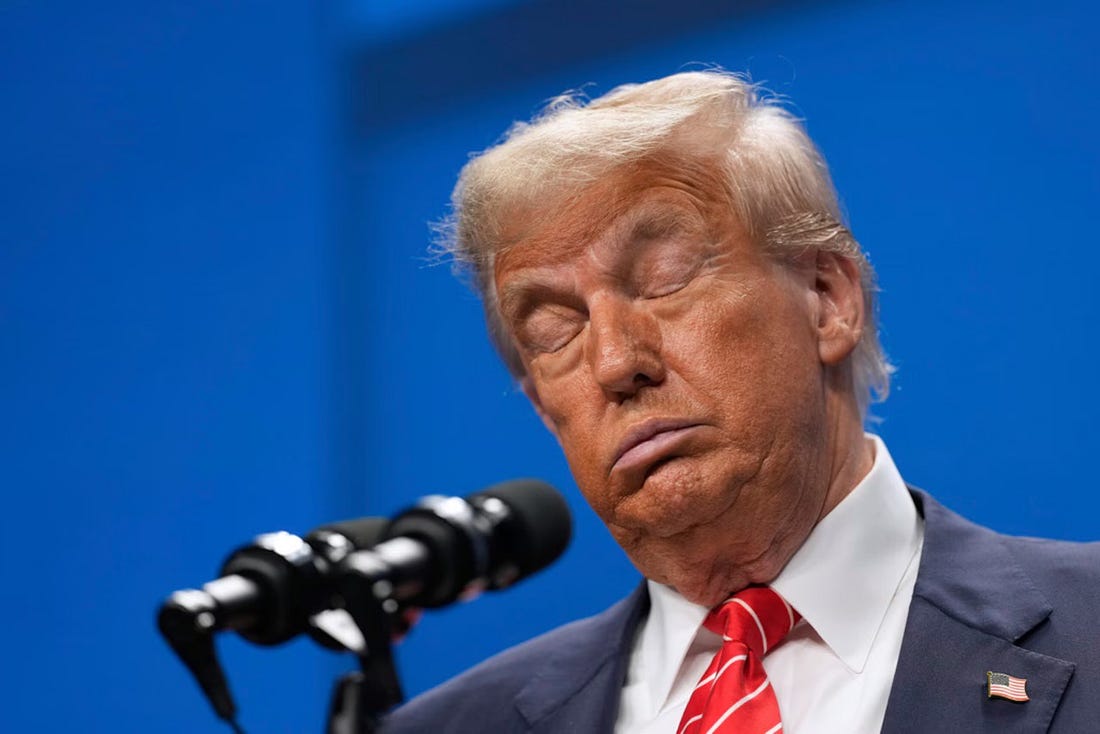
The question of whether the sitting President of the United States is experiencing cognitive decline has moved from speculation into documented observation. What distinguishes this moment from previous criticism of aging political figures is not partisan hysteria but the systematic accumulation of evidence from multiple sources: medical professionals, former administration officials, behavioral observation, and statistical polling. As of March 2026, nearly half of all Americans polled believe the president is experiencing significant cognitive decline. But polling data, while significant, is the least important evidence. More important is what can be directly observed, what medical professionals have documented, what family history suggests, and what the president’s own statements reveal about his mental state. The challenge in discussing this topic lies in the distinction between partisan criticism and genuine clinical concern. Critics on the left have long questioned Trump’s fitness for office. But the evidence that has emerged over the past months comes from sources that are harder to dismiss as purely partisan: Trump’s own statements, observations from people inside his administration, medical analyses from credentialed professionals, and behavioral patterns that are consistent with specific neurological conditions. The question is not whether Trump is unfit—that is a judgment that precedes the clinical analysis. The question is what the clinical evidence actually shows and what it means for a nation governed by someone whose cognitive capacities are apparently diminishing. Understanding this requires beginning with what confabulation is and how it differs from simple lying. Confabulation is a psychological phenomenon in which a person unconsciously fills in gaps in their memory with fabricated information that they genuinely believe to be true. It is not deception in the intentional sense. The person experiencing confabulation is not aware that their version of events differs from what actually occurred. They experience contradiction not as evidence that they are wrong but as evidence that others are lying. Confabulation is a recognized symptom of dementia, and it is also associated with traumatic brain injury, certain personality disorders, and other neurological conditions. On March 17, 2026, Trump claimed that he had spoken to a former president who told him “I wish I did it” regarding the Iran bombing campaign. When asked which of the four living former presidents he meant, Trump refused to say, offering the excuse that revealing the name would “embarrass” the person. Later the same day, Trump made the claim again. Representatives from all four living former presidents—George W. Bush, Bill Clinton, Barack Obama, and Joe Biden—subsequently stated that no such conversation had taken place. None of the four had spoken to Trump about Iran. Trump had fabricated the conversation. This is not a case of Trump deliberately lying for strategic advantage. The manner in which he stated the claim—the confidence, the specificity, the willingness to repeat it when challenged—suggests that Trump genuinely believed the conversation had occurred. When contradicted by aides from all four former presidents, Trump did not provide evidence or walk back the claim. He simply asserted that he could not reveal which president it was. This pattern is consistent with confabulation rather than intentional deception. A person who is confabulating experiences the contradiction as an attack on their veracity rather than as evidence that they are mistaken. In the same time period, Trump made claims about having conversations with former presidents who supposedly validated his Iran strategy. One account suggested Trump was claiming to have spoken with a deceased president. The possibility that Trump was “talking to portraits,” as one observer suggested, is more than jest. It reflects the genuine concern of those observing his behavior that his sense of reality has become disconnected from consensus reality. When a person begins to create false memories of conversations that never occurred, and when those false memories are about significant political decisions, the implications are serious. The behavioral manifestations of Trump’s apparent cognitive decline have been documented by multiple observers. In November 2025, a New York Times report noted that Trump appeared to doze off during a noon event in the Oval Office. The report stated: “At one point, Mr. Trump’s eyelids drooped until his eyes were almost closed, and he appeared to doze on and off for several seconds.” In another instance, a guest who was standing near him fainted and collapsed, yet Trump only stood up after other people reacted to the guest’s collapse. This pattern—appearing to lose alertness during daytime hours—is consistent with a symptom known as “sundowning,” though in this case occurring during the day rather than specifically at dusk. Sundowning is a syndrome associated with dementia in which cognitive function deteriorates at specific times of day. While the term typically refers to evening decline, the underlying mechanism—fluctuating cognitive capacity—is the same. The observation that Trump appears to have difficulty maintaining alertness during formal daytime events is significant because it suggests a systemic issue with maintaining consciousness and focus rather than simple tiredness. Multiple reports in March 2026 document similar observations: Trump appearing to doze off during cabinet meetings, appearing to doze off while hosting foreign leaders, and in at least one instance, requiring physical intervention from staff to maintain his position during a formal event. The question of Trump’s physical health has become intertwined with questions about his cognition. In March 2026, hand bruising became visible, which Trump attributed to a high-dose aspirin regimen (325mg daily, compared to the typical preventative dose of 81mg). While bruising from aspirin use is medically plausible, the visibility and extent of the bruising led some medical professionals and members of Congress to speculate about other possible causes. Representative Sydney Kamlager-Dove of California posted on social media that the pattern of bruising, combined with reports of fatigue and recent MRI imaging, could suggest use of Leqembi, an FDA-approved medication for early Alzheimer’s disease that is administered via intravenous infusion. Leqembi (lecanemab) is a monoclonal antibody that targets beta-amyloid plaques in the brain. It is used to slow cognitive decline in people with early Alzheimer’s disease or mild cognitive impairment. The drug is administered every two weeks via IV infusion, which would explain bruising on the hands and arms. Serious side effects include amyloid-related imaging abnormalities (ARIA), which can cause brain swelling or bleeding, which is why patients receiving Leqembi require regular MRI scans to monitor for these complications. The White House reported that Trump had an MRI in October 2025, which the White House physician said was “preventative” and showed “perfectly normal” results. Whether Trump is actually taking Leqembi is unknown. The White House has not confirmed or denied it. Trump himself has not addressed the speculation. But the fact that such speculation emerged from a member of Congress and was taken seriously by medical professionals reflects the depth of concern about Trump’s cognitive status. The pattern of visible hand bruising, reports of fatigue, the documented MRI, and the observable cognitive changes created a plausible scenario that enough people found credible to merit public discussion. The speech patterns Trump has displayed in recent months have also drawn professional analysis. Researchers at Cornell University studying Trump’s speech over time have noted an increase in phonemic paraphasia—difficulty completing words or retrieving specific words, resulting in circumlocution or word substitution. One specific example: Trump appeared to struggle to recall the word “Alzheimer’s” during a health-focused interview. The inability to retrieve a specific word is not by itself diagnostic of anything serious. But when combined with other observations—increased tangentiality (going off on unrelated tangents), decreased sentence complexity, repetition of phrases—the pattern becomes notable. In a seventy-one-minute speech to military leaders at Quantico in September 2025, Trump exhibited what observers described as perseveration—the repetition of words, phrases, or behaviors in ways that seem inappropriate to the context. The speech included numerous claims about Trump having “settled” wars, with Trump repeating these claims multiple times despite the fact that many observers disputed whether these were accurate descriptions of what had occurred. The pattern of perseveration combined with confabulated claims about past accomplishments is consistent with what researchers have observed in cognitive decline: the brain attempting to maintain a sense of coherent self-narrative even as the ability to accurately track reality deteriorates. Perseveration is a recognized symptom of frontotemporal dementia, a form of dementia that affects the frontal and temporal lobes and can present with personality changes, impulsivity, and speech difficulties. Frontotemporal dementia can affect younger people than Alzheimer’s disease typically does, and it can present with behavioral changes that are particularly pronounced. One neuropsychiatrist who has studied Trump’s behavior suggested that some of his observable characteristics—the impulsivity, the disinhibition, the apparent difficulty with impulse control, the grandiose assertions about past accomplishments—are consistent with frontotemporal dementia. The family history adds another dimension to the concern. Fred Trump Sr., Donald Trump’s father, was diagnosed with Alzheimer’s disease in the early 1990s and died from Alzheimer’s-related complications in 1999. The Trump family handled his cognitive decline by creating what was described as a “pretend office” environment at the Trump Organization headquarters in Brooklyn. Fred Sr. would go to the office daily and sit at a desk where he was given stacks of blank paper to sort and sign, maintaining the illusion of productivity while his cognitive abilities deteriorated. The phone on his desk was modified so it could only reach his secretary, preventing him from making external calls while making him feel he still had authority. This is not simply historical anecdote. It is a family precedent for managing cognitive decline by creating the appearance of normal function while the person’s actual capacities deteriorate. It is a template for how family members might respond to a similar situation with another family member. When Donald Trump’s niece, Mary Trump, and nephew, Fred Trump III, began publicly noting similarities between Donald’s recent behavior and the early stages of their grandfather’s decline, they were drawing on intimate knowledge of what dementia looks like in their family. Mary Trump has said explicitly that she sees patterns in Donald’s behavior that remind her of her grandfather’s deterioration. The question of whether Trump has been diagnosed with any cognitive condition is impossible to answer from outside the White House. The White House physician has stated that Trump’s health is “excellent” and that cognitive testing has been normal. But cognitive screening tests, particularly the Montreal Cognitive Assessment (MoCA) and the Mini-Cog test that are typically used for initial screening, are designed to catch severe cognitive impairment. They are not sensitive to mild cognitive impairment or to the early stages of dementia. Someone could perform normally on these screening tests and still be experiencing measurable cognitive decline that would become apparent through more comprehensive neuropsychological testing. Moreover, Trump himself has repeatedly boasted about “acing” cognitive screening tests. In 2018, he claimed perfect performance on the Montreal Cognitive Assessment. The test involves naming animals, doing basic math, and recalling words. The fact that Trump frames perfect performance on a simple cognitive screening as remarkable speaks to his understanding that his cognitive status is a legitimate question. A person who is confident in their cognitive abilities typically does not feel compelled to repeatedly announce their performance on basic cognitive tests. The polling data on public perception of Trump’s cognitive status is striking. In February 2026, a poll found that 49 percent of Americans believe Trump is experiencing significant or moderate cognitive decline. This is not a partisan split—significant percentages of Republicans also believe Trump shows signs of decline, though they may frame it differently than Democrats. When nearly half the population believes the president is experiencing cognitive decline, the question shifts from whether there is evidence to why the evidence is not being taken more seriously by institutions. Part of the answer lies in the strategic ambiguity of Trump’s public appearances. On some days, Trump appears relatively sharp—coherent, articulate, capable of complex reasoning. On other days, he appears confused, tangential, and disconnected from reality. This variability makes it difficult to definitively assess his cognitive status based on any single appearance. It also creates a space for supporters to say “see, he was fine that day” and for critics to point to other days where he appeared impaired. The variability itself, however, is significant. Cognitive impairment does not typically present as constant and stable. It fluctuates. Good days and bad days are part of the pattern of dementia progression. What makes the question of Trump’s cognitive status more than a medical curiosity is that it goes directly to the question of presidential fitness. The Constitution does not require that a president be of sound mind, though the framers certainly assumed that leaders would be capable of rational decision-making. The Twenty-Fifth Amendment provides a mechanism for removing a president who is unable to discharge the duties of office. But invoking the Twenty-Fifth Amendment requires either the president’s voluntary declaration that he is unable to discharge his duties, or a majority of the Cabinet plus the Vice President, or a two-thirds vote in both houses of Congress. Given the political costs of invoking the Twenty-Fifth Amendment against a sitting president of one’s own party, and given that doing so would require either Trump himself or a massive breakdown of party loyalty, the mechanism remains unused. This is not unique to Trump. The framers of the Constitution assumed that party loyalty and basic institutional self-interest would prevent a president from surrounding himself with people willing to remove him. They assumed, in other words, that the political cost would be perceived as too high. That assumption has proven correct. The implications of having a president whose cognitive capacities are apparently declining are not merely academic. A president makes decisions about war, about the deployment of nuclear weapons, about economic policy, about the distribution of federal resources. If that president’s cognitive capacities are impaired—if he is confabulating rather than reasoning, if he is impulsive rather than deliberative, if he is experiencing breaks with reality—those decisions carry extraordinary weight. The fact that Trump has not appeared to be making decisions that are obviously catastrophic might reflect either that he is not actually experiencing severe cognitive impairment, or that advisors are managing around his impairment to prevent obviously catastrophic decisions. The evidence suggests the latter is occurring. Intelligence officials have confirmed that Trump is not receiving daily intelligence briefings. This is unusual for a president. It suggests that officials have made a determination that providing Trump with sensitive intelligence poses a greater security risk than leaving him uninformed. If that is what is occurring, it represents a profound failure of the system. The president cannot be left uninformed about threats to national security. But the system has apparently calculated that informing him is worse than leaving him ignorant. Similarly, the pattern of Trump making statements that directly contradict his own administration’s official positions—claiming allies will help when they have explicitly refused, claiming to have had conversations that multiple parties deny occurred, claiming to have accomplished things that observers dispute—suggests that Trump’s statements are no longer being treated as authoritative by the people around him. Instead, they are being managed as the output of someone whose grip on reality is uncertain. This is not stated explicitly, but it is evident in the pattern of behavior from Cabinet members and staff. What emerges from the available evidence is a picture of a president whose cognitive capacities appear to be declining, who is exhibiting behavioral patterns consistent with early dementia, who has a family history of Alzheimer’s disease, and whose statements increasingly reflect confabulation rather than accurate memory. The evidence is not conclusive—it is not possible to make a definitive diagnosis from outside the White House. But the pattern is significant enough that it deserves serious consideration and serious concern. The historical question is how long a system can function with a president whose cognitive capacities are impaired. The answer, based on what has been observed in March 2026, is that it can continue for longer than one might expect. The machinery of government has adapted. Advisors manage the president’s schedule. Officials filter information. The military and intelligence community operate with awareness of the president’s limitations. Congress largely defers to executive authority. The courts are constrained by precedent and by the reality that challenging a sitting president is extraordinarily difficult. But this adaptation comes at a cost. Decisions that should involve presidential deliberation are instead being made by advisors operating within the constraints of what they believe the president will accept. Information that the president needs is being withheld because officials fear what he will do with it. The separation of powers, which depends on each branch making independent decisions based on its own judgment, is being replaced by a system in which one branch (the executive) is only nominally functional and the other branches are managing around its dysfunction. The question that will be asked by historians is not whether Trump experienced cognitive decline—the evidence for that appears substantial. The question will be why the institutions designed to address presidential incapacity did not invoke those mechanisms. The answer will be that the cost of doing so was perceived as higher than the cost of managing around the problem. And that answer will explain how a democratic system, faced with a genuinely impaired executive, chose accommodation over accountability, managed decline rather than confronting it, and allowed the machinery of government to continue operating with a president whose grip on reality was demonstrably slipping. That choice—the choice to manage around incapacity rather than address it—may ultimately prove to be more consequential than the incapacity itself. Because in making that choice, institutions demonstrate that they are willing to function without the constraints that are supposed to bind them. And once that willingness is demonstrated, the path is open to further erosion, further accommodation, further surrender of institutional prerogatives. The question of Trump’s cognitive decline is not merely a medical question. It is a question about whether the institutions designed to constrain power will do so, or whether they will instead adapt to accommodate power’s exercise regardless of the capacity of the person exercising it. |