
Trump just crossed the line: The arrest of Don Lemon is an authoritarian assault on American democracy
When courts fail to stop an authoritarian leader, the press becomes the next target.
 |
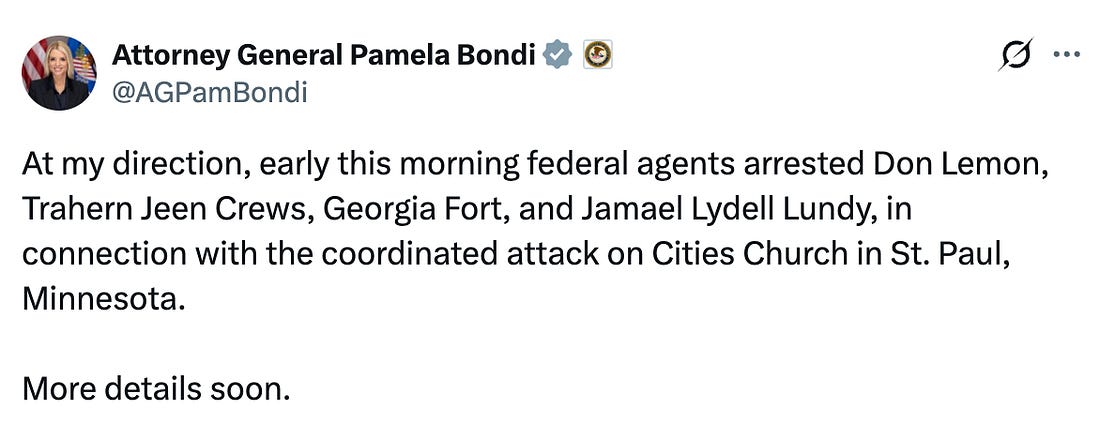
The arrest of Don Lemon should shatter any remaining illusions that the Trump administration is merely “flirting” with authoritarianism. This week, it crossed the line outright, and did so with chilling confidence.
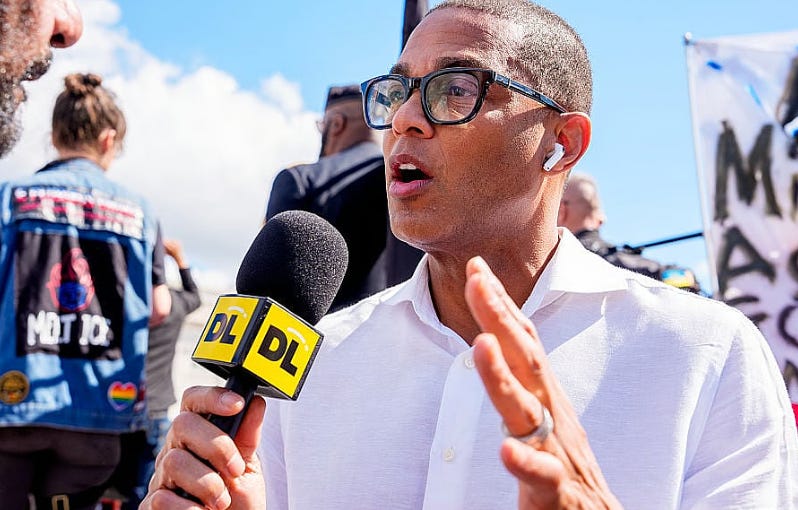
Lemon was taken into federal custody after covering a protest at a Minnesota church linked to Immigration and Customs Enforcement, despite the fact that a magistrate judge had already rejected the Department of Justice’s attempt to charge him. An appeals court had backed that decision. In any functioning democracy, that would have ended the matter. Instead, Lemon was arrested anyway.
The immediate reaction from legal experts wasn’t rhetorical, it was pure panic.
“What was Don Lemon arrested for?” asked Cardozo Law professor Kate Levine. “I thought the church protest indictment was dismissed by magistrate and appeal court? Like what are the actual charges?”
Others echoed the disbelief, noting that magistrate judges, district court judges, and appellate courts had all said the government couldn’t arrest Lemon, yet somehow an arrest warrant materialized anyway.
 |
“Damn. Don Lemon was snatched up by the feds last night,” wrote attorney Yankee Mack. “Didn’t a federal magistrate and appellate court tell DOJ that they had no probable cause to arrest Lemon? So what changed between two weeks ago and last night?”
Donald Trump had publicly demanded Lemon’s arrest, amplifying MAGA calls for Lemon to face prison time by boosting a post that compared Lemon to anti-abortion protesters sentenced under the FACE Act and declaring, “I would like to see the same kind of sentence for Don Lemon.” Lemon has consistently maintained that he was doing what journalists do: reporting on a matter of public concern. A magistrate judge agreed and rejected DOJ’s attempt to criminalize his coverage.
Veteran journalist Mark Jacob spelled out what this really was: “The Trump regime has detained former CNN host Don Lemon.” He noted that just a week earlier, the regime failed to charge Lemon for covering the protest. Lemon himself predicted, that the Trump administration would try again. “Apparently he was right,” Jacob said.
The backlash from journalists across the country was immediate.
“They arrested Don Lemon. This is horrifying,” said Jemele Hill. “I don’t care what your political beliefs or leanings are… this absolutely cannot stand.”
Susan Gross echoed the creeping dread many felt: “This is truly insane… and then they came for the journalists.”
Others pointed out the administration’s grotesque priorities. “They went after Don Lemon faster than anyone on the Epstein Files,” noted Alex Cole.
 |
A statement released by Lemon’s attorney, Abbe Lowell.
Sportscaster Jon Alba called it an “all-out assault on the First Amendment,” adding that America’s “de-evolution as a republic” was now impossible to ignore.
Jim Acosta pointed out that Lemon was arrested by federal agents in Los Angeles, calling the move “outrageous” and warning plainly: “The First Amendment is under attack in America!”
Chicago Tribune reporter Gregory Royal Pratt went further, describing Lemon’s arrest as “a five alarm fire for our constitutional rights with endless and enormous consequences.”
This is not hyperbole. Authoritarian regimes follow a predictable pattern: delegitimize the press, portray journalists as criminals, then use the state to make an example of them. Hungary did it. Turkey did it. Russia perfected it. The United States has always insisted it was immune, but Trump is proving otherwise.
It remains unclear what crime Lemon is even accused of committing, and that uncertainty is not a bug, it’s the feature — arrest the target first, intimidate them publicly and justify it all later, if at all.
Court rulings, judicial safeguards, and press protections mean nothing if they can’t stand in the way of presidential retribution. This was a message to every reporter, editor, and publisher watching: you are only protected until you’re inconvenient. When a sitting administration shows it’s willing to put journalists in handcuffs to make a point, the real question becomes who is brave enough to make sure those stories keep getting told anyway.
If Don Lemon can be arrested for doing his job, then journalism itself is no longer safe, and silence, at this moment, is exactly what this administration is counting on.
