

HINDSIGHT - WRITE SOMETHING WORTH READING ABOUT OR DO SOMETHING WORTH WRITING ABOUT
Showing posts with label snapsheet. Show all posts
Showing posts with label snapsheet. Show all posts
Tuesday, August 22, 2023
Tuesday, August 15, 2023
NEW INC. MAGAZINE COLUMN FROM HOWARD TULLMAN
Don't Fall for
A.I.'s False Promises
Hot applications such as
ChatGPT are prompting many businesses to dump money into A.I. way too soon.
Most companies would be better advised to develop analytic systems that may be
less leading edge, but more productive.
BY HOWARD TULLMAN, GENERAL MANAGING PARTNER, G2T3V AND CHICAGO HIGH TECH INVESTORS@HOWARDTULLMAN1
We're
in the midst of another FOMO frenzy over artificial intelligence (A.I.),
and especially large language model-based systems like ChatGPT. Seems like
millions of companies and dozens of VCs are rushing to invest billions in what
they hope is going to be the next best thing.
The
term A.I. has become sloppy shorthand and an overused, misapplied buzzword
(like crypto, blockchain and Web 3.0) that's so broad as to cease to be
descriptive. A.I. is so widely misunderstood that the only thing most of these
folks actually know about the subject is that they certainly don't want to miss
out on it. Even if they don't really know what the "it" is that
they'd be missing.
But
what's even more discouraging is that this is one of those semantic swamps and
media-driven hypes that you wade into and, as you're slowly sinking your
precious capital and tech resources into the bog, and your team is finally
learning something concrete about the relevant applications of these new tools,
you sadly discover that the money you've spent and the "tools" you
built or licensed have little or nothing to do with the actual operations of
your particular company.
Most
businesses won't need or find practical, cost-effective uses for actual A.I.
tools for years to come, if ever. Because their day-to-day information
requirements and the characteristics and attributes of their products,
services, markets and customers simply don't line up enough with the actual
information outputs of these systems. It's like asking for tax advice from a
philosopher rather than an accountant. You might get an answer - and one that
might be directionally correct--or, in the current ChatGPT world, one that
might be completely made up. But that advice is nothing that any sane
person would rely on.
If
you're really trying to solve certain problems in better and faster ways,
including scheduling and routing, just-in-term supply chain projections, cost
and damage estimates or pricing matrices, A.I. might be the wrong approach. You
don't need to spend the time and money training your people on new systems to
build precise and iterative prompts and inquiries to interrogate huge,
generalized data aggregations to get responses based on tons of information
that have nothing to do with the specifics of your business; or the marketplaces,
geographies and regulatory environments in which you operate. It's
overkill and very much like using a hammer to put out the flames when your hair
is on fire. Painful, costly, and not particularly helpful.
On the
other hand, spending your time and energies on creating analytical and
heuristic systems that are practical, cost-effective, relatively rapid, and
readily accessible -- and built from your own datasets, related third-party and
adjacent others, shared and documented experiences, and archived knowledge
bases-- is the smartest way to enter this new generative world. Let's just say
that the simple idea of machine learning is a lot more useful and
understandable than all the gobbledygook about A.I.
The
premise couldn't be simpler: you don't need an oracle to predict next month's
likely demand for specific products if you already have a decade of prior sales
data, an experienced sales force, good info about your competitors' pricing
strategies and a relatively stable marketplace in terms of regulation or other
external factors. Every decent sales organization, every restaurant, and any
smart entertainment venue has its own version of a "beat yesterday"
book, which helps them look backwards and plan ahead. Most businesses have been
doing their own variations of these kinds of inquiries for years in some
combination of manual and mechanical approaches, so there's virtually no new
training involved.
The
trick is that any decent machine can manage, absorb, manipulate and display
results, variations and projections for thousands of different products and
scenarios at multiple price points, in minutes, far more accurately than even
your best salespeople. The critical change is that the speed and abilities of
even the base level computing machines have grown exponentially while the costs
of accessing and employing the processing power are now close to zero.
The
use of machine learning isn't limited to applications like sales projections.
Millions of other business interactions occur every day that are subject to
known rules, processes, regulation, and limitations that are also capable of
being accumulated, archived, analyzed and converted to real-time tactical
instructions and directions, to be played back to customer-facing team members
in hundreds of different roles and positions.
Balto deploys one
shining example of such a system, which equips customer service agents and
their supervisors and managers with immediate, in-stream, customer history,
transaction data, appropriate responses and escalation directions, all drawn
from current interactions, company policies, and historical
experiences in similar cases. If
you have to have a name, I'd suggest that you more properly call this type of
assistance "augmented intelligence" as long as you understand that
it's the intelligence of the human end user that's being enhanced and extended
rather than some novel output being created by a miraculous black box that is
answering questions that no one needs to ask.
The
improvements in customer engagement, and in customer and CSR satisfaction, and
the gains in time, accuracy and productivity aren't the product of new
discoveries. They're simply the result of better and more quickly equipping
team members with the data and tools they need to do the best job possible in
the shortest amount of time. Slicing and dicing at scale isn't some new magic--
it's a case where we're more focused on the power and value of such analysis
and also have the ability to convert massive amounts of data into useful and
actionable information.
Snapsheet creates claims management software for the insurance
industry; its customers provide access to millions of interactions among claims
adjusters, repair shops and consumers who may be insureds or claimants. As
unique as each and every crash may seem to the parties, the nature of the
damage to the vehicles, costs of repairs and time required, are remarkably
consistent when similar cars and circumstances are present. In addition, the
claim documentation and submission processes have also been streamlined and
standardized by major insurers, which means that the vast majority of claims
being processed on any given day for comparable vehicles are virtually
identical. Likewise, the entire repair process is fully understood. And
because virtually all the descriptive language regarding damaged parts and
systems is also available in commonly employed digital designators, all claim
submission material can be captured instantly by the entry systems and flowed
directly into the analytical engines.
Here
again, as Snapsheet continues to demonstrate, circumstances are ideal for the
expanded application of machine learning. By relying on millions of
accumulated prior damage examples, the system can analyze, document and process
claims as they are submitted and automatically create initial estimates without
any human involvement. These initial estimates can then be quickly reviewed by
adjusters, edited, or corrected where necessary, and returned in real time to
their insureds or claimants, along with directions and authorizations to the
body shops to get the damaged vehicles repaired and returned to their owners
quickly.
If
this process seems remarkably mechanical and straightforward, that's because it
is. There's no magic. There's no novel "intelligence" or native
thought. There are constantly improving ways to use increasing computer power
to manage massive amounts of data. This is precisely the value and virtue of
using computers and other machine learning tools to replace endlessly
repetitive human actions, including data entry, with systems that can
immediately assemble, process, and evaluate materials to increase productivity,
avoid entry and calculation errors, assure consistent legal and regulatory
compliance, save time and improve everyone's satisfaction.
The
most intelligent thing that any business owner can do today is to take stock of
their own operations, determine which parts of the workflow have the essential
attributes that can be optimized and enhanced through the application of
machine learning, and get started implementing those kinds of improvements.
There's nothing artificial about the results and savings you'll see in no time
at all.

Thursday, May 16, 2019
This Founder Got the Idea for a Multimillion-Dollar Company After Being in a Car Wreck
This
Founder Got the Idea for a Multimillion-Dollar Company After Being in a Car
Wreck
May 15, 2019

190206_GBR_BradWeisberg_GBR
More
In 2011, Brad Weisberg
co-founded Snapsheet — which uses technology to streamline the auto insurance
claims process — and has led the company through multiple stages of rapid
growth as its CEO. Snapsheet has raised $47.6 million in funding, according to
CrunchBase, and was named one of the top fintech startups of 2018 by CB
Insights.
Each week,
GOBankingRates sets out to discover what makes the people behind top companies
tick. We like to call this series “Best in Business” — and Weisberg really is
one of the best. He told us why time management is so vital when starting
a company, how he keeps his employees engaged and motivated (gift baskets are
involved!) and ways that you can find (or build) your own dream job, too. Below, find our favorite moments from
the story of how Weisberg launched his business.
It All Started With a Car Accident
Years ago, I got into
a car wreck. I took my car to three body shops, which resulted in three
different estimates for the same damage to my car. All the body shops did was
look at the damage and quickly put a number on a piece of paper. It took so
much time and frustration to get the damage assessed, and there was no
technology used throughout the process. It dawned on me that submitting a photo
of the damage to the body shops through the use of technology would save time,
costs and frustration. The result would be the same — a cost estimate to fix
the car. This was the moment that Snapsheet was created. I knew then that a
picture was worth a thousand words.
He Put His Life Savings on the Line
Failure was my biggest
fear. My life savings were invested, and I jumped headfirst into Snapsheet.
Once I had the initial idea, I spent time researching the market and the
industry, as well as talking with body shops, friends and family to identify
the challenges and the opportunities. I believed then, and I still believe now,
that the harder you work, the more successful you can be.
It takes three times
as much time and money as you would initially think. There is no such thing as
an overnight success. If you perceive someone to have had quick success, you
likely aren’t familiar with their backstory. So many business owners have been
working at it for more than 10 years, hitting many challenges and roadblocks
along the way, until they are externally perceived as successful.
Time management was
the hardest part of going from the concept to actual business. In the early
days of Snapsheet, I was working two jobs, selling real estate while I was
getting Snapsheet off the ground. When you are the only employee at a founding
company, there are so many roles you need to be focused on, such as raising
money and building the product. It’s important to prioritize your tasks but
stay committed to each piece of the business puzzle. Once you can start hiring
a team to put in functional roles, the time management piece gets easier.
He Built His Company Based on the Idea That
You Can Always Do Better
In previous jobs,
people that I worked with never pushed the envelope. They stuck to the same
processes that turned into the same results. At Snapsheet, our motto is, “There
has got to be a better way.” I believe that there has to be a better way to do
everything in life, and we should always be exploring other opportunities to do
just that. We encourage innovation and challenge the status quo.
The culture of a
company is extremely important for the success of a company. I wanted to build
a company where I was surrounded by passionate and motivated team members that
enjoyed coming to work each day. Nearly 50 percent of Snapsheet employees work
remotely. To keep the team engaged, we work hard at building a culture that
makes them feel appreciated. Being transparent is one of my biggest
priorities as a business leader. Snapsheet’s entire executive team ensures that
our colleagues understand what we are doing, why we are doing it and where we
are going. Each person understands why they are important to our team, but also
to helping us achieve our goals.
We also make sure to
add in a bit of fun for both the employees [that work] in the office and
[those] that work remotely. On top of the lunches and happy hours, we send
monthly themed gift baskets that keep up the excitement about being a part of
Snapsheet.
He Views Success as an Ever-Moving Target
I consistently
challenge myself against achieving success. Success to me is defined by many
things. Success is bringing my team happiness and fulfillment when they come to
work every day. I feel proud of creating more than 500 jobs for people, as we
work together for one common mission and dream.
At Snapsheet, we set high targets and
challenging goals. When we reach those, we celebrate together. The next
morning, we roll up our sleeves and raise the bar. Fortunately, we have had
many milestones to celebrate over the years. We look forward to many more
achievements in our future.
Thursday, November 29, 2018
Snapsheet and Zurich Insurance Group collaborate, bringing innovative claims software to international businesses
Snapsheet and Zurich Insurance Group collaborate, bringing innovative claims software to international businesses
Strategic collaboration will set new standards for Zurich's customer claims experience and accelerate Snapsheet's global expansion

Snapsheet
08:00 ET
CHICAGO, Nov. 27, 2018 /PRNewswire/ -- Snapsheet, the leading provider of virtual claims technology for the personal and commercial insurance marketplace, today announced a new strategic agreement with Zurich Insurance Group. The collaboration marks a global expansion for Snapsheet, allowing its innovative digital services platform to be available in multiple countries across Zurich's operations in Europe, Latin America and Asia Pacific.
"The collaboration with Snapsheet will allow Zurich to further streamline the claims journey for our customers and provide additional innovative services," said Ian Thompson, Zurich's Group Chief Claims Officer. "Our customers will have additional options to report claims and communicate with Zurich to speed up and simplify the claims experience. As we build a culture of innovation and greater agility into our business, we are very excited to enter into this strategic relationship with an insurtech that is paving the way for new innovation in the insurance industry."
Snapsheet's software as a service (SaaS) platform allows intake of information from various customer channels, including e-mail, text, or a web and mobile app, allowing insurance carriers to better engage customers and process claims more quickly. It also enables them to directly deposit payments into customers' bank accounts, easing the claims process while providing superior customer engagement and workflow optimization. The software covers auto, property and injury for personal and commercial claims, and incorporates automation derived from data collected from 1M+ processed claims across 70+ blue-chip carriers and non-traditional innovators.
"Snapsheet has already processed more than $2.5B worth of claims in the U.S. through our software platform. We continually leverage our own claims data to provide real-time R&D that enhances the functionality and automation of our claims processing software," said CJ Przybyl, co-founder of Snapsheet. "Zurich recognized the tremendous value to be gained from the Snapsheet suite of software across multiple lines of their P&C business. Our ability to capture claims information from any medium, coupled with pro-active workflows, will help augment Zurich's existing systems – ultimately providing a higher level of service for their customers."
The enhanced Snapsheet services will be available to Zurich customers in Ireland first, with plans to expand to additional countries across Zurich's operations in Europe, Latin America and Asia Pacific.
For more information about Snapsheet's digital services platform, visit www.snapsheetapp.com
About SnapsheetSnapsheet is the leading provider of virtual claims solutions. Using powerful technology to improve workflows for more than 70 insurance carriers around the world, Snapsheet creates a simple claims process starting with virtual estimations and continuing through final repairs and payment. By streamlining communication between consumers, shops, and carriers, Snapsheet takes complicated processes and makes them fast and simple for everyone involved. For more information, please visit http://www.snapsheetapp.com/.
About Zurich Insurance GroupZurich Insurance Group (Zurich) is a leading multi-line insurer that serves its customers in global and local markets. With about 53,000 employees, it provides a wide range of property and casualty, and life insurance products and services in more than 210 countries and territories. Zurich's customers include individuals, small businesses, and mid-sized and large companies, as well as multinational corporations. The Group is headquartered in Zurich, Switzerland, where it was founded in 1872. The holding company, Zurich Insurance Group Ltd (ZURN), is listed on the SIX Swiss Exchange and has a level I American Depositary Receipt (ZURVY) program, which is traded over-the-counter on OTCQX. Further information about Zurich is available at www.zurich.com.
Tuesday, January 23, 2018


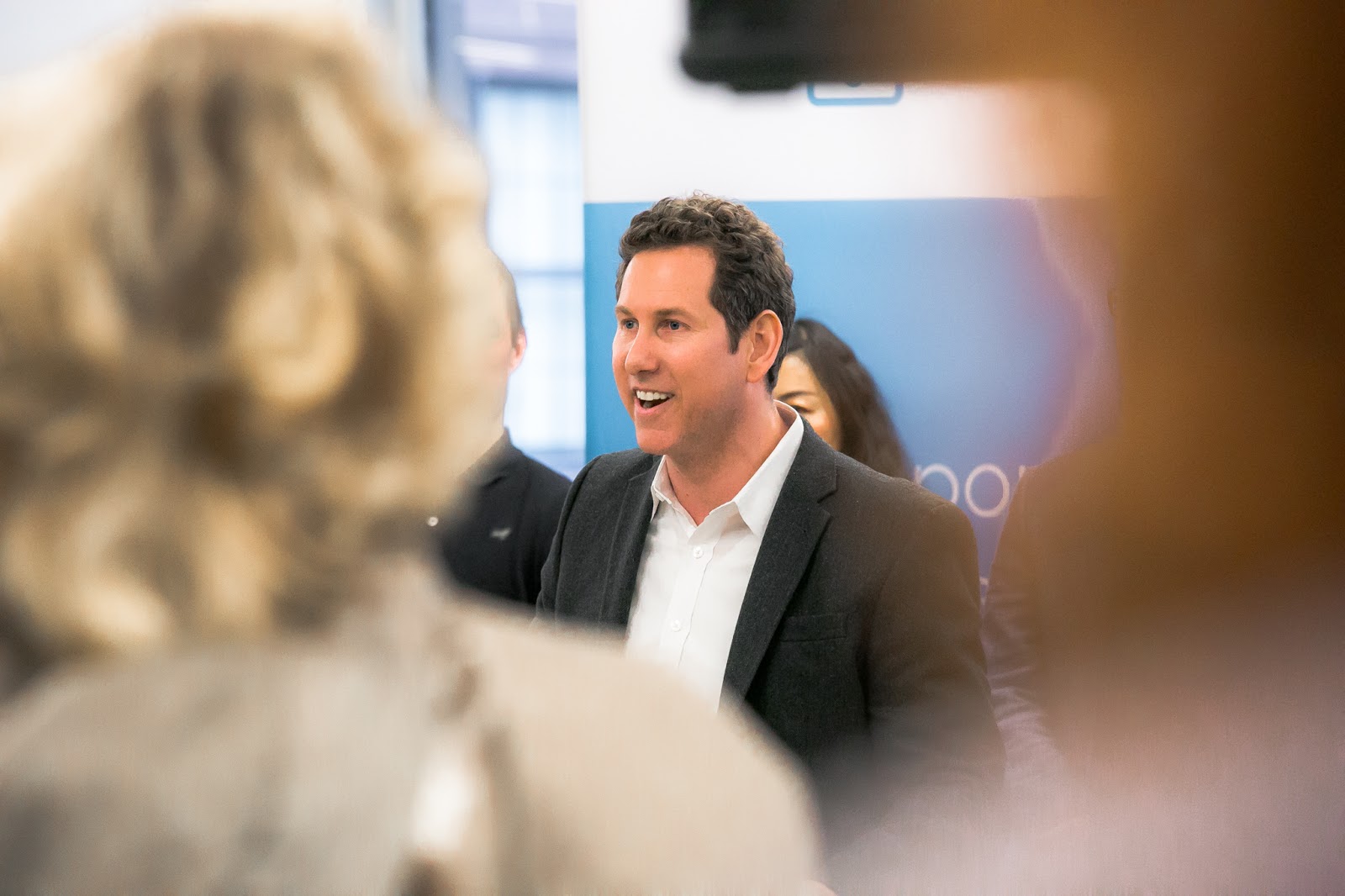


1871 CEO Howard Tullman and Snapsheet CEO Brad Weisberg Appear on Tasty Trade

1871's Howard Tullman invites Snapsheet's CEO and Founder, Brad Weisberg, into the tastytrade studio to give us an update since his last appearance. Snapsheet is an app which uses proprietary technology to make automotive claims simpler for customers as well as insurance companies. Brad explains how his company has expanded in recent months and comments on the changes he sees in the insurance industry. Plus, Howard weighs in on his role as a board member of Snapsheet and the importance of the Board Member/CEO relationship in a business such as this! Learn More About Snapsheet: http://www.snapsheetapp.com/#about Some of the most interesting stories around are from entrepreneurs willing to take an idea and turn it into a business. From web apps to workouts to Barron's and babies, we've got it covered. You can watch a new Bootstrapping in America interview live and check out all previous episodes everyday at http://ow.ly/Ee7F0
Tuesday, November 17, 2015


Saturday, October 25, 2014


Tuesday, October 14, 2014

Saturday, June 07, 2014
BRAD WEISBERG and SNAPSHEET
Keep the baby, toss the bathwater: Four lessons from failed ventures

“Many of the character traits we seek in early stage ventures, such as tenacity, fortitude, outsize ambition and drive, can constrain an entrepreneur's ability or willingness to truly step back” and acknowledge the limits of a particular strategy, says Jim Dugan, CEO of Chicago-based venture-capital firm OCA Ventures. “Introspection is easier said than done.”
But failure doesn't have to be the end of the road. Startup gurus believe that many tech ventures fail due to poorly calibrated business models, not inept people or even lackluster technology. The solution, called a pivot, is the entrepreneurial equivalent of visiting the chiropractor to crack your back. Tweak your product and redirect your sales strategy. Then that tangled path will straighten ahead.
That's not to say the process isn't agonizing. BodyShopBids founder Brad Weisberg, 33, knows that firsthand. In January 2012, he raised $1 million for his startup. He created an app that allowed drivers to photograph damage to their cars, then to solicit repair bids from rival body shops. Never heard of BodyShopBids? Turns out it was destined for the junkyard. Even though the app functioned well, the company had trouble building business: Even its most enthusiastic customers didn't get in car wrecks that often, and most people who do turn first to their insurers rather than approach body shops directly. A desperate $300,000 marketing push yielded little fruit, and by summer 2012, Mr. Weisberg was ready to throw in the towel.
It wasn't a decision he made lightly. “I knew that continuing didn't make sense, but it wasn't easy to let go,” he recalls. “This was my idea, something I had obsessed about for years. It was hard to say, all of a sudden, 'You know what? I'm scrapping this.' “

I knew that continuing didn't make sense, but it wasn't easy to let go.
— Brad Weisberg
“It worked out,” Mr. Weisberg says. “But it was hard.”
THE PROCESS BEGINS
Mr. Weisberg's experience dovetails with an observation made time and again by more seasoned entrepreneurs. “You've built something and worked on it for six months or a year, and it's not getting the traction you think it should. That doesn't mean there's not an entirely different market where you can thrive,” says Terry Howerton, CEO of Chicago tech incubator TechNexus.
“The challenge,” he adds, “is to be just as open-minded during the execution phase as you were during the creation phase.”
Of course, the more progress you made during the first incarnation of your business, the more painful the pivot. But those who have gone before say that there are some key questions to ask before redirecting a concept.
Sunday, March 09, 2014


Friday, January 03, 2014


Wednesday, December 04, 2013
Snapsheet lands $10 million from new investors
Snapsheet lands $10 million from new investors

David Bauer
Snapsheet has put another $10 million in the tank to fuel its effort to automate the claims process for car insurers.
The Lightbank-backed startup, previously called BodyShopBids, shifted gears a year ago from a consumer-focused company to one that partners with insurers. It originally targeted consumers with a mobile app to take pictures of their wrecked cars to get repair bids from body shops. But the company realized that the bulk of auto-body repairs involve insurers, rather than individuals paying out of their own pockets.
Since then, it's lined up several insurance companies, including Farmers Insurance Group, USAA, MetLife Inc. and National General (formerly GMAC). But the company ultimately wants to land the big boys of the business, such as Bloomington-based State Farm Mutual Automobile Insurance Co., too.
Snapsheet, headed by co-founder Brad Weisberg, imported industry veteran David Bauer from San Francisco last spring to be chief operating officer. He previously was chief information officer for auto-salvage giant Copart Inc.
The new funding was led by several private investors, which the company did not name but described as having strategic ties and/or experience in the insurance industry. Existing investors include Lightbank and Chicago-based venture funds OCA Ventures and Pritzker Group Venture Capital. Snapsheet raised $1 million in early 2012.
The company will use the money to add repair estimators and support and sales staff as well as improve its technology, Mr. Bauer said.
ADDED EMPLOYEES, SPACE
Snapsheet already has grown to 50 employees from about seven in less than two years. It expects headcount to reach 60 by year-end. The firm recently increased its space at 600 W. Chicago Ave., where Lightbank also is housed, to 20,000 square feet from about 5,000.
Because the company pays for repairs upfront and then collects reimbursement from insurers, it also needs working capital. Snapsheet charges insurers a flat fee per claim, rather than a percentage of the repair costs, which Mr. Bauer said is a unique advantage.
Snapsheet has made inroads into the business, landing several big insurers. Mr. Bauer said he expects to sign up four more of the top 20 carriers soon.
But it will need to keep bulking up and prove it can handle a lot more volume to land the largest insurers, some of which, such as Northbrook-based Allstate Corp., are developing their own technology.
Snapsheet is on pace to handle about 50,000 claims annually and plans to hit a rate of 200,000 to 300,000 next year, which would allow the company to crack the top 10 in claims processed and become cash flow-positive, Mr. Bauer said. Such volume is a drop in the bucket compared with State Farm, the industry giant, which handles about 7 million auto-repair claims annually.
After 30 years in the industry, Mr. Bauer knows as well as anyone the challenges facing Snapsheet.
"We have to get to scale," he said. "The biggest challenge is we have to show we can do it better than the insurance carriers. I believe we can do that."
Follow John on Twitter at @JohnPletz.
Subscribe to:
Posts (Atom)