
DHS Secretary's On-Air Admission Places Her at Center of
Court Fight Over Defying Federal Judge’s Order
Noem’s
public account contradicting a judge’s halt order could be entered into
evidence, raising legal exposure for her and renewed concerns about separation
of powers.
Nov 30, 2025
Noem publicly described authorizing actions that ran
opposite a federal judge’s halt order, a statement that could be entered as
evidence and that now potentially exposes her and the Trump administration to
significant legal and separation-of-powers concerns.
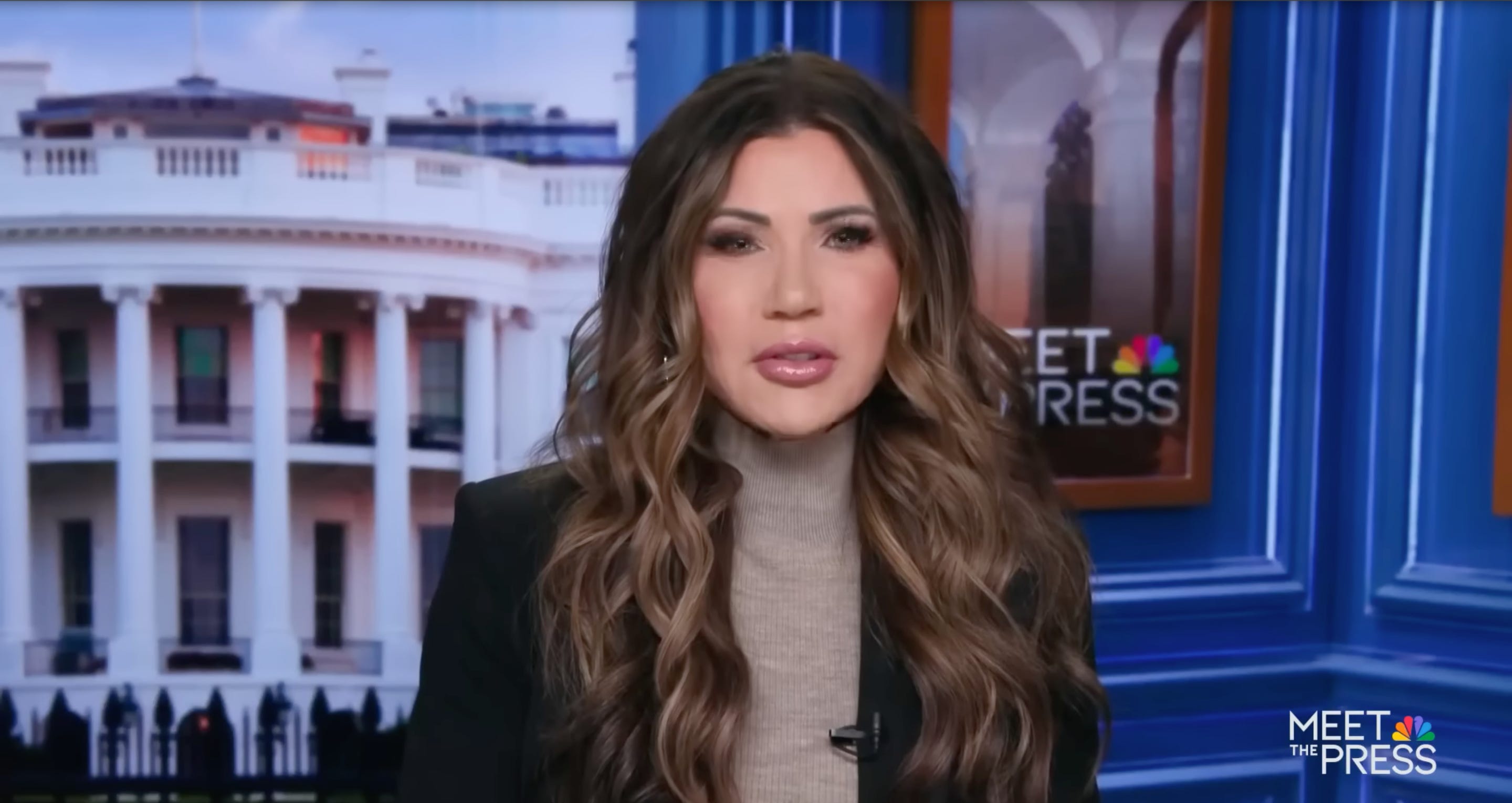
DHS
Secretary Kristi Noem speaks during a Nov. 30, 2025 interview in which she
blamed the Biden administration’s Afghanistan withdrawal and Operation Allies
Welcome for enabling the suspect in the National Guard shooting to enter the
United States.
Homeland Security Secretary Kristi Noem on Sunday publicly
acknowledged authorizing the deportation and transfer of Venezuelan detainees
whose movements had been halted by a federal judge, a statement that could be
offered as potential evidence as a court reviews whether the Trump
administration complied with a binding judicial order. Noem insisted her
actions were lawful. Her description of directing operations that a judge had
ordered DHS to stop and reverse positions her remarks as potential evidence against
her and the Trump administration in an active contempt inquiry.
In her interview on NBC’s “Meet the Press,” Noem initially
declined to answer directly when asked whether she personally made the final
call to continue the flights after the court’s directive. When pressed, she
said that decisions about deportation flights “are my decision at the
Department of Homeland Security,” a formulation that mirrors language the
Justice Department used in recent filings identifying her as the key
decision-maker. Those filings were reported by The Guardian, Politico and CBS
News and form part of the evidentiary record in a separation-of-powers dispute.
Host Kristen Welker also read on air the text of U.S.
District Judge James Boasberg’s oral directive from March, stating: “Any plane
containing these folks that is going to take off or is in the air needs to be
returned to the United States… this is something that you need to make sure is
complied with immediately.” The directive required DHS to halt removals and
return detainees who had already departed, so they could seek judicial review.
Noem responded that she “did not” defy the order and characterized the judge as
“activist,” framing the directive as lacking legal merit; her remarks reflect
the administration’s position but do not alter the directive’s legal effect.
Under the Federal Rules of Evidence, a party’s own
statements describing conduct at issue in a court proceeding are treated as
admissions of fact when offered against that party, according to Rule 801(d)(2)
as summarized by the Legal Information Institute at Cornell Law School. Noem’s
acknowledgment that she approved the disputed transfers therefore carries
potential evidentiary weight as the court analyzes what the government did
after the judge issued his oral directive. If the interview is introduced in the
proceedings, her on-air account would provide a contemporaneous description of
her role in the decisions federal filings say were executed after the
halt-and-return order.
The administration relied on the Alien Enemies Act, a
wartime-era statute first enacted in 1798, to deport certain Venezuelan
nationals identified as security risks. The AEA framework permits removals
through streamlined procedures with fewer safeguards than standard immigration
cases, contributing to the controversy surrounding its use. Litigation
summaries from the American Civil Liberties Union and the Civil Rights
Litigation Clearinghouse describe these proceedings as part of J.G.G. v. Trump,
a broader challenge to AEA-based removals.
Despite Boasberg’s directive, two flights carrying more
than 100 Venezuelan men continued to El Salvador, where detainees were placed
in the country’s high-security Cecot facility, which the Associated Press has
described as a maximum-security complex used to detain alleged gang members. In
recently unsealed filings, the Justice Department stated that Noem “directed”
that detainees removed before the order was issued could be transferred to
Salvadoran custody, characterizing the decision as consistent with a
“reasonable interpretation” of the directive. DOJ filings also reference
internal legal advice that officials say supported their interpretation,
according to Politico and ABC News.
On NBC, Noem defended her actions, saying DHS acted to
“ensure that dangerous criminals are removed.” She did not address Boasberg’s
instruction to return flights that had already departed. The administration’s
position, as reported by CBS News, is that the order did not clearly apply to
individuals already in transit or already removed. DOJ has argued in filings
that the oral nature of the directive contributed to uncertainty about its
scope, particularly for detainees who had departed U.S. airspace before the
hearing concluded. Her remarks are now available alongside DOJ’s filings for
lawyers on both sides as the court determines whether the government complied
with the directive’s timing and scope.
Evidence treatises summarized by Cornell’s Legal
Information Institute explain that under Rule 801(d)(2), statements by a party
about contested conduct may be introduced as factual admissions when offered
against that party. Noem’s remarks therefore give the court a contemporaneous
account of her role in decisions detailed in federal filings. The
administration maintains that it acted in good faith based on internal guidance
about how to interpret the judge’s instruction.
Civil liberties groups describe the dispute as part of a
broader challenge to the use of the Alien Enemies Act in domestic immigration
enforcement. An ACLU press release from June states that a federal judge found
the March removals unlawful and ordered that Venezuelan detainees transferred
to Salvadoran custody be given access to judicial proceedings. Those filings
represent a separate track of litigation that continues in parallel with the
contempt inquiry.
The detainees were later released from Cecot and
transferred to Venezuela in a prisoner swap, according to reporting from The
Guardian and the Associated Press. The repatriation did not end the underlying
legal questions. Boasberg previously found probable cause to examine whether
DHS officials defied his directive and, after an appeals panel allowed him to
proceed, requested sworn declarations from Noem and other officials, according
to ABC News and CBS News.
Public-law researchers cited by the Associated Press and
Politico note that disputes over executive adherence to court orders have
shaped major national cases, including enforcement of school desegregation
rulings and post-9/11 national-security decisions. They point out that while
the administration argues it acted in good faith based on internal guidance,
the judiciary’s authority depends on the executive branch carrying out its
orders without reinterpretation. Commentary published in The Guardian and other
national outlets has noted that public statements by senior officials
describing conduct that appears inconsistent with a federal order may influence
perceptions of judicial independence in the United States and internationally.
Supporters of the administration told ABC News and CBS News
that officials acted quickly amid evolving legal guidance and that any
ambiguity in Boasberg’s instruction weighs against a contempt finding. Critics
cited in The Guardian and ACLU filings argue that the flights’ continuation
after the judge’s directive reflects an expansive view of executive authority
in immigration enforcement and underscores tensions over the role of emergency
powers in removal cases.
As Boasberg examines whether the government followed his
directive, lawyers have both DOJ’s filings and Noem’s televised descriptions of
her actions to draw on in arguing over what the administration did after the
order. Observers quoted in Politico and The Guardian have noted that the
outcome of the inquiry may influence how future administrations interpret
judicial oversight when invoking emergency authorities in immigration law.
