Showing posts with label HOWARD SCHULTZ. Show all posts

Tuesday, November 11, 2025

NEW INC. MAGAZINE COLUMN FROM HOWARD TULLMAN


Why Santa Isn’t Going to Save Starbucks 

Former CEO Howard Schultz’s heart was in the right place, but his message seems to have gotten lost in the translation.


I haven’t been too impressed with Starbucks and its senior management’s various back-and-forth moves since the last time former CEO Howard Schultz left. I’ve been connected with Starbucks for many decades, including stints as one of its many Seattle landlords, while the basic coffee business kept growing at a fierce pace and their real estate guys were leasing every available space in town. I feel like I’ve lived through at least six or seven versions and visions of what the company could be and should be. Ten years ago, I wrote a long piece explaining why I thought Starbucks was doing a better job of serving its customers than almost anyone else.

Right now, I’m not really sure that anyone inside the company has really made up his or her mind as to where it’s headed. One of the toughest tasks when you’re trying to unwind significant changes in a business of this size and scope is that it takes longer and costs much more to go backwards than it does to slowly roll out a new posture, approach, store design or even a new product. It’s like stirring cream into coffee: easy to do, hard to undo.

But, given the recent financial results—where sales for stores open at least a year have finally increased after two years of especially tough times—and the statements by management as to what the latest going-forward plans were, I’m hopeful that it feels a little like they’re headed back to some of the most basic operating fundamentals, which are just as critical for new business builders as for businesses that feel like they’ve been part of our lives forever. The hardest hurdle will be to step back from the concept that each store is a mini-community center serving the world and admitting that they’re running a business—not a charity—and that their attention needs to be directed primarily to paying customers.

One really good place to start the latest retrenchment might be to tell the CEO that it’s a bad joke and a horrible message for him to be commuting to work from Newport Beach to Seattle on a company-owned private plane. This kind of wretched excess makes even Kash Patel (who’s been caught shuttling his girlfriend between dates and gigs on an FBI plane) look like the one of the boys in the band. But apart from the sheer stupidity of rubbing your wealth in your employees’ faces on a daily basis, Starbucks absolutely needs to focus deeply on their best customers and, once again, try to simplify everything they’re doing with an acknowledgement of and a concentration on what Howard Schultz observed a long time ago. He said: “We’re not in the coffee business, serving people. We’re in the people business, serving coffee.” His heart was always in the right place, but I’m not sure as the message was passed down the line that it didn’t get largely lost in the translation.

For sure, the troubles they’ve had for several years in China (its second largest market, with 8,000 stores) are one good example, although their same-store sales did move up a little in the most recent quarter. Their lengthy search for an operator in China to partner with ended in a joint venture deal announced last week where Starbucks will sell 60 percent of the China business to a private equity firm and license its brand and IP to a new entity, which will hopefully be able to deliver a more hands-on and localized approach as well as more direct supervision.

However, the bigger overall risk isn’t simply messaging, it’s that they fall once again into the trap of trying to be all things to all people. If they do, they’ll simply repeat the sins of the past. You can’t be a mile wide and an inch deep across the board and expect undying support and loyalty from your most important, dedicated and regular customers in return. The key customers have seen that movie before. There’s nothing worse than standing in line waiting to place your order while half a dozen mobile customers whiz in and whiz out after grabbing their lattes. It’s at times like this that I think a “coffee” is just a name for someone who’s been coughed on, or worse.

The key actions that we can expect to see over the next year or two in order to hopefully prolong the turnaround and sustain a strong recovery aren’t any mystery or complicated to execute, but they do require a strong commitment by management, a willingness on their part to stay the course during the inevitable bumps along the way, and a strong PR and messaging strategy to offset the likely impression of customers and consumers in general that Starbucks is cutting back rather than rebuilding, revamping, and expanding.

Closing more than 600 U.S. stores already this year and cutting over 1,000 “corporate” jobs can be smart mathematically, but it may be counterproductive if you’re trying to convince impatient and unhappy customers that things are going to get better soon. This is especially true in an environment where the competitive offerings are substantial, readily accessible, and increasing all the time. The company’s plan is to bolster the in-store teams during peak hours and make additional process changes to speed up the entire ordering and delivery processes. But this message needs to get out to the customers and the public stressing that the current actions are actually steps toward improving their overall daily experience and not short-term frugalities or misplaced efforts to “save their way to success” which almost always fail.

Another mixed message, but one that seems to be working quite well, is to remove seating, shrink many of the locations, and basically convert to a “mobile-first” operation where all of the orders are placed using either cellphones or kiosks and no one expects to spend any significant time in the stores at all. This is absolutely contrary to Schultz’s original vision of the stores as the “third place” between home and office, but it’s an important recognition that the pandemic completely changed the entire playing field and that Starbucks was late to the new digital environment. With the holidays just around the corner, we’ll see a huge push for the annual Peppermint and Eggnog lattes which are sales boosters, but fewer and fewer open laptops, lounge chairs and couches in the stores. JD Vance will just have to fulfill his fabric and friction fantasies elsewhere.

I hope Thanksgiving and Christmas go great for them, but I don’t think Santa’s gonna be their long-term solution or salvation. The new emphasis and the path back will be dependent on great beverages and swift and efficient service rather than providing safe spaces, restrooms, and homes away from home for the world.


Monday, November 06, 2023

LOOP NORTH NEWS


Howard Tullman
Adobe Stock
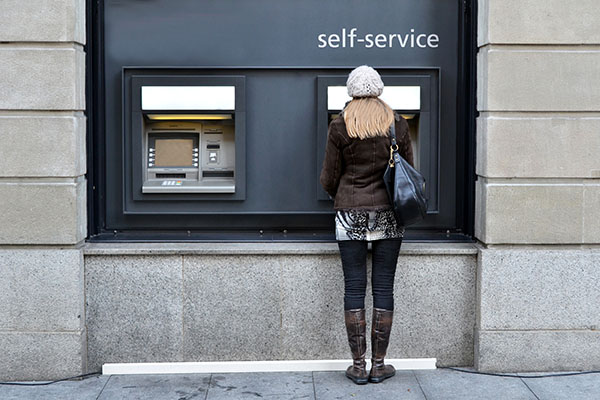
I’d rather use an ATM or a tablet than a teller

6-Nov-23 – I guess there was a time not too terribly long ago when we actually preferred doing business with people rather than machines. When we believed that the human interaction somehow added value to the transaction and could, if necessary, address questions and issues that might arise. This was based in no small part on our prior impressions and experiences in terms of the individuals we were likely to encounter on these occasions. They might even recognize us; we trusted them, they trusted us. We thought of them as our neighbors and part of the community, and we believed that they were generally interested in being of service to us.

Those times are long gone. These days you can walk into a branch bank and the humans sitting behind desks in cubicles are happy to tell you that they can’t even cash a check for you. You’ve got to wonder why they even bother to come to work?

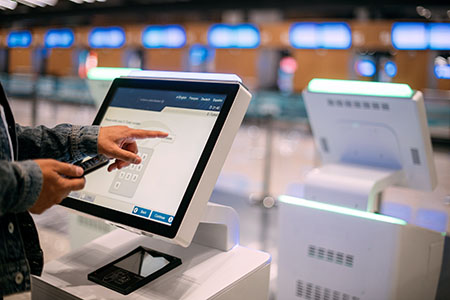
Too many businesses today are replacing people with technology without understanding that the increasingly few customer-facing employees they still employ are their “front door” and most likely their prime point of customer contact.

Adobe Stock

As a result, these firms which are willing to insert just about anyone who can breathe into those sensitive positions are really selling themselves short and cruising for a bruising.

Especially post-pandemic, your front-line troops are the ones who are best suited to welcome back, reassure, and re-connect directly with your customers. If your entire consumer service experience is automated and abstract, you can bet that Amazon will be handling your customers’ banking and other needs in no time at all. And if these folks have no real training, no authority, and not even cash on hand, they might just as well be ATMs.

Today, for a variety of economic and social reasons, all bets are off in terms of what passes for an acceptable workforce as well as appropriate dress and behaviors. The net effect is that we’re all, more or less, passively migrating or being actively pushed toward impersonal tech solutions – whether they work well or not – partly because the alternatives are so unfriendly, unappealing, or unappetizing.

And, believe me, it’s not just the banks that are a problem. Grocery stores, restaurants, bars, and bodegas all have similar issues. They may have massive and meaningless video displays and all kinds of Muzak, or a million different bottles of beer, but the overall retail experience just keeps getting worse and worse.

Maybe it’s post-pandemic PTSD or longing for times long past, or the fact that it’s flu season, but between the autumn’s abundant allergies, winter’s sniffles, and resurgent COVID issues, everyone seems to be walking around stressed and a little more sensitive to their surroundings than they might have in the past. Observant consumers are increasingly noticing the cutbacks and cost-saving efforts.

Too many businesses today are replacing people with technology without understanding that the increasingly few customer-facing employees they still employ are their ‘front door’ and most likely their prime point of customer contact.

But the biggest and most obvious changes are in the attitudes, abilities, and anger of the people staffing the stores. I get that there’re a lot of folks unhappy with their work situations, but honestly, I don’t think it’s my fault, or that they should take it out on me.

A simple example. We’re entering the runny nose season and I’d like to suggest that Whole Foods and the other food purveyors and restaurateurs which have staff handling my food suggest to their esteemed team members that it’s a good time to keep the studs and other jewelry hanging out of their noses away from my meals. It gives me the creeps even apart from any contagions.

This stupid idea of letting their food handlers bring their whole selves to work needs to be cleaned up so they don’t bring COVID, colds, and other germs to work with them. If you think I’m the only one disgusted by the drips, feel free to ask anyone standing in line or seated at a table and subjected to this snotty spectacle. Self-service checkout machines still basically suck, but they’re looking better all the time compared with the bozos behind the registers and the brutal baggers.

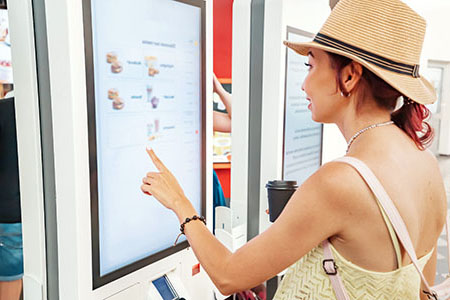
Or how about the new restaurant kiosks where you’re supposed to order your food as you enter and then wait for someone behind the counter to bring it to you? We’re seeing more and more variations of this theme even in traditional restaurants – not just fast-food joints – as a way to cut back on wait staff.

Needless to say, these displays have all the flexibility and warmth of an ice cube, and you end up feeling just like another cog in the system.

Adobe Stock

They make you long for the crabby old servers who at least knew what you wanted and seemed slightly interested as well. It’s hard to escape the subtle message of “eat and get out” that so many of these places give off. Not exactly comfort food. But don’t forget to leave a generous tip as the display officiously reminds you.

Now’s the time that smart business builders and owners need to take a step or two back and decide what business they’re in and how they want that business to operate. Frankly, I think most of them – if they could mystery shop their own places – would be shocked and disappointed at how unpleasant the whole process has become.

Every business is the same in at least one way – whatever you’re selling, it’s your people who deliver the goods. Starbucks takes a lot of crap for a variety of reasons, but one thing that Howard Schultz said at the outset of the business was the truest observation ever. He said “we’re not in the coffee business, serving people. We’re in the people business, serving coffee.”

Saving on staff, cutting back on training, trying to do things cheaply that you shouldn’t do at all – all send the same message to your customers. And not a happy one. Technology is a tool, not a savior in these situations. Care for your customers first and then worry about the costs.

Words of Wisdom: A 60-year compilationHoward Tullman is General Managing Partner for G2T3V, LLC – Investors in Disruptive Innovators, and for Chicago High Tech Investors, LLC. He is also the author of Words of Wisdom: A 60-year compilation.

Tuesday, October 24, 2023

NEW INC. MAGAZINE COLUMN FROM HOWARD TULLMAN


Terrible Tech and Untrained Staff: For Customers, Is This the Worst of Both Worlds?

Too many companies are trying to automate customer service with technology that doesn't work; then they compound the problem with customer-facing workers who can't help the customer. 


BY HOWARD TULLMAN, GENERAL MANAGING PARTNER, G2T3V AND CHICAGO HIGH TECH INVESTORS@HOWARDTULLMAN1

I guess there was a time not too terribly long ago when we actually preferred doing business with people rather than machines.  When we believed that the human interaction somehow added value to the transaction and could, if necessary, address questions and issues that might arise. This was based in no small part on our prior impressions and experiences in terms of the individuals we were likely to encounter on these occasions. They might even recognize us; we trusted them, they trusted us. We thought of them as our neighbors and part of the community, and we believed that they were generally interested in being of service to us.

Those times are long gone. These days you can walk into a branch bank and the humans sitting behind desks in cubicles are happy to tell you that they can't even cash a check for you. You've got to wonder why they even bother to come to work?

Too many businesses today are replacing people with technology without understanding that the increasingly few customer-facing employees they still employ are their "front door" and most likely their prime point of customer contact. As a result, these firms, who are willing to insert just about anyone who can breathe into those sensitive positions, are really selling themselves short and cruising for a bruising. Especially post-pandemic, your front-line troops are the ones who are best suited to welcome back, reassure, and re-connect directly with your customers. If your entire consumer service experience is automated and abstract, you can bet that Amazon will be handling your customers' banking and other needs in no time at all. And if these folks have no real training, no authority, and not even cash on hand, they might just as well be replaced by ATMs. 

Today, for a variety of economic and social reasons, all bets are off in terms of what passes for an acceptable workforce as well as appropriate dress and behaviors. The net effect is that we're all, more or less, passively migrating or being actively pushed toward impersonal tech solutions (whether they work well or not) partly because the alternatives are so unfriendly, unappealing, or unappetizing. And, believe me, it's not just the banks that are a problem. Grocery stores, restaurants, bars, and bodegas all have similar issues. They may have massive and meaningless video displays and all kinds of Muzak, or a million different bottles of beer, but the overall retail experience just keeps getting worse and worse.

Maybe it's post-pandemic PTSD or longing for times long past, or the fact that it's flu season, but between the autumn's abundant allergies, winter's sniffles, and resurgent Covid issues, everyone seems to be walking around stressed and a little more sensitive to their surroundings than they might have in the past. Observant consumers are increasingly noticing the cutbacks and cost-saving efforts. But the biggest and most obvious changes are in the attitudes, abilities, and anger of the people staffing the stores. I get that there're a lot of folks unhappy with their work situations, but honestly, I don't think it's my fault, or that they should take it out on me.

A simple example. We're entering the runny nose season and I'd like to suggest that Whole Foods and the other food purveyors and restauranteurs that have staff handling my food to suggest to their esteemed team members that it's a good time to keep the studs and other jewelry hanging out of their noses away from my meals. It gives me the creeps even apart from any contagions. This stupid idea of letting their food handlers bring their whole selves to work needs to be cleaned up so they don't bring COVID, colds, and other germs to work with them. If you think I'm the only one disgusted by the drips, feel free to ask anyone standing in line or seated at a table and subjected to this snotty spectacle. Self-service checkout machines still basically suck, but they're looking better all the time compared with the bozos behind the registers and the brutal baggers.

Or how about the new restaurant kiosks where you're supposed to order your food as you enter and then wait for someone behind the counter to bring it to you? We're seeing more and more variations of this theme even in traditional restaurants (not just fast-food joints) as a way to cut back on wait staff. Needless to say, these displays have all the flexibility and warmth of an ice cube, and you end up feeling just like another cog in the system. They make you long for the crabby old servers who at least knew what you wanted and seemed slightly interested as well. It's hard to escape the subtle message of "eat and get out" that so many of these places give off. Not exactly comfort food. But don't forget to leave a generous tip as the display officiously reminds you.

Now's the time that smart business builders and owners need to take a step or two back and decide what business they're in and how they want that business to operate. Frankly, I think most of them-- if they could mystery shop their own places -- would be shocked and disappointed at how unpleasant the whole process has become. Every business is the same in at least one way-- whatever you're selling, it's your people who deliver the goods. Starbucks takes a lot of crap for a variety of reasons, but one thing that Howard Schultz said at the outset of the business was the truest observation ever.  He said "we're not in the coffee business, serving people.  We're in the people business, serving coffee."

Saving on staff, cutting back on training, trying to do things cheaply that you shouldn't do at all -- all send the same message to your customers. And not a happy one. Technology is a tool, not a savior in these situations. Care for your customers first and then worry about the costs.

Total Pageviews

GOOGLE ANALYTICS

Blog Archive