
Feb
28, 2026
I am not a law of war expert. I don’t play one on TV. But I
wanted to share some basic principles and offer some suggestions for further
reading as we watch the news unfold in Iran. The White House hasn’t offered the
public a reason for the attack on Iran that would make it legal, and CNN
is reporting they
haven’t provided a “full accounting” to members of Congress either. This
afternoon, Jake Sherman at Punchbowl News reported that “A senior Trump
administration official said that U.S. intelligence ‘had indicators’ that the
Iranians were going to use their missiles ‘preemptively, but if not,
simultaneous’ to any American action on Iran.”
But if the real reason for our attack was warding off
casualties from an Iranian first strike, you would have expected to hear the
White House using that explanation from the start, which they didn’t. And now
that we have struck, we haven’t seen any proportional response, “simultaneous”
or otherwise, from Iran. The legality of the U.S. strike is, at best, highly
questionable.
Of course, we all know that under the Constitution,
Congress, not the president, has the power to declare war. We also know that
for the past few decades, the executive branch has been assuming more of that
power, adopting a “beg for forgiveness,” rather than an “ask for permission”
stance. But no one has been as brazen about it as Donald Trump, who has bombed
7 different countries in just over a year in office and is at in a
second time in Iran, after claiming, in June
2025, that he had “obliterated” their
nuclear program. It’s not a good thing when the man with the nuclear codes is
punch-drunk on the amount of power at his disposal, and it behooves us all to
keep a close watch.
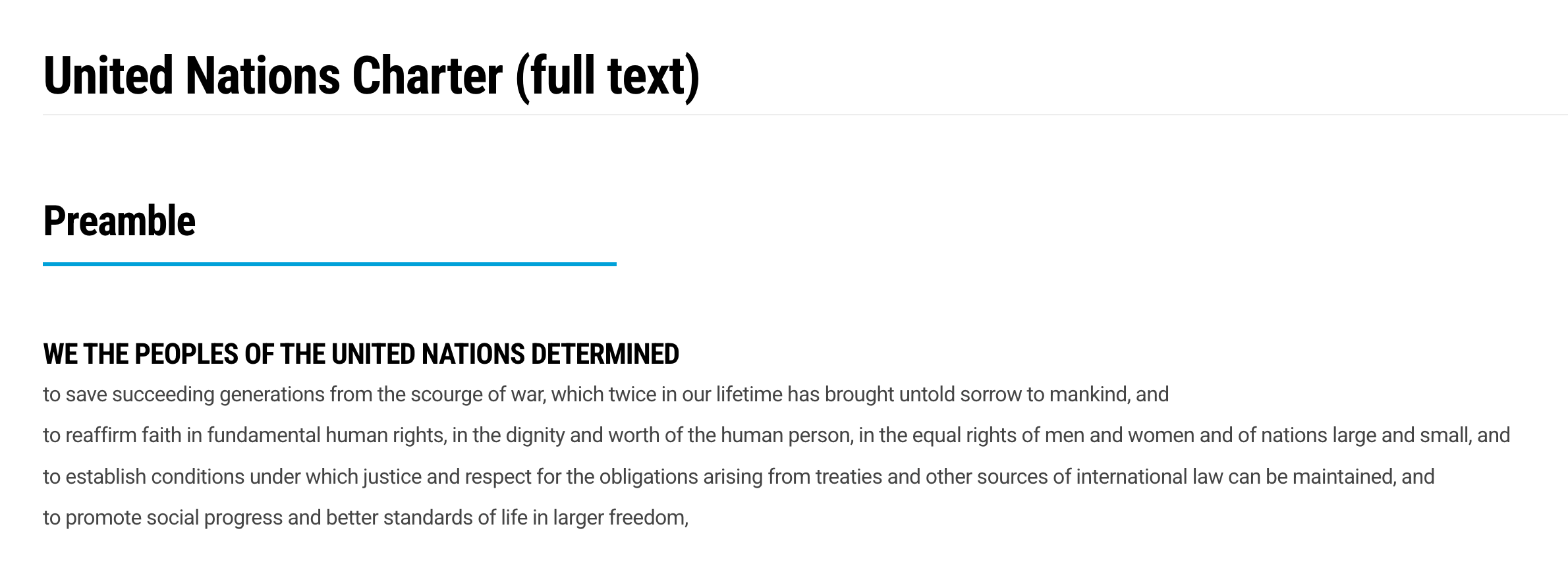
The UN Charter prohibits
the threat or use of force against the territorial integrity or political
independence of any state in Article 2(4), which reads, “All Members shall
refrain in their international relations from the threat or use of force
against the territorial integrity or political independence of any state, or in
any other manner inconsistent with the Purposes of the United Nations.”
Launching attacks, like the U.S. strike on Iran, is generally illegal. There
are exceptions for self-defense against an armed attack (Article 51) or an
attack authorized by the Security Council, but neither of those is in play
here.
Treaties ratified by the U.S. Senate, like the UN Charter,
have the status of federal laws under Article VI, Section 3 of the
Constitution, which reads, “This Constitution, and the Laws of the United
States which shall be made in Pursuance thereof; and all Treaties made, or
which shall be made, under the Authority of the United States, shall be the
supreme Law of the Land.” (emphasis added). Upholding them is part of a
president’s duties and the oath of office he takes under the “take care” clause
of the Constitution.
If you want to read about this in more detail, there
is an
excellent explainer from Just Security at NYU Law in the context of
Venezuela. (Full disclosure: I’m a member of the Board of Editors at Just
Security.)
Tess Bridgman, President Obama’s Deputy Legal Advisor on the
National Security Council, with whom we discussed war
powers in January, posted
this on Bluesky:
“To: House and Senate Foreign Relations, Armed Services, and
Judiciary Committees:
Time to stand up for Art. I of our Constitution and the
representatives of the people deciding when to go to war, not the whims of one
man in the White House (or Mar-a-Lago).”
Tess and her co-author Brian Egan have a backgrounder here.
Senate Minority Leader Chuck Schumer called for Congress to
return to Washington immediately, so it could vote on a War Powers Resolution.
But whether Republicans will agree to impose a legislative check on military
action isn’t at all clear. While the strikes on Iran are very likely illegal
under both U.S. and international law, the regime itself is very unpopular, and
politicians may be willing to cast aside the law in hopes of regime change
(although many experts have
assessed success in that regard as unlikely). Schumer tweeted:
“The administration has not provided Congress and the
American people with critical details about the scope and immediacy of the
threat. Confronting Iran’s malign regional activities, nuclear ambitions, and
harsh oppression of the Iranian people demands American strength, resolve,
regional coordination, and strategic clarity. Unfortunately, President Trump’s
fitful cycles of lashing out and risking wider conflict are not a viable
strategy.
The administration must brief Congress, including an immediate all senators
classified briefing and in public testimony, to answer these vital questions.
The Senate should quickly return to session and reassert its constitutional
duty by passing our resolution to enforce the War Powers Act.”
So, legally, the administration is on thin ice under both
U.S. law and international law. But many people will be pleased to see a
ruthless dictator, one who gruesomely killed tens of thousands of his own
people, done in. They may be willing to ignore legal niceties to get there.
That sort of rationale underscores the importance of holding
fast to the rule of law and insisting that the Trump administration comply with
it. Today, people may try to justify ignoring the law because they think it
will lead to regime change. They may claim that it will benefit the Iranian
people, as well as our own country. The law could be ignored.
But who gets to decide when the end justifies the
extra-legal means and when it’s acceptable to ignore a law that stands in the
way of certain actions? Is it you? Me? Donald Trump? Stephen Miller? You can
readily see the problem with abandoning it.
Laws provide us with fairness and stability. They prevent
arbitrary exercises of power and protect rights. They ensure justice. When you
get right down to it, they prevent chaos. And the rule of law is preferable to
the rule of dictators.
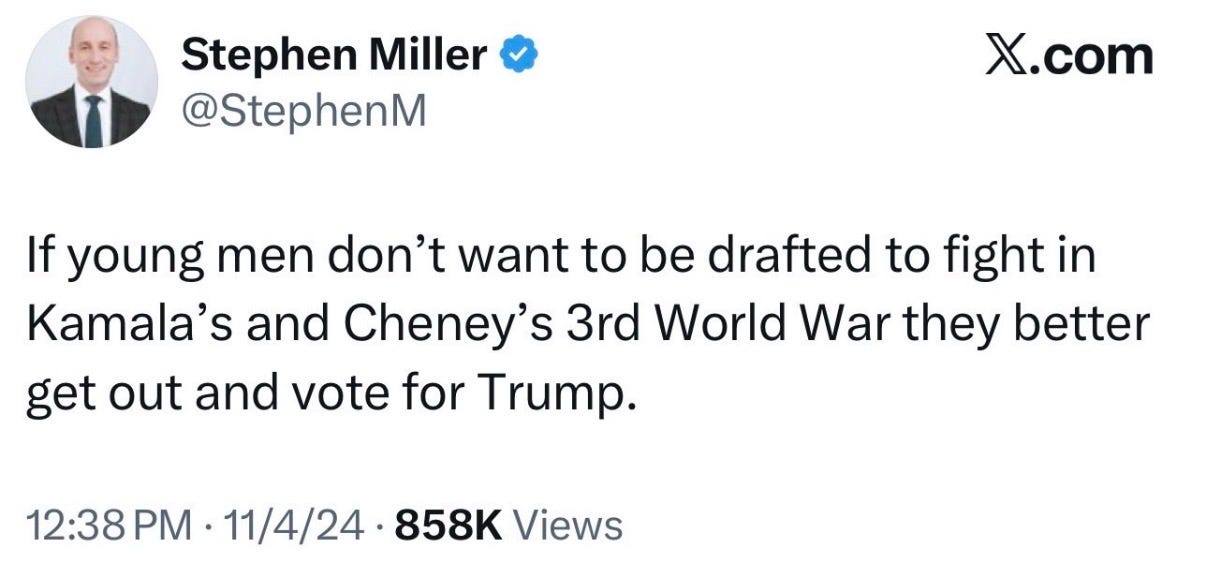
Like this guy, and the people who shamelessly lied to
Americans during the campaign—and continue to do so.
As we evaluate what happens in the days ahead, we need to
insist that the administration do this the right way. Senator Schumer is on the
right track. Congress has to follow through.
Tonight’s piece isn’t about the hot take of the hour. It’s
about the guardrails. We’re talking about first principles — why the rule of
law exists, why it restrains all of us (especially the powerful), and why
“doing whatever feels good in the moment” has never been a substitute for
constitutional order. These aren’t abstract debates. They determine whether we
live in a country governed by laws or by impulse.
If you value clear-eyed analysis instead of outrage, and
memory over amnesia, this is the work your subscription makes possible. Paid
subscribers make it possible for me to connect the dots, and explain not just
what is happening — but why it matters in the long arc of our legal tradition.
If that kind of thinking matters to you, become a paid
subscriber tonight, so that this kind of serious, principled analysis has a
place to live and grow.
We’re in this together,
Joyce
