Tuesday, March 12, 2013

It’s a brave new material world


It’s a brave new material world

by Marci Jacobs
March 12, 2013


REPO 4
Courtesy of the Rebuilding Exchange

Product designer Casey Burkitt teaches workshop students how to build a mirror out of repurposed materials.


If you ever visit Tribeca Flashpoint Academy, best to watch out for sharks. Or lions or Jabberwockies or former mayors.

The college is home to a menagerie of three-dimensional models of prehistoric proportions.

From a distance, they have every quality of fine sculpture and design. But inch your way in and you will see they are constructed of the most humble of resources: the hammerhead is made of recycled plastic paneling, the lion an assemblage of repurposed Nike shoe boxes and the Jabberwocky a pastiche of magazine scraps. The pigment-perfect replica of former Mayor Richard M. Daley is a vast, digitized grid of crude, plastic-capped pushpins.


And people other than artists are catching on to the brave new world of waste-reduction.

As society awakens to the dire realities of climate change and resource depletion, a junkyard renaissance of sorts is blooming, fertilized by abandoned objects and reusable industrial materials. A number of Chicago-area businesses are looking at unorthodox and castaway materials as the building blocks of a more sustainable future.

Local architects are among the chief pioneers.

“The trend runs from straightforward reuse in construction to basically taking constructed things and reusing them in novel ways,” said Andrew Wolfram, global leader of preservation and reuse at architecture firm Perkins+Will, a partner in the adaptation of Chicago’s Fulton Market Cold Storage into an office complex.

Architects and builders are, quite literally, digging deep to satisfy increasing client demands for repurposed materials.

“In the past they’d knock a building down and just bury it,” Wolfram said, explaining that a treasure trove of discarded artifacts lies just below the earth’s surface, in many cases possessing greater value than their freshly manufactured equivalents.

For example, much of the wood interred in the earth’s crust is at least 80 years old and of significantly higher quality than the modern tree-farm type. “You just can’t find that quality of wood anymore,” Wolfram said.

Builders are similarly scavenging today’s teardowns for reusable pieces such as doors, cabinets, beams and flooring. Their motivations tend to be both environmental and aesthetic – and not necessarily economic.

“Most of the stuff I’m seeing is just the same price and that’s because people are wanting it, it’s in limited supply and it’s becoming trendy,” said Sean Moran, owner of NewGrange Development, a construction company focused on sustainable design. “It’s just as high quality as buying it new, but it has a vintage look to it. So there’s value in those old building materials that would otherwise be thrown out.”

But a discount market for salvaged materials also exists. The Rebuilding Exchange, a Chicago-area non-profit that warehouses building remnants intercepted before hitting the landfill, sees substantial traffic from contractors in the market for marked-down, second-hand wood slabs.

“People are starting to realize that there are advantages all around for reclaiming material,” said Rebuilding Exchange manager Heather White. “We have a lot of contractors come in and restaurants right now looking for things. If you look at some of the things in our warehouse, if you went somewhere else to buy it, some other big place to buy, say, a door, we’d be half that price.”

The exchange accepts everything from salvaged bowling lanes to barn siding. What it doesn’t sell it uses in its workshop series, which include woodworking, metalworking and do-it-yourself home improvement. For Valentine’s Day the exchange hosted a “Couples Wood & Wine Coat Rack Make It/Take It” class.

“People just don’t know how to repurpose it,” White said about the raw materials collected at the warehouse. “So we try to help them think of creative ways to use it.”

And repurposing has practical advantages beyond construction and design. Take the livestock backscratcher manufactured by Repurchased Materials, a Denver-based company that sells farm and ranch products made of reclaimed materials throughout the country that has a substantial number of contracts in the Chicago area. The back-scratching tool is made from discarded street sweeper brushes and sells for $125. It has been such a sensation nationwide that the Bronx Zoo recently bought two for its rhinoceros pit.

“We were just at a farm show and it had a back scratcher with an electric motor on it and it was $2,800,” said owner Damon Carson.

While a large degree of repurposing occurs in the high-end home construction industry, a growing market also exists for economical repurposed materials, Carson explains.

“Our largest customer base is farmers and ranchers,” he explained. “And we say this a lot: ‘Does repurposing make more sense environmentally or economically?’ And the truth is it’s both.”

Carson states his company’s mission simply as “creative re-use,” and argues that repurposing “is not recycling that has gotten all the buzz since the 1970s. We deal with byproducts and waste that get a second life because they have value ‘as is.’”

What salvaged materials also have is a past.

“When we tell people that it’s made from recycled products and where it comes from, it’s like ‘Oh, wow, that’s interesting,’” said Clare Leavitt, store manager at Chicago-based Ten Thousand Villages, which partners with artisans in developing countries to support sustainable economic development. “It’s fun looking at the customer’s face when we say this is made out of this.”

Ten Thousand Villages’ products derive from a universe of reclaimed materials, from furniture made of lava-soaked wood to sculptures made from Colombian orange peels to jewelry made from land mines.

“From the wars in Cambodia, there’s non-exploding bombs and bomb casings from explosions,” Leavitt said. “A group called HALO Trust goes through and demines the fields, and then our artisan group purchases the casings and makes these necklaces.”

The necklace is called “the tree of life,” and certainly is a new way of looking at a killing device.

Art gallery owner Carl Hammer explains that while the impulse to repurpose unconventional materials runs deep in our artistic history, there is greater concern for reclaiming things nowadays.

“I think it makes the artwork a lot more thoughtful in that respect,” Hammer said. “The artwork has had another life. It becomes like a monument to the material itself.”

Warehouse staff members at the Rebuilding Exchange likely agree--many of them were hired by the exchange after serving prison sentences.

In training to work with salvaged goods, “As I was told, nothing should be thrown away, because it always could be reused,” said Stanley Branch, a warehouse associate at the exchange whose skills might have gone wasted if he, too, were not given the opportunity to reinvent himself.

TFA CEO HOWARD TULLMAN INC BLOG POST ON SOCIAL MEDIA


READ THE WHOLE POST HERE: http://www.inc.com/howard-tullman/the-trouble-with-social-media.html

YOU ARE WHAT YOU ARE INTERESTED IN


 YOU ARE WHAT YOU ARE INTERESTED IN

                When Facebook bought Karma (one of the leading gift sites) at the end of 2012, it was pretty clear that we were going to see a second iteration of Facebook Gifts - especially as the holiday shopping season started to heat up. Socially-informed commerce in various forms and shapes has been around for quite a while, but we’re at another major inflection point now because of the impact of hyper-personalization and the far more precise and cost-effective targeting which is now available.

   Keep in mind that it’s a long-established principle that, if you give a consumer too many choices, they are far more likely to buy nothing than if you give them a limited and more relevant decision set. New young companies like Chicago-based Local Offer Network are jumping into this particular space as well with tools that deliver the “exactly right” offers to consumers visiting a site even the first time that the visitor appears. I call this “smart reach” and Facebook will be all over it – especially with Facebook Exchange.

                Given the tools and resources that Facebook increasingly has at its disposal, they can now make the gift selection and giving process far more successful for the donor and also make the recipient far more likely to be happy with the gift. Remember that the excellence of a gift lies in its appropriateness, not simply in its value.  And there are other important ancillary benefits as well. One of the reasons people get divorced is that they run out of gift ideas.  Ergo – better gifts – less divorces.
                So there's no question that this latest foray into "f-commerce" is going to be a big focus for the Facebook team along with a couple of other "interest graph-driven" initiatives like Facebook “Collections” which is their initial salvo in response to the explosive growth of  Pinterest.  If you want to get some idea of how interesting and accurate gift giving becomes when it's informed by detailed data about the interests and preferences and buying history of the friends and peers for whom you're trying to select a present, take a look at shopycat.com which is actually a product created by Wal-Mart Labs - but very cool nonetheless.
    If you are more of a metrics person, here are some numbers to keep in mind – when a “friend” refers and/or recommends that someone they know take an action on the web – the impact (as compared to a simple ad solicitation) is major:  recipients are 15% more likely to download something; 8% more likely to buy something; and – most importantly – when they do buy, the average order size is 22% larger.  That’s a lotta lift.
               What's less obvious about the new gift-giving initiatives (the Lightbank/Groupon gang also invested in Boomerang in 2012 which is another gift site) is that, from Facebook's perspective, the dollars generated from gift purchases may be nowhere near as valuable in the long run to their enterprise as the purchase decision data which will be made available through these transactions as well as the implicit and explicit “connections” which each and every gift transaction will establish between their members. You can just imagine the opportunities for follow-on sales and service and the cross-marketing possibilities that each gift will create.
    As I like to say, “personal data is the oil of the digital age” and Facebook increasingly owns the primary pump.  And because birds of a feather flock together, other analytical tools will help correlate purchases with the buyer’s presence in defined communities and other likely behavioral groups.  Data, data and more data with virtually no acquisition cost and high degrees of precision and accuracy.
                So the real “news” about Facebook Gifts is that we’re continuing to see more and more indications of the next major seismic shift from the relatively simple social graph to the deeper interest graph. Because we (and Facebook in particular) have pretty much cracked the code on personal data and demographics (empowered in real-time by high-velocity computing), the next hurdle is pretty clear: “tell me what you’re interested in and what you pay attention to and I will tell you who you are”.  And basically, if you’re not where your targets and customers are and a relevant part of their world, you’re nowhere. This is really where both Instagram, Aviary and Pinterest loom large.
   As we see better and better tools to interpret and identify (and categorize) visual materials (photos and other images with videos to follow in the near future), we will see more and more emphasis on and influence of the players who are successfully aggregating these huge treasure troves of visual information. After all, a picture’s worth about a million words these days if it’s the right picture.
               And speaking about the future and gifts reminds me that the future isn’t a gift, it’s an achievement that we work for and earn every day.  Hard work is what makes our dreams come true.
                   But Facebook really is like a powerful steamroller and it rarely stops changing the rules of the game - and thereby - the world that we all live in today.  The addition of Facebook Graph Search is really another major brick in the wall. But it’s really a double-edged sword that will take some serious getting used to.
   I’ve been worried for a while about the filter bubble and how narrow the search process was becoming as it increasingly morphed from a window on new worlds to a mirror reflecting back to us basically what we and our friends already know. Our peers are important, but how would you learn anything new if search was simply an endless loop?
                    I was also concerned about the death of serendipitous discovery which is the sheer joy we feel at a bookstore (remember those?) or a flea market (remember those?) when we come across something new and amazing and totally unexpected and it just makes our day. You didn’t even know you were looking for something, but you loved it when you found it. And, of course, in search terms, you could never have constructed a query to find something you weren’t seeking.
  That’s why I’m excited about Graph Search and why it will actually enable and enhance a lot of businesses (besides Facebook’s) which could include yours once you understand some of the basics beneath the buzz.
  First and foremost, GS is a return to the earliest days and, in fact, to the origin of Facebook. Think about it (even if you’ve only seen the movie) – it was about finding pictures of the hottest women on campus. And, clearly, it wasn’t about women you knew (search); it was about women you wanted (desperately) to know (discovery).
 GS takes the blinders and the filters off of the painstaking process of conscious search (does anyone really want to check out all of your friends’ profiles one at a time?) and opens up a huge amount of additional social and personal and interest material that was always there, but which is now readily accessible. Broad content queries constrained by the limiters and filters of your friends is an elegant way to get right to the heart of the interest graph.
Two simple examples – how much better would a Groupon deal do if in 10 seconds I could ask Facebook which of my friends were already participating in the deal? Or have Ticketmaster’s concert seating charts (enabled by Facebook integration) show me which of my friends already have tickets to the show and where they are sitting?

So, as you start to think about how to position your business and your product and service offerings in new ways to make them discoverable and sharable thru the new power of Graph Search, keep in mind the following three aspects of GS:
(1)   Aggregation – GS does the heavy lifting for you and assembles the data and results of your friends’ likes, preferences and interests across whatever cuts and selections you care to make and permits you to interactively build on your questions and broaden or narrow them on the fly. Single friends with MBAs who are living in San Francisco and working in the entertainment business? You got it in a flash.

(2)    Filters – Instead of limiting your queries or your results in the background in ways that were never really clear, filters now take on a new ability to help you frame your selections, criteria and choices in ways that avoid overwhelming and unwieldy results and permit you to dictate limits of scope, time, location, images, etc.  Friends who loved Inglourious Basterds and are actually up for going to see Django with me?  Try that on Google.

(3)   Engagement - For now, and this may change, assets like photos are “valued” and ranked and displayed in engagement order which – in Facebook terms – means that the more likes and comments a particular photo has, the more likely it will be to be surfaced. The reason I think that this criteria is in flux is that it’s highly likely that the volume of activity around a photo may be exactly why it’s the least likely photo that the person shown in the photo wants circulated.

 We’re headed into the next big burst of Facebook-enabled commerce (f-commerce) and increasingly millions of customers are going to be living within this Facebook economy and nowhere else. If you doubt that, just check out how many times the Facebook team during the launch events repeated the idea that “you never have to leave Facebook” to do anything that you want to do.
 Each of these components of the new GS engine will change many of the ground rules for how (and whether) new and small businesses will be able to make themselves heard and get their messages out to their prospective customers in the clutter and the crowd. It’s not going to be easier, but it will definitely be more interesting.
 Here’s one last word of advice.  One of the great internal mantras of Facebook regarding the creation of all social web content is: what will make them care? and what will make them share? As you bring your products and services to market, keep these two questions top of mind.


Monday, March 11, 2013

SOOPER ARTICLES SITE REPUBLISHES TFA CEO HOWARD TULLMAN CUSTOMER ARTICLE


Howard A. Tullman (CEO of Tribeca Flashpoint Media Arts Academy) purports a strategy he labeled as "knocking on old doors". He believes an organization can improve customer satisfaction and retention by focusing on existing clientele. Companies often spend a lot of money and energy to understand why customers have left them. Tullman believes in "closing the backdoor". Through this process, an organization gives utmost attention to current customers and let go those who turned their back on them. After all, defected customers only account for only a few percentage points of total revenue. He advised companies to anticipate, meet and exceed customers' needs and expectations. Support chat software, a web-based tool, is in line with his beliefs.

Proactively engaging with remaining customers is more profitable to organizations than chasing the few who left. By intercepting customers at the right time, happy customers will respond by increasing the base profit, increased purchasing, reducing operational costs, paying a price premium on selected items, and giving more referrals. In order to increase satisfaction and retention, organizations should identify their customers' position on the cycle of consumption. The cycle of consumption has three components: purchase, ownership, and repurchase. Tullman believes all customers go through this cycle. By learning at what stage a customer is at, you can then discover when and how to offer them something which will fulfill their needs.
An online retailer can learn how to preempt a customer at the right time by integrating support chat software. This is an online CRM that e-commerce websites across a range of industries have integrated. Live support software generally works by connecting company chat representatives to browsers in real-time. Chat operators provide sales, after-sales support and customer service. They make use of the tracking element which helps them to identify where a customer is upon the cycle of consumption. By monitoring the referral URL, duration upon a web page and keyword searches, an operator can anticipate what a customer is interested in. Through measuring these online activities, an operator can proactively engage customers by referring the product which will fulfill their need.

Tullman believes other ways to make customers happy is to give them great service, listen carefully, and give continual customer maintenance. Live support software is a one-stop solution and accomplishes organizational goals such as customer satisfaction and retention. This web-based solution fulfills all components of his strategy. Operators use the engagement opportunity to discuss with customers all of their website and product concerns. They are thoroughly trained to resolve all problems in real-time. They also fulfill customer maintenance by asking for live feed-back. All of these efforts help an online organization convert their existing customers into satisfied and profitable ones.

TRIBECA FLASHPOINT ACADEMY CEO HOWARD TULLMAN ARTICLE REPUBLISHED IN MICAELA REVIEW


NEW VIDEO ON TRIBECA FLASHPOINT ACADEMY FEATURING DR. ERNESTO SIROLLI

Saturday, March 09, 2013

The Educational Importance of Storytelling


The Educational Importance of Storytelling

Howard A.Tullman


Posted 03/08/2013 12:53PM

Storytelling is the way we teach and the way we learn. We’re Bennett Day School – a new, independent, progressive grade school opening soon in Chicago - and this is our story.
The stories we tell others help us to share our knowledge, experience and wisdom. The stories we tell ourselves give us faith, courage and inspiration. But the stories we tell our children are the most crucial of all because, in a moment, they can heighten a child’s horizons or crush their creativity. We trust our children’s teachers to tell them many of the earliest and most critical tales.
We know there’s no cure for curiosity. But preserving and promoting a child’s desire for learning and encouraging their aspirations are more delicate and challenging tasks. bookTeaching a child is no longer about filling an empty vessel with facts and figures – it’s about lighting a lifelong fire and igniting an accompanying passion for continued growth and discovery.
We can’t hope in these complex and rapidly changing times to prepare the path for our students; but we can help to prepare our students for the path. We cultivate and embrace an innovative culture of curiosity and constant change where our students co-create, construct and, in the process, discover their educations. And this we do with their parents as pivotal partners and classroom participants providing a constant and engaged presence facilitated by open and active communication.
We believe that the most instructive stories are those we create ourselves. Stories are vehicles through which we ask questions and seek answers and understanding. In telling our stories, we define and describe our real selves. At Bennett Day School, we want our students to be great storytellers because the process of creating, constructing and conveying even the simplest tale takes time, tools and tenacity - the foremost foundational skills for their future.
Time is a crucial tenet of our program. Just like our students, great stories take time to reveal themselves; time to be assembled; to mature and ripen; and to be carefully and convincingly told. Stories, and students, need the time to breath, absorb and blossom and to slowly come into their own. And, as they progress, students need to learn to manage their time and to move at their own pace because each of us learns in different ways. One size or one approach never fits all.
Tools are also an essential part of our process. Physical tools and exceptional digital technologies are a part of our plans, but the primary skills we seek to build and develop in our students are – at their most basic – curatorial in nature. Because telling a compelling story is as much about what’s left out as about what is told. And because life is all about intelligent and conscious choices. Making informed choices is a cerebral muscle function and the sooner and more often our children start making difficult choices, the stronger and smarter those choices become.
We want our students to be great builders and editors; to appreciate the value of planning, structure and organization; to aggressively control and curate their lives and their experiences; to focus their attention and their energies on a few important concerns; to learn to be flexible, but also to say “no”; and to appreciate that nothing of value is gained in trying to be all things to all people.  
Good judgment is another powerful tool which is only developed through repeated exercise – not by substituting memorized rules. Our program is based on expressed and shared expectations of performance and not on rote rules of behavior. In taking control of their education and extending it through the choices and decisions they make, our students rapidly mature and become responsible and accountable.  
And finally, tenacity.  There’s always a way to do things with care and intent. Work at Bennett Day School is detailed and considered and always done with an expectation of excellence. We don’t “try.” We do. And we keep at it regardless of the time it takes because, if you want to do something well, you’ll find the time and, if you don’t, you’ll find an excuse. Projects are either exceptional or they are incomplete.  
Space and place are also central to our story. “Stories” need not only be traditional narratives. They can be joint enterprises, powerful experiences, heroic or modest adventures, and projects of all sizes and shapes. But they all need a center where ultimate understanding is made concrete and achieved through inquiry-based processes and the hands-on application of hard-earned knowledge. Where the classroom meets the real world and creativity, curiosity and focused inquiry collide in the exciting chaos of construction.
At BDS, we call this place of work and wonder the Tinker Lab.  It’s a place to explore and experiment and to apply concepts and ideas drawn from the classroom in ways that make them real and provide both understanding and mastery. It’s a hub of project and team-based collaborative learning between teachers, students, and parents. And, it draws upon and seamlessly incorporates the community’s resources and related elements of the environment as additional and critical components in the program.
We want our students to be active learners in and from their community and to be informed global citizens as well. We want them to be conscious and caring stewards of the environment and responsible consumers of our precious resources. But, more than anything else, we want our students to be leaders and to serve as examples for those around them – young and old.
This isn’t an easy goal or a simple undertaking. It’s just the only approach that makes any sense to us. And it’s the way we want our own children educated. What higher standard could there be?

Thursday, March 07, 2013

MICHAEL CERA'S NEW FILM "MAGIC MAGIC" PREMIERES AT SUNDANCE 2013 MIDNIGHT SERIES


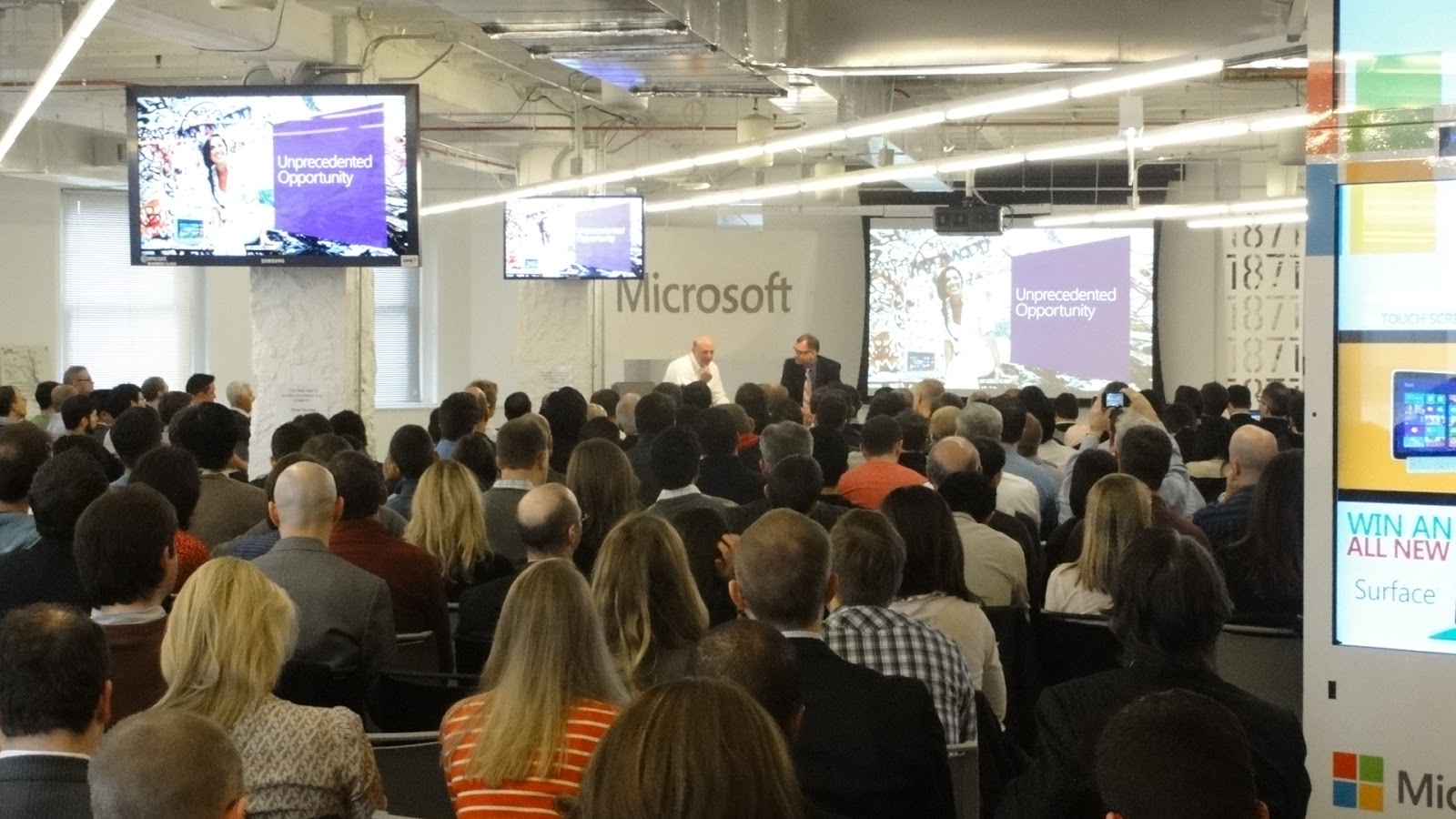
MICROSOFT CEO STEVE BALLMER AND MAYOR EMANUEL AT 1871 - TFA CEO HOWARD TULLMAN MEETING


HOWARD TULLMAN AND KEVIN WILLER


JB PRITZKER


MAYOR RAHM EMANUEL


STEVE BALLMER - MICROSOFT CEO


Despite snow, Microsoft CEO plows ahead to Chicago


 - Steve Ballmer
Steve Ballmer
This story has been updated to include Mr. Ballmer's other Chicago meeting.

The Economic Club canceled its dinner event featuring Microsoft Corp. CEO Steve Ballmer.

“It is with great disappointment that we must postpone Tuesday night's dinner meeting,” club President Donna Zarcone said in a letter to members. “We do not want anyone to risk traveling to and from this event in severe winter weather conditions.”

Mr. Ballmer apparently didn't get the memo.

He made it through the blizzard safe and sound — he's a hardy Midwesterner, having grown up in Detroit. He now lives in Washington state, where Microsoft is based.

Mr. Ballmer, who's been to Chicago before, arrived Tuesday evening and was up early for an event with Mayor Rahm Emanuel at 1871 to highlight the importance of entrepreneurship in Chicago.

After, he went back to Microsoft offices in Chicago and met privately with Tribeca Flashpoint Academy CEO Howard Tullman to talk about a new city-wide video project that would involve Chicago Public Schools.


HOWARD TULLMAN MEETING WITH STEVE BALLMER 


WATCH SOME OF BALLMER'S TALK AT 1871


Total Pageviews

GOOGLE ANALYTICS

Blog Archive