Saturday, September 06, 2025

Trump has turned the Oval Office into a Las Vegas marriage parlor.


Friday, September 05, 2025

How Many...


How Many Court Cases Can Trump Lose in a Single Week?

From tariffs and immigration to the National Guard, federal judges are rejecting Trump’s ridiculous cover stories.


By Susan B. Glasser

September 4, 2025


Is Donald Trump tired yet of all the losing? During the past week alone, federal judges across the country have rejected some of the most important and far-reaching of Trump’s initiatives—from his efforts to reshape the global economy with tariffs and mobilize the military to act as police in American cities to his refusal to spend billions of dollars in congressionally appropriated funds. The President continues to cite nonexistent emergencies to justify his executive overreach and judges continue to call him out on it, issuing stern rebukes in the tradition of Judge Beryl Howell, who, during a case this spring about the firings of civil servants, observed that “an American President is not a king—not even an ‘elected’ one.”

I’m not sure that this week’s epic losing streak has received the attention that it deserves, no doubt in part because America had other things to worry about, such as whether Trump was actually alive, despite all the internet rumors. It speaks to the present moment that the President is not only very much still with us but has already started fund-raising off the social-media frenzy surrounding his supposed death over Labor Day weekend. (“These rumors are just another desperate attack from the failing left who can’t stand that we’re WINNING and bigly!” the e-mail pitch that arrived in my inbox on Thursday morning said.) But what does it say about the state of things that disputing rumors of his death turns out to be a welcome distraction from underlying political realities for Trump?

In fact, the President enters the first fall of his second term in office with historically low approval ratings—the only President with worse marks at this point was Trump himself, in his first term—and a radically disruptive agenda whose fate has yet to be determined. I am well aware that this is not currently the dominant narrative about Trump 2.0, which, whether you like it or hate it, has generally been covered as a sweeping and surprisingly successful attack on pillars of the American establishment in and out of government. But, depending on how the next few months play out, it could be. And that’s the point: What’s clear from Trump’s first seven months back in power is that he has embarked on a breathtaking effort to reshape the American Presidency. What’s far from apparent yet is whether and to what extent he will succeed.

The latest string of defeats began last Friday, when the U.S. Court of Appeals for the Federal Circuit ruled that Trump’s so-called reciprocal tariffs imposing double-digit duties on key trading partners such as Canada, China, and the European Union were illegal. Over the holiday weekend, a federal district judge intervened to stop migrant children from being deported to Guatemala while some of them were already loaded on planes. On Tuesday, the U.S. Court of Appeals for the D.C. Circuit reinstated a Federal Trade Commissioner, saying that Trump did not have the power that he claimed to fire her. Also that day, another federal judge ruled that, in sending hundreds of National Guard personnel to Los Angeles amid protests of Trump’s immigration crackdown, the President had violated a nineteenth-century law prohibiting the use of troops for domestic law-enforcement purposes. On Wednesday, yet another judge, in Boston, rejected billions of dollars in cuts to research funding for Harvard University, part of a broad war on liberal academia that Trump has made an unlikely centerpiece of his second term. And late on Wednesday night, a federal judge in Washington blocked billions of dollars in Trump-ordered cuts to foreign aid, saying that he was usurping Congress’s power of the purse in refusing to spend the money. This, I should add, is an incomplete list. If nothing else, it shows the extraordinary scope and scale of the battles that Trump has chosen to pursue—suggesting not so much a strategic view of the Presidency as an everything-everywhere-all-at-once vision of unchecked Presidential power.

Important caveats apply, of course, most notably that all these rebuffs to Trump can and may well be overturned on appeal; September’s losing streak could soon enough become next spring’s winning streak, especially with a Trumpified Supreme Court, which, in the first few months after Trump’s return, failed to check many of Trump’s initial excesses, almost certainly emboldening him to push further and faster in applying his favored constitutional theory, what one might call the “I can do anything I want to do” doctrine. Already this week, Trump has appealed the tariff ruling to the Supreme Court, asking for an expedited review in a case that will test not only the legality of his favorite economic tool but his broad assertions of emergency authority to override constitutional constraints. In the foreign-aid case, U.S. District Judge Amir Ali made clear that his word would hardly be the last on the matter, anticipating “definitive higher court guidance” given the “immense legal and practical importance” surrounding the question of whether a President can simply decide to flout Congress’s appropriations bills.

There’s also the matter of the damage that Trump has already wrought, even if he were to ultimately lose some or even all of these cases—unspent aid that could have saved lives, families divided by harsh immigration policies, companies whose supply chains have been broken or disrupted by a single man’s peremptory demands. So let’s stipulate that winning by losing might be a fine outcome as far as Trump is concerned; when smashing stuff is the goal, the more that’s smashed, the better, whether the judges ultimately agree or not.

Still, I wouldn’t dismiss these rulings so quickly. For starters, they show that there remain pockets of robust opposition to Trump at a time when many are wondering what happened to America’s collective spine. This is a constraint on Trump in and of itself. Every adverse court ruling that he has to appeal takes time and effort and mental bandwidth. Trump himself, channelling his mentor Roy Cohn, has long understood that the courts are politics by other means. When he bemoaned the ruling against him in the tariffs case to reporters on Wednesday, he sounded not like an all-powerful winner convinced that he will prevail so much as an unhappy loser complaining that the appeals-court ruling, if upheld, “would destroy America.”

It’s been a great relief during these disruptive past few months to find that the federal judiciary harbors so many individual jurists who are willing to use plain English to skewer the lies and unmask the cover stories that have been used to justify Trump’s various power grabs. U.S. District Judge Charles Breyer, in his fifty-two-page ruling in the Los Angeles National Guard case, stated clearly that, despite Trump’s claims that he had to send in troops to “quell a rebellion . . . there was no rebellion.” He went on to warn that Trump’s plans were to create “a national police force with the President as its chief.” In the Harvard case, U.S. District Judge Allison Burroughs determined that the Trump Administration had engaged in “retaliation, unconstitutional conditions, and unconstitutional coercion.” She added that it was “difficult to conclude anything other than that Defendants used anti-semitism as a smokescreen for a targeted, ideologically motivated assault on this country’s premier universities.”

Their opinions might be overturned, but they are important nonetheless. On Thursday, using language similar to that in Breyer’s ruling, the District of Columbia filed suit against the Trump Administration for sending in the National Guard to fight crime in the capital, citing an emergency that the city says does not exist.

I know that the courts alone cannot save us from Trump’s would-be authoritarianism. If anything, I’ve long been struck by the faith that so many of the President’s critics have in the power of the judiciary to curb his excesses, when history is so clear about the power of a demagogue to bulldoze his way past even the most eloquent legal rulings. But I also know that America’s tradition of the rule of law is what makes it different from Vladimir Putin’s Russia or Xi Jinping’s China, where the law is whatever the boss says it is. John Roberts, thank you for your attention to this matter. ♦

FORRINERS


Trump's vindictiveness spares no American, including MAGA faithful

American voters, including Donald Trump’s most ardent supporters, are collateral damage in his war of attrition against his enemies and what he sees as injustices.

By  S. E. Cupp


  Sept 4, 2025, 6:00am CDT

A person holding a sign in front of a crowd

AI-generated content may be incorrect.

Hundreds march in the West Loop during “Workers Over Billionaires: A Labor Day of Action,” where activists, workers and politicians spoke against President Donald Trump and advocated for workers’ rights on Labor Day. Trump, columnist S.E. Cupp says, actively punishes Americans, including his own voters. 

Pat Nabong/Sun-Times

  •  

It had a slightly more noble sound to it in 2023, when then-former President Donald Trump made the lofty but creepy promise to a friendly MAGA crowd at the Conservative Political Action Conference.

“In 2016 I declared: I am your voice. Today, I add: I am your warrior. I am your justice. And for those who have been wronged and betrayed, I am your retribution.”

The idea that voters might send Trump to right significant injustices like inflation, inner-city crime and an out-of-control migrant crisis — the three issues that mattered most to them — was appealing to plenty of voters, more than enough to put him back in the White House.

But if that was the main course, there were other side “injustices” he sought to fix, too — diversity, equity and inclusion policies, wokeism on college campuses, trans men in girls’ sports — keyword issues meant to be an amuse-bouche for his base.

Then, there was dessert: avenging his personal injustices. He made it very clear while he was running that he was going to punish his political enemies for going after him. He’s carried out that promise doggedly since being reelected.

But what he didn’t tell American voters was that they’d often be collateral damage in his war of attrition against all these injustices and enemies, that they’d end up being targets, too.

But he’s not hiding it now.

This week, Trump announced he was moving the U.S. Space Force command from Colorado Springs, Colorado, to Huntsville, Alabama. Why? Not for any strategic advantage. Not because it’s more cost effective. Not to help the state of Alabama. But to punish the state of Colorado.

“The problem I have with Colorado — one of the big problems — they do mail-in voting. They went to all mail-in voting. So they have automatically crooked elections, and we can’t have that. So that played a big factor also.”

Importantly, Trump lost Colorado in all three elections but made sure to point out he won Alabama.

The move will cost Colorado Springs and its five military installations jobs and prestige, and even Colorado Republicans like Rep. Lauren Boebert have opposed it. But to carry on the ruse of Trump’s election fraud lies, Colorado voters — including in El Paso County, where Trump won in 2024 — must be the losers.

A little more than a week ago, it was Maryland in the crosshairs, when Trump threatened to cancel funding for the reconstruction of the Francis Scott Key Bridge, which was struck by a ship last year. Why? Because Gov. Wes Moore is refusing to deploy the National Guard to fight crime in cities like Baltimore.

Tens of thousands of vehicles crossed that bridge a day, and it’s a vital corridor for moving goods up the Eastern Seaboard. But no matter for Trump — they can all wait on their lousy bridge. He’s got a grudge to hold.

Earlier this year, he unimaginably threatened to withhold disaster relief to California after it suffered devastating wildfires unless the state enacted voter ID laws. So, once again, Californians struggling to rebuild their homes, schools and businesses were merely political pawns to him. Sickening.

It was more of the same after Hurricane Maria devastated Puerto Rico. After delaying more than $20 billion in congressionally approved aid, he faced allegations that he was deliberately punishing the territory over politics. Most of the aid didn’t reach Puerto Rico until the Biden administration released it in April 2021.

Whether it’s his tariffs, which are a tax on all American consumers, his threats to withhold disaster funding in cities that don’t comply with his crime edicts or his regular aggressions against LGBTQ Americans and minority groups, Trump is proactively punishing or threatening to punish wide swaths of American voters so he can score political points, soothe his overweening ego, or just make people uncomfortable.

It’s gross, and a huge abuse of power. It also makes him a small and sad figure who will be remembered most lastingly for his petty politics of personal grievances.

You have to wonder when his voters will wake up and realize they’ve been bamboozled, used and abused. He’s taken their hard-earned money to line his pockets, under the guise of “stopping the steal” and fighting nonexistent election fraud. He’s lied to them repeatedly, sending many of them into harm’s way on Jan. 6. He fed them bogus conspiracy theories that helped him get elected and now insists they’re a hoax. His One Big Beautiful Bill will cut up to $1 trillion in Medicaid, decrease funding for rural hospitals and take health insurance away from millions of his own voters.

His loyalty has always been one-way and conditional. But now he’s actively punishing Americans, including his own voters. Will they ever tire of being targets and pawns?


Tuesday, September 02, 2025

HOWARD TULLMAN JOINS LISA DENT ON WGN RADIO TO DISCUSS HIS INC. MAGAZINE ARTICLE ON THE POST OFFICE

 LISTEN TO THE SHOW HERE


TULLMAN COLUMN IN LOOP NORTH NEWS


Loop North News
Serving the Loop and Near North neighborhoods of downtown Chicago
FacebookNextdoorXRSS
Howard Tullman
Adobe Stock
Four reasons Gen-Z employees are finally returning to the office
Business owners looking to attract, engage, and retain these critical workers need a hybrid plan in place and a comprehensive program to address all their needs, desires, and expectations.

Sep. 2, 2025 – A new Gallup report suggests that the work-from-home tide has decisively turned among younger employees, and the Gen Z newbies in particular are now the group of employees most interested in flocking back to the nest – at least on a hybrid basis.

It seems that the bloom is finally off the rose and the gig economy fantasy of working – occasionally in your PJs and according to your own schedule and timetable – has collided with many of the immutable facts of life concerning how the world and especially hierarchical and bureaucratic organizations actually operate.

I’ll detail these epiphanies and painful discoveries later because smart employers need to address them, but, as the pitiful saying among the now-disgraced and departed heads of some of our grandest academic institutions used to go: “the context matters.” And the story starts with COVID, which for about half the country’s workforce looked for a moment like this century’s great emancipation.

If you asked owners and managers about their entire COVID experience, many would tell you their biggest issue was they couldn’t get rid of their kids quickly enough by sending them back to their schools, which were closed. As a result, they had to deal with childcare issues that they had never imagined. Pets were much less of an issue since you could just bring them to the office, as long as you had an office to go to rather than a grocery store or a factory floor.

Adobe Stock

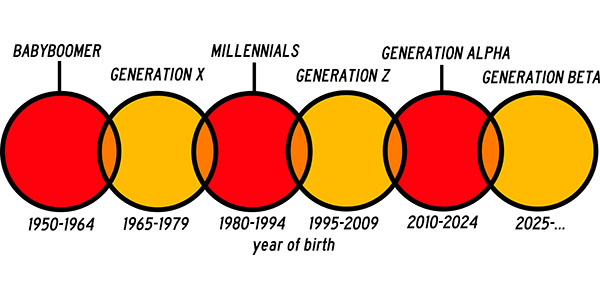
This is why the Gallup survey showed a rock-solid 35 percent of Boomers, Gen Xers, and Millennials who were perfectly happy to continue working exclusively at home. They had their homes, their positions and perks were secure, they didn’t feel like they had a lot that was new to learn, they were totally invested in preserving and protecting the status quo, and frankly, they really didn’t want to deal with all the noise, angst, confusion, and anger that’s a growing part of the new normal in the workplace.

On the other hand, less than 25 percent of those born after 1997, which is to say the bulk of the workforce of the future, were interested in remote employment and permanent WFH. The overwhelming majority of Gen Zers – more than 70 percent – said that a hybrid solution was the only way to go. They also clearly said that they don’t want to return to the office full time. In fact, between 4 and 10 percent of all the cohorts surveyed said that they had no interest in ever returning to the office on a full-time basis and working on-site again.

So, it’s abundantly clear that new business leaders – along with any entrepreneur or business owner looking to attract, engage, and retain these critical workers and their inchoate talents – need to have a hybrid plan in place and a comprehensive program to address all of the needs, desires, and expectations of the new wave of workers as they return to the office.

Of course, planning in a vacuum without clearly understanding what these folks are looking for is like winking at your date in the dark. You know what you’re doing, but no one else does. You can plan all the plans you like, but you can’t plan results without the appropriate inputs and data.

Here are the four most repeatedly expressed concerns that are driving the Gen Zers back to the office. Your plan, approach, and strategies should address as many of these issues as possible. In addition, regularly acknowledging these issues and reinforcing the newbies’ belief that they are critically important matters is crucial to your success in demonstrating to these team members that you’re listening, that they’re being heard, and that you’re taking action to address each of these areas.

1 There’s no one at home to learn from. There’s no watercooler.

It turns out that you can’t learn everything from books, manuals, or YouTube. You learn a great deal by doing, but the real key to stepping up your game is by watching, listening to, and learning from older, smarter, and more experienced players in your company.

Examples, war stories, tried and true solutions to recurring problems, and even just gossip around the watercooler or the Keurig machine are all essential tools and channels to gather additional knowledge, “tricks of the trade,” and important cautions and instructions on how and when to deal with certain others in the firm or tough customers out in the wild.

Needless to say, you get next to none of this at home sitting in front of your monitor. It’s long been known that far more communication and intelligence is passed between peers before and after meetings (or Zoom sessions) than when the meeting is going on and the whole world is listening and watching what’s being said. You’ve got to be there to be part of the informal conversations, which is where the real action always is.

2 There’s no one at home to share the ups or the downs with.

Entrepreneurs learn early on that it’s not smart, helpful, or productive to bring your problems home from work. Sharing the pain and the bumps in the road just multiplies the people with bad stomachs and sleepless nights. And frankly, new business builders also learn that bragging about the wins doesn’t buy you much goodwill at home either. Doubling the sales at Smart Mart doesn’t really matter to a spouse stuck at home with a sick kid while you’re locked in the basement on a customer call.

Adobe Stock

It’s your peers and buddies at the office – the other soldiers in the struggles – who can really understand and appreciate what you’re going through and what you’ve accomplished as well as the sacrifices that those things have entailed and required.

Company, community, and camaraderie are a far more important emotional component of our work that we don’t appreciate and value enough until we’re without these things.

3 No one’s a hero at home. Out of sight is out of mind.

Not surprisingly, feats of remarkable salesmanship, clever coding solutions, and great marketing ploys aren’t really understood or appreciated at home by your spouse and kids. You just don’t get the strokes. They’re civilians, not sophisticates, supplicants, or soldiers. There’s no one at home who sees how hard you’re working or frankly always understands why it matters.

And, even more importantly, absence these days doesn’t make the heart grow fonder, it makes you forgettable and invisible to the guys in charge, the ones handing out new projects and assignments, and those making promotions. It’s dawning on people sitting on the sidelines that the bus is passing them by.

4 There’s no one at home to keep you on task. Too easy to lose focus.

Chores, calls, errands, and kids are all flow busters and make it far too easy to get distracted, interrupted, and pulled away from getting the work finished that needs to get done in a timely and professional fashion. It’s no longer cute to have your kids or your cat busting into your conference calls. It’s a reminder to others – like it or not and accurate or not – that you’re not fully engaged, totally focused, and a serious player anymore. It’s also too darn easy to take a break, spend an hour online doom scrolling, watch a zillion videos on YouTube, catch a ball game, or just kick back and take a crack at your favorite video game.

Needless to say – productivity problems aside – none of this is a good look for those looking to get ahead.

Boston Consulting Group released a report a little while ago that 75 percent of employees working at home were just as or more productive than they were in the office. I’d like some of what they’ve been smoking.

Adobe Stock

The bottom line is, the newbies are coming back because they’ve realized that it’s lonely at home, that you can’t do much of anything important all by yourself, that your friends and family aren’t a substitute for being an important part of the team at the office, and that, if they want to get ahead, they’ve got to be in the rooms where it happens.

Words of Wisdom: A 60-year compilationHoward Tullman is General Managing Partner for G2T3V, LLC – Investors in Disruptive Innovators, and for Chicago High Tech Investors, LLC. He is also the author of Words of Wisdom: A 60-year compilation.


NEW INC. MAGAZINE COLUMN FROM HOWARD TULLMAN


3 Ways to Empower Your Employees to Feel Engaged at Work

If your employees aren’t happy to be working for you, your customers will pick up on that in a flash.

EXPERT OPINION BY HOWARD TULLMAN, GENERAL MANAGING PARTNER, G2T3V AND CHICAGO HIGH TECH INVESTORS @HOWARDTULLMAN1

Sep 2, 2025


I live within five minutes of no less than three major post offices, and I visit all of them from time to time depending on whether I plan to park my car, how much time I can spare, and how horrible my last experience was at each location. I make these pilgrimages in part because you can no longer trust the few remaining greasy, graffiti-decorated mailboxes which are randomly located in generally inaccessible places throughout the city to be secure repositories of any mailed missive. Forget about snow, rain, heat, or gloom of night—these days you need to worry far more about stolen mailbox keys, thefts and washing of checks, and carrier stick-ups.  

To be clear, the few postal stations I still frequent are only the surviving remnants of a larger universe of possible choices because there are several of these archives of angst and anger that I have sworn to never enter again. I don’t know what I’ve ever done to offend these folks, but I know that they’ll be pissed to see me from the moment I arrive. I guess interrupting whatever it is they’re doing is just an impolite imposition. In some cases, as soon as they see me, they rush into the back room. This is, by the way, probably the fastest they will move for the entire day.

Suffice it to say that these forlorn places are a bridge too far for me even though I know that there’s no real threat that the omnipresent desperation, despair, and depression are contagious. I have decided that it’s just not worth the risk of subjecting myself and my psyche to the postal perils present in these dark dungeons where these poor people are condemned to spend their days.  

For some reason, however, my mail man or woman—who does have to contend with the weather, dogs, crazy teens on scooters, and, of course, the occasional thief trying to steal money, keys, or the contents of his bag—is still dependably cheerful, talkative, and even occasionally helpful with misdelivered materials and other information. These folks still seem to enjoy their work, to go out of their way to connect with their customers, to be involved and curious about what’s going on around them, and to make it their business to be the best representatives possible for the USPS. They know it’s their job to make the best possible first impression. 

As much as that complete moron, Louis DeJoy, the former U.S. Postmaster General, tried everything in his power for five years before he was fired to slow or eliminate the mail service, to remove convenient mailboxes, to discard or decommission critical processing and sorting equipment, and to treat his workforce as drones and morons, the day-to-day delivery troops who get us our mail seem to have somehow escaped his best attempts to make their lives miserable. 

When you compare the onsite experience at the post office to the aptitude, atmosphere, and attentiveness you find at almost any UPS or FedEx store, it really is a world of difference. And these guys seem to have also figured out how to make their places well-lit, clean, and welcoming. But, at the end of each day, what really determines the customer’s experience is the person behind the counter. All the scripting and role playing in the world isn’t as important to the end results as one simple fact: Successful service is more about self-esteem than training. If your people feel good about themselves, it’s obvious and it’s contagious.  

And there’s a serious lesson here for every business with customer-facing front line folks. If your employees aren’t engaged, involved, and “happy” to be working for you, your customers will pick up on that in a flash. I’m not talking about the crappy employees who shouldn’t be there in the first place. And I understand that there’s a reason they call it “work” and not “fun” and that “happy” may be too high a bar.  But you still need to figure out how to make the work being done by everyone in your business—top to bottom—somehow important, valuable and meaningful to them as well as for you. Your customers will never be happier than your employees. A critical part of great leadership is the ability to get other people to do what they don’t want to do and like it.

There are a couple of important things to keep in mind as you try to make sure that you’re creating the most supportive, effective and empowering environment for your employees that is possible in whatever business you’re in. 

·         Sadly, from an early age at school, we learn to be bored by lazy teachers with low expectations and with unchallenging materials left over from the last century. This is not a natural condition and plenty of students survive and thrive by making their own way through the painful dream-snuffing process we call education. It’s not much better in many businesses and industries. Being bored is not an inevitable consequence of whatever job you may have. All work can be creative if it’s done by a thinking mind who works at it. My mailman makes it a challenge every day to see how many people on the block he can interact with and he actually keeps score.  

·         On the other hand, if you start out and settle for the idea that you’re a mindless drone just going through the motions and repeating a routine without any thought that you’ve learned from someone else, then I assure you that you’re going to get exactly what you deserve. My mailman says that – while a meter maid might hate herself for basically delivering pain every day – he knows that, in addition to the bills and flyers, he brings a lot of joy and pleasure to many of his customers. His work is meaningful and has value and that knowledge provides the kind of satisfaction that leads to exceptional performance. Rain or shine, he doesn’t quit for the day until every piece of mail he has is delivered and he’s appropriately proud of that fact. 

·         Finally, recognition and feedback from the firm and from the folks in the field is critical. If your employees think that no one is watching or cares about their performance, they’ll have very little interest or incentive to step up. If you tolerate poor performers; if you keep people around with crappy attitudes who’ve “quit”, but haven’t left, you drag down and demoralize your best performers; and if you don’t commit to challenge and help your people grow in whatever role they have or aspire to, they’ll be leaving for a better opportunity and a better boss.  

The best of the post offices I visit (and the only one where the staff actually knows who I am) has had a program for the last year where each member of the counter team offers everyone a chance to buy a book or sheet of whatever cool new stamps have come out that week. They even explain what the stamps mean if you ask. This requires heads-up, face-to-face conversation (imagine that) and even some eye contact and an occasional smile. It’s part of a competition and contest invented by the local office manager to see who can sell the most stamps each week. I think the winner gets to pick what kind of donuts the manager buys on the following Monday morning for the office. It’s not a huge thing, but it makes a world of difference.   

Total Pageviews

GOOGLE ANALYTICS

Blog Archive