

HINDSIGHT - WRITE SOMETHING WORTH READING ABOUT OR DO SOMETHING WORTH WRITING ABOUT
Wednesday, September 13, 2023


Tuesday, September 12, 2023

NEW INC. MAGAZINE COLUMN BY HOWARD TULLMAN

The Game is Won by People Who Absolutely Have to Get Things
Done.
Finishing. Whether it's
a crossword puzzle or a new product launch, the ability to commit to and finish
a task is a critical skill for startups. Here are four keys to
completion.
BY HOWARD
TULLMAN, GENERAL MANAGING PARTNER, G2T3V AND CHICAGO HIGH TECH
INVESTORS@HOWARDTULLMAN1
Not too long ago, I was
walking on a newly completed strip of asphalt, and I spotted a dime laying on
the ground. Old habits die hard, and I quickly stooped to pick it up and found
that the coin was stuck firmly in the black gook and wouldn't budge. I took out
my keys and tried to dig around the edges of the coin, but I clearly had the
wrong tools for the task. I thought for a moment that this was some prankster's
idea of a joke like the old wallet on a string ploy or Lucy whisking away the
football from Charlie Brown just before the kick, but sometimes tar is just
tar. In any case, I went home and, like any good entrepreneur, stewed on the
problem for a while, grabbed a screwdriver, mallet, and an awl from my
basement, and headed back to the scene of the crime. That dime is now mine.
You wouldn't be
surprised to learn that certain family members concluded that I was totally out
of my gord - but the only really important question is whether this undertaking
at that moment was the highest and best use of my time. Some version of this exact
question is what every new business builder and entrepreneur should be asking
themselves multiple times a day: "Is what I'm doing or about to do moving the
business forward and closer to our goals?" It's so very
easy these days to get distracted and lose your way and your direction. Time is
scarce, resources are limited, and, if your attention is scattered, your
chances of success are far less.
But that doesn't mean
that even the smallest undertaking can't be important and meaningful in the
long run. Finishing what you start is one great example.
It's not like I couldn't
spare 15 minutes in my day, but was rescuing this dime really something that
needed to be done? And please ignore the reality that, in the WFH world,
the spousal list of chores is infinite, inchoate, and always lurking - so there
are always other demands competing for your time. What's critical about the
decision to get the job done isn't its importance or size or even ultimate
monetary or other value. What's crucial is developing, strengthening, and
flexing from time to time the underlying behavior (or obsessiveness if you
prefer) that drives so many successful people. The need to get things done.
The most successful
people I know make sure that they try their best to finish whatever it is that
they started. Unfinished tasks, large or small, don't disappear; they linger,
fester, and suck away energy, focus, and enthusiasm. If you're lucky and work
at it, you develop a mantra, a style, and a lifelong habit - like a dog with a
bone that won't let things go. Everyone comes to appreciate that you don't settle, quit in the
middle, or do much of anything in a halfway or half-hearted manner. The
level of intensity with which you approach any and every challenge rarely
differs from one task or project to another unless you no longer care about
what you're doing.
And if you're very
fortunate, that drive and commitment will carry over into whatever it is that
you do for a living. Entrepreneurs especially know that in building a business
you can be proud of, there's never really a finish line. And don't think for a
moment that people don't notice or that it's not contagious. The strongest
leaders lead by example, and they sweat all the details - large and small
- to make sure the job gets done completely and done right.
We don't go home when the whistle blows; we leave when there's nothing left to
be done. We stop when we're finished.
Of course, we all know
that not everything works out perfectly -- or at all. It's always a race to see
how big you can get before you get bad. You need to learn how to let
things go because not everything can be fixed, finished, or saved. Knowing how to stop an ill-fated or fruitless venture and
how to do it fairly for all concerned is another critical skill set which takes
years to master. It makes life down the line a lot easier to set realistic
milestones and several checkpoints, benchmarks, and drop-dead dates before you
commit everyone to stick to the plan and the schedule.
But there are still some
things you can do to set yourself up for the highest probability of consistent
success and to help you avoid biting off more than anyone can chew. Here are
the four main cautions I try to always keep in mind.
(1) Look
carefully--really carefully-- before you leap.
It's great to be
enthusiastic and to say "Yes" to as many projects and tasks as
possible, but the "ready, fire, aim" approach is guaranteed to cause
you more heartache than happiness. Make sure you understand the scope and scale
of each commitment before you jump into it - everything in life generally costs
more and takes longer than we hope or expect, and startups are no different.
You don't want to test the depth of the puddle with both feet.
(2) Make
sure you're taking your team with you.
The true leader is the
one who gets followed - whole-heartedly and with enthusiasm. If you're spending
too much time trying to talk your team into the journey, convincing them of its
wisdom, or pulling them along beside you, there's a good chance that you need
to take a second look and catch your breath before charging ahead. Nothing good
gets done if you're working on it all by yourself.
(3) Don't
try to get to heaven overnight.
Patience isn't something
normally associated with entrepreneurs, but starting out slowly and building
over time gives you the power to course correct, the flexibility of
alternatives and options, and the ability to recruit partners, talent,
resources, and support for the new venture as time passes. You can't push a
rope. Feeling too much pressure to get something done quickly generally means
that you failed to scope out the project and analyze the requirements and
necessary timeframes correctly before you began. In the long run, doing it
right is far more important than doing it fast.
(4) Make
sure the gamble is worth the risk.
In interviewing, we
don't hire the best person we see; we hire the best person we see for
the job that needs to be done. It's the same idea for taking on new
projects. As attractive and potentially profitable as they may be, it's always
still a matter of "fit." Are the risks, the costs, the other foregone
opportunities, the team's capacity and ability, and the upside of the venture
all sufficient to make the undertaking worthwhile for your business.
If any of the critical decision criteria are missing, it's a pass. It doesn't
take a large leak to eventually sink even the sturdiest ship.
Bottom line:
Success is not about starting, it's about finishing. But starting out carefully
and thoughtfully makes the whole process a lot easier, a lot less painful, and
a lot more likely to succeed.

Monday, September 11, 2023

Saturday, September 09, 2023
NOTE FROM NEIL STEINBERG
Chicago voices #2: Howard Tullman on Jimmy Buffett
 |
| Howard Tullman |
Today I'm sharing the thoughts of one of my most distinctive and voluminous correspondents, Howard Tullman, a hugely successful Chicago businessman, the guy behind the 1871 high tech incubator at the Merchandise Mart. I wrote about him six years ago when he sold part of his huge collection of contemporary art.
Tullman was one of the many, many readers who reacted to my critique of the somewhat tone deaf New York Times' obituary of Jimmy Buffett — the post led Charlie Meyerson's Chicago Public Media on Tuesday. I thought Howard's observations worth sharing, and hope that you do too:
Everyone who ever worked with Jimmy Buffett, and I did, will tell you the same thing about him. Which is that they took far more away from the experience — however fleeting it may have been — than simply a love for the guy and his music. He was every bit as successful an entrepreneur as he was an entertainer, and he brought the same focus, passion, and enthusiasm to whatever he did.
The insiders' joke was that he was about the least laid back "laid back" guy you were ever gonna meet. Whether it was music, his Margaritaville-themed businesses, charity, or politics, it was the same story — if he was in, he was in 110% and he did everything with a vengeance. Jimmy was direct, down-to-earth and deliberate in his dealings with you whether you were a peasant or a prince, although he never paid attention to those kinds of distinctions. And that openness, attitude, and approach never changed over the more than 30 years that I knew him.
So, it's a little surprising to hear from so many people that they had no real idea that he was such a substantial businessman in addition to being a great writer and musician. I'm reluctant to add "philosopher" to the encomium because he always hated it when anyone used such "high-falutin'" terms to describe him. He was thoughtful and certainly took a great deal of pride in his craft and worked his butt off to make that happen.
But he was also amazingly modest and always said that he was just one of the guys who got far luckier than he ever expected or deserved. And, he'd usually add that the luckiest thing in his life was his family. I know he usually meant his immediate family, but there were plenty of others in his various circles who felt that familial bond as well and knew that — if the need ever arose — he'd be there for you.
There are dozens of lines in the lyrics that mean a great deal to millions of listeners as they applied his folksy and touching wisdom to their own lives, but very few that related to business as opposed to his mostly imagined aquatic, romantic and intoxicated lifestyle. However, if there's an entrepreneur alive whose long, lonely nights and life on the road who can't relate to Come Monday, I'd like to meet him.
In any case, here are the three most important things that Jimmy shared with me over several projects and many years:
(1) Your work is what you do, not who you are.
It's difficult for any new business builder to separate himself from the business — the best entrepreneurs never leave much of anything at the office at day's end — and taking things personally and to heart is critical to their eventual success. The ones who care the most win. But maintaining a healthy distance between what you do and your own identity and self-worth is crucial to your mental health.
And when you're a celebrity, and a walking lifestyle, like Jimmy was, it's even harder sometimes to remember to separate your public "persona" from the work and the audience's response. No one's "happy-go-lucky" all the time — it's not part of the human condition. Performers face a far more immediate and regular test of their efforts every time they cut a record, perform, write something, or offer new material to the world because the world — especially these days - is a picky and nasty place. When he faced criticism, complaints, and even outright rejection or disappointment, Jimmy always took a step back and said that he could only do his best and that, as long as he did that, he could live with whatever came after. Success is fleeting, but excellence is forever. His work was a wonderful part of his life, but making a living was only a part of making a life worth living.
(2) Take your work seriously, but not yourself.
It's easy as an entrepreneur to convince yourself that the weight of the world is on your shoulders, that everyone inside and outside of the company is depending on you, and that the work you're doing is the most pressing and important work around. And it's sadly too short a step for too many people to translate that actual and awesome responsibility into the belief that your shit doesn't stink. An entrepreneur needs plenty of self-confidence, but that power and passion needs to be tempered from time to time with some self-awareness as well.
Jimmy could always laugh at himself. He'd sometimes catch himself pressing a little too hard, lecturing out loud, or even pontificating and — full stop — he'd just shut up and shake his head and say: "Where'd I go wrong?" or "Who is this guy anyway?" He knew he could get caught up in the work and in the moment and he would never compromise the take or the music or the project. But he'd often take himself to task, take a short break and a mental reset, and then come back - a little sheepishly – and hit things twice as hard.
He knew that, from time to time, the person most likely to get in the way of moving things forward was Jimmy Buffett and he always kept an eye out for times when he thought he was getting too full of himself or ahead of the game.
(3) Never expect to get what you give — not everyone's heart's as big as yours.
I'm not sure that Jimmy ever got enough credit for his charitable work — not just the music appearances at all the big-deal group events over the years — but the gestures and the sleeves-rolled-up time he devoted quietly to a number of causes, people, and charities that were personally near and dear to his heart. But — not surprisingly — not everyone else in these ventures lived up to their end of the bargain, delivered on their promises, or even showed up when they said they would. What was completely amazing to me was how he never let these disappointments get him down, interfere with what he needed to do, or even break his belief that most of the people out there were solid citizens, well-intentioned, generous, and willing to help others in need. It would have been so easy to get angry, to hold a grudge, or to say, along with the Who, "we won't get fooled again" and walk away. But he never did. He didn't measure, he didn't compete, he didn't lose his faith, and he never stopped giving back. He did everything he could, never expected anything in return, and never tried to impose his contributions and commitments on others.
There's never a best way to say goodbye or to close a piece like this, but I'm sure that Jimmy wouldn't mind if I take a line from Now and Forever which Carole King wrote in 1992: "We had a moment that will last, beyond a dream, beyond a lifetime." We'll be together, now and forever.
Posted by Neil Steinberg at 12:00 AM
Friday, September 08, 2023
Chicago's unqualified and inexperienced mayor missing in action

Mayor is missing in action on crime
How sad is it that we now live in a
city torn and convulsed by rampant and brazen street criminals who drive stolen
cars and know the police will be ordered not to chase them and whose behavior
is justified, excused and encouraged by a mayor who is reluctant to show his
face and aggressively speak out — simply and directly — about these thugs and
gangsters.
We see Brandon Johnson at every
concert, ballgame and event, but never at a press conference following regular
weekends of robberies, carjackings and vandalism, where he could be asked about
his inaction, ineptitude and indifference to the way our way of life in the
city is being corrupted and destroyed by “kids” just having fun.
Every opportunity the largely
invisible mayor has to make bold and convincing statements about taking any
kind of effective action on the crime issue is weakened and emasculated by
weasel words, excuses, justifications and blame shifting.
What kind of city will be left when
every plan, trip, entertainment or shopping excursion, or simple dog walk to
the park in any neighborhood will need to consider and account for the crime
and the risks of masked and armed bands of thieves rampaging through our
streets?
How quickly our lives have changed
under this new mayor who proudly professes that nothing has surprised him about
the city in his first 100 days. Only a fool would think he had mastered and
understood the challenges and complexity of a city of this size and former
greatness in a matter of months. This attitude and admission simply confirm the
grave error we made in electing someone with no business experience and no
management history.
Howard A. Tullman, Lincoln Park
Wednesday, September 06, 2023
LOOP NORTH NEWS - JIMMY BUFFETT

Serving the Loop and Near North neighborhoods of downtown Chicago
 |  |  |  |
 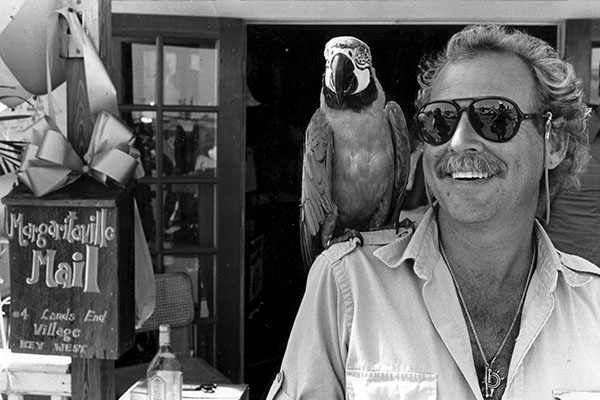 Three things my friend Jimmy Buffett taught me about life and business Buffett was as talented an entrepreneur as he was a musician, author, sailor, and aviator. He never forgot about keeping successes and failures in perspective. 6-Sep-23 – Everyone who ever worked with Jimmy Buffett, and I did, will tell you the same thing about him. Which is that they took far more away from the experience – however fleeting it may have been – than simply a love for the guy and his music. He was every bit as successful an entrepreneur as he was an entertainer, and he brought the same focus, passion, and enthusiasm to whatever he did. The insiders’ joke was that he was about the least “laid-back” guy you were ever gonna meet. Whether it was music, his Margaritaville-themed businesses, charity, or politics, it was the same story – if he was in, he was in 110 percent, and he did everything with a vengeance. Jimmy was direct, down-to-earth, and deliberate in his dealings with you whether you were a peasant or a prince, although he never paid attention to those kinds of distinctions. And that openness, attitude, and approach never changed over the more than 30 years that I knew him. So, it’s a little surprising to hear from so many people that they had no real idea that he was such a substantial businessman in addition to being a great writer and musician. I’m reluctant to add “philosopher” to the encomium because he always hated it when anyone used such highfalutin terms to describe him. He was thoughtful and certainly took a great deal of pride in his craft and worked his butt off to make that happen. But he was also amazingly modest and always said that he was just one of the guys who got far luckier than he ever expected or deserved. And, he’d usually add that the luckiest thing in his life was his family. I know he usually meant his immediate family, but there were plenty of others in his various circles who felt that familial bond as well and knew that – if the need ever arose – he’d be there for you.
1 Your work is what you do, not who you are. It’s difficult for any new business builder to separate himself from the business – the best entrepreneurs never leave much of anything at the office at day’s end – and taking things personally and to heart is critical to their eventual success. The ones who care the most win. But maintaining a healthy distance between what you do and your own identity and self-worth is crucial to your mental health. And when you’re a celebrity – and a walking lifestyle like Jimmy was – it’s even harder sometimes to remember to separate your public “persona” from the work and the audience’s response. No one’s happy-go-lucky all the time – it’s not part of the human condition. Performers face a far more immediate and regular test of their efforts every time they cut a record, perform, write something, or offer new material to the world because the world – especially these days – is a picky and nasty place. When he faced criticism, complaints, and even outright rejection or disappointment, Jimmy always took a step back and said that he could only do his best and that, as long as he did that, he could live with whatever came after. Success is fleeting, but excellence is forever. His work was a wonderful part of his life, but making a living was only a part of making a life worth living. 2 Take your work seriously, but not yourself. It’s easy as an entrepreneur to convince yourself that the weight of the world is on your shoulders, that everyone inside and outside of the company depends on you, and that the work you’re doing is the most pressing and important work around. And it’s sadly too short a step for too many people to translate that actual and awesome responsibility into the belief that your shit doesn’t stink. An entrepreneur needs plenty of self-confidence, but that power and passion need to be tempered from time to time with some self-awareness as well. Jimmy could always laugh at himself. He’d sometimes catch himself pressing a little too hard, lecturing out loud, or even pontificating, and – full stop – he’d just shut up and shake his head and say: “Where’d I go wrong?” or “Who is this guy anyway?” He knew he could get caught up in the work and in the moment, and he would never compromise the take or the music or the project. But he’d often take himself to task, take a short break and a mental reset, and then come back – a little sheepishly – and hit things twice as hard. He knew that, from time to time, the person most likely to get in the way of moving things forward was Jimmy Buffett, and he always kept an eye out for times when he thought he was getting too full of himself or ahead of the game. 3 Never expect to get what you give. Not everyone’s heart is as big as yours. I’m not sure that Jimmy ever got enough credit for his charitable work – not just the music appearances at all the big-deal group events over the years – but the gestures and the sleeves-rolled-up time he devoted quietly to a number of causes, people, and charities that were personally near and dear to his heart. But, unsurprisingly, not everyone else in these ventures lived up to their end of the bargain, delivered on their promises, or even showed up when they said they would. What was completely amazing to me was how he never let these disappointments get him down, interfere with what he needed to do, or even break his belief that most of the people out there were solid citizens, well-intentioned, generous, and willing to help others in need. It would have been so easy to get angry, to hold a grudge, or to say, along with The Who, “We won’t get fooled again,” and walk away. But he never did. He didn’t measure, he didn’t compete, he didn’t lose his faith, and he never stopped giving back. He did everything he could, never expected anything in return, and never tried to impose his contributions and commitments on others. There’s never a best way to say goodbye or to close a piece like this, but I’m sure that Jimmy wouldn’t mind if I take a line from Now and Forever, which Carole King wrote in 1992:
|


Subscribe to:
Posts (Atom)