Saturday, August 13, 2022

SEND THE PIG TO JAIL


Exhibit A of Trump’s Recklessness

The classified documents recovered by federal agents at the former President’s Mar-a-Lago estate add to the picture of his out-of-control behavior after he lost the 2020 election.

By David Rohde

August 12, 2022


On Friday, a federal magistrate judge in Florida ended at least some of the speculation about the search of Donald Trump’s Mar-a-Lago estate by Justice Department officials and F.B.I. agents. Documents unsealed by the judge showed that, during the raid earlier this week, agents had discovered and removed four sets of top-secret documents and seven other sets of classified documents from Trump’s home. One group of documents was described as “classified TS/SCI documents,” an acronym for “top secret/sensitive compartmented information”—one of the highest levels of secrecy that exists in the U.S. government.

The search warrant unsealed by the judge sought “all physical documents and records constituting evidence, contraband, fruits of crime, or other items illegally possessed” in violation of three criminal statutes, including the Espionage Act, which prohibits “gathering, transmitting, or losing” information relating to the national defense, and carries a penalty of up to ten years in prison. All three of the potential offenses cited in the warrant are felony crimes. On Thursday, the Washington Post reported that some of the documents pertained to nuclear weapons, an account the former President dismissed as a “hoax.” But the events of the past week raise the possibility that officials have finally found misconduct by Trump for which he can be held legally accountable.

A former Trump staffer said on Friday that Trump had the power as President to declassify top-secret information, and he could mount a defense in court that he did so before removing the documents from the White House. But senior officials who have been investigated, in the past, for improperly handling classified information—including David Petraeus, a C.I.A director during the Obama Administration, and Sandy Berger, a national-security adviser during the Clinton Administration—eventually pleaded guilty to misdemeanor charges for unlawfully removing secret documents.

The political implications for Trump remain to be seen. Trump’s base, of course, will believe that the Justice Department and the F.B.I. are falsely accusing him. But, for everyone else, a sense of exhaustion with Trump’s antics feels inevitable. The credit goes to an unlikely figure—Attorney General Merrick Garland. In an unexpected news conference on Thursday, Garland announced that he was asking for the warrant to be unsealed. It was a way of puncturing Trump’s bluster about the raid. Garland also defended the men and women of the Justice Department and the F.B.I. “I will not stand by silently when their integrity is unfairly attacked,” he said. Garland was measured in his tone. He was balanced and fair. He did not smear Trump, nor did he publicly accuse him of any crimes. It remains unclear if Trump will be prosecuted. But Garland stood up for the rule of law and also respected the rule of law.

In the days ahead, Trump—as he has done so effectively in the past—will deflect and dissemble. One of his initial defenses on Friday was to falsely claim in social-media posts that President Barack Obama had taken tens of millions of government documents after leaving office: “What are they going to do with the 33 million pages of documents, many of which are classified, that President Obama took to Chicago?” A statement from the National Archives and Records Administration refuted Trump’s assertion. The archives said that roughly thirty million pages of unclassified records from Obama’s eight years in office were transferred to a National Archives facility in the Chicago area and that they continue to be maintained by the agency. “Former President Obama has no control over where and how NARA stores the Presidential records of his Administration,” the agency said.

The exposure of Trump’s lies is not new. During his four years in office, Trump was regularly shown to make false claims, exaggerate achievements, and smear enemies. But he was also careful to avoid crossing certain legal thresholds and to generally obey the advice of his lawyers. The Mueller report, for example, revealed that Trump was saved from patently obvious obstruction of justice when top aides—particularly White House counsel Don McGahn—declined to carry out his orders or managed to restrain him. When Trump withheld four hundred million dollars in aid from Ukraine as leverage to demand an investigation of his likely Democratic opponent, he kept his language vague in phone calls with President Volodymyr Zelensky, which helped him deny wrongdoing.

The classified documents collected by the F.B.I. agents at Mar-a-Lago, as well as the work of the January 6th committee, show that Trump was increasingly reckless at the end of his Presidency. Former Trump Administration officials have testified that the President’s behavior changed after he lost the election to Joe Biden in November, 2020. Warnings from White House lawyers that had previously reined Trump in were no longer effective. Whatever guardrails remained were cast aside.

For Americans who wish to look, their worst fears about Donald Trump are being confirmed. He recklessly handled some of the country’s most important secrets, including, apparently, information related to nuclear weapons. Tens of millions of Americans, undoubtedly, will continue to believe his conspiracy theories. But the steady compilation of facts by the January 6th committee, the Justice Department, and the F.B.I. is creating a post-November, 2020, record of negligence that exceeds Trump’s actions earlier in his tenure. The Mar-a-Lago search warrant showed that Trump has grown more rash, thoughtless, and heedless—and more unfit than ever for the Presidency. ♦

ALL IN DUE TIME


                   TRUMP'S NEXT TEST 

                JUST A MATTER OF TIME 


WELCOME HOME, DONNIE BOY  
YOU FILTHY PIG


This Should Be Written in Prison Ink on Trump's Rear End When He's Finally in Jail


The Scumbags at Breitbart Could Also Have Obscured the Names of the Agents. They are as despicable as Trump.


Tuesday, August 09, 2022

LET'S GET THIS CROOKED BASTARD ONCE AND FOR ALL - TOILET GATE UBER ALLES


New INC. Magazine Column by Howard Tullman


The FTC Declares War on Entrepreneurs

By attacking Meta's offer to acquire Within Unlimited, the bureaucrats are eliminating the driving force behind most startups--that somebody much bigger will someday rain cash on them.

BY HOWARD TULLMAN, GENERAL MANAGING PARTNER, G2T3V AND CHICAGO HIGH TECH INVESTORS@TULLMAN

In a midterm election year, could there be a more obvious target for politicians and their ambitious regulatory flunkies than Facebook/Meta? Talk about low hanging fruit -- picking on the techies is always good for a cheap shot by the know-nothings in D.C.  Meta (formerly Facebook) is quite a tasty morsel, especially since everyone already hates co-founder/CEO Mark Zuckerberg as well as the other billionaire bros, and for a million good reasons. Zuck, of course, seems to go out of his anhedonic way to make himself as insufferable and unpalatable as possible. What a morale booster to tell everyone in your company (and the world) at all-hands meetings that "there are probably a bunch of people at the company who shouldn't be here." And to advise them further that his feelings, if he had any, wouldn't be hurt if they left.

So, as much as Mark and his minions sorely deserve their comeuppances, it's still sad and disappointing, but not surprising, to see the Federal Trade Commission sue to prevent Meta's latest minor acquisition. Meta is trying to buy a tiny company and its video fitness app, which is built to work with Meta's own products. This bogus action relates to a miniscule segment of two broad markets -- fitness and training-; with hundreds of competitors already producing similar video-augmented and enabled fitness apps.

Lina Khan, the new wunderkind and chair at the FTC, has invented and defined this imaginary and hyper-narrow market while carefully and stupidly ignoring the presence of any number of other major players in these spaces. Do the names Sony, Microsoft and Nintendo ring any bells at all for these bozos who apparently believe that no one in the real world will notice their curious omissions. Saying something's a market doesn't make it so unless you're doing it for self-serving reasons, which pretty much defines this FTC. 

Meta's plan is to acquire Within Unlimited, a small virtual reality company that produces a fitness app called Supernatural, which is specifically designed to work with Meta's own Oculus Quest headset. The FTC objects. Or, perhaps more accurately, as Bloomberg has reported, Ms. Khan alone objects and has ignored her own staff's recommendations against pursuing such a fatally flawed and publicity-motivated action.

I guess in a do-nothing DC enforcement world, we should in theory be grateful for anyone willing to act on behalf of the citizenry, but this action is rank stupidity. With the Supreme Court blowtorching regulatory overreach, now seems like a terrible moment to be trying to make new law, invent bizarre market definitions and limitations, and expand the reach of any government agency. But there's nothing better or easier for an "aggressive" regulator to do to generate noise and headlines than to launch a useless and time-wasting lawsuit against a giant tech company.

This action is wrongheaded for so many reasons. It actively encourages re-inventing the wheel rather than building off existing tech. It ignores the tremendous boost in distribution, exposure, and access the deal will provide for the current and future offerings of Within, which would take years for any startup to build on its own. And, most of all, the FTC ignores the best interests of Within itself, which built a product expressly for Meta's new VR universe.

This whole process couldn't be worse news for entrepreneurs and startups. No self-respecting entrepreneur wants anything to do with helpful government regulators inserting themselves into the complex and rapidly changing marketplaces for new technologies. Thanks, but no thanks --you've never run anything or worried about making a payroll as funds disappear.

The real problem and the underlying truth come from an earlier tech era when an aggressive startup never knew whether Microsoft was going to buy them or bury them. That is exactly the sweepstakes and the lottery ticket life that every entrepreneur signs up for and dreams about. The odds are long, the journey is even longer, but the rainbow at the end in the rarest of cases is real and unbelievably rewarding. Going it alone rather than going for the gold is a bad bet in 99% of the cases and everyone out there in the real startup world knows that.

Having the FTC trying to prevent selected market-driven transactions and "level the playing field" in emerging spaces that their own technical personnel barely understand is every developer's worst nightmare. Sure, the odds are harsh and the risks of being rolled over or left behind are high, but they're no worse or more imposing than the everyday ups and downs and challenges of building any successful business.

Bureaucrats barging in to block deals and whisk away the brass ring at the last minute for the few young companies on the cusp of actually winning the brutal battle to build something better than the big guys -- something so attractive that Meta would rather buy it than try to build it themselves -- is exactly what we want to encourage, not preclude. That's what creates the external pressures on the bigger and more complacent companies and ultimately drives the growth and continued innovations we see all around us.

Protecting startups from themselves and the big bad tech companies and removing the pot of gold that an acquisition represents after years of risk, pain, and hard work is a foolish and uninformed approach that is far more likely to discourage and diminish competition and innovation than promote it. The smartest and best thing the FTC can do these days is to look the other way and not try to make up for past oversights and inaction by initiating ill-considered and damaging enforcements that will ultimately come to nothing.

Monday, August 08, 2022

Why your kid isn’t going to Princeton and a bunch of other top schools


Loop North News
76 °Rain

Howard Tullman
Why your kid isn’t going to Princeton and a bunch of other top schools
The odds against getting into elite universities have never been higher. But maybe it’s time to recalculate the value of a college education.

8-Aug-22 – Many of us likely forgot one of the most striking things about the last great college sports scandal. I’m not referring to the illegal early recruiting stings, the under-the-table payments to incoming athletes and their parents, or even the many perverts caught in the locker and training rooms. It was a revelation from the Varsity Blues scandal, where fancy, famous, and affluent parents bribed coaches and other admissions officers and used fake resumes to get their mediocre offspring admitted to prestigious colleges through the locker room door by claiming that they were serious jocks.

As the stories slowly unfolded, what became apparent is that some of the kids involved didn’t even want to go to college. In each case, the main driving force was a clever con artist named Rick Singer, who combined his mastery of the college admissions process with his ability to manipulate and stroke the pathetic parents’ egos, their competitive social concerns, and their desperate need for bragging rights. These folks may have gone to inferior schools or none at all, but their kids were going to the moon, and they’d tell the whole world about it. Talk about living vicariously through your kids.

Of course, this isn’t exactly unexpected or difficult to understand. No one associates famous TV or film stars with healthy and happy childhoods or with being great parents. In truth, though, you don’t know what you’re capable of until you have children.

But that’s all yesterday’s news. There’s a major new storm on the horizon that suggests bad news for millions of late-Millennial parents with high school aged kids, even though their own aspirations are far more modest than those of the bi-coastal cheats. From here on down, it’s all uphill. These aren’t people seriously looking to get their kids into Harvard or Yale; they’d be pleased as punch just to be sure that their kids got into a “good” school – one like they attended themselves.

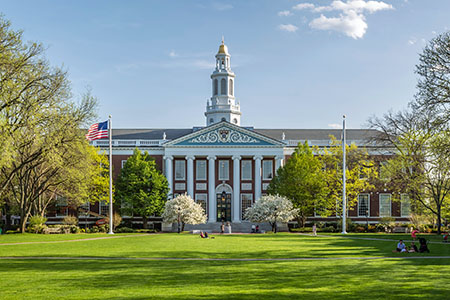
Photo by Marcio Silva

Ideally, one that was at least as well regarded as their own alma maters. But their kids most likely won’t be headed anywhere near their folks’ old stomping grounds.

The sad realities that will be playing out over the next several years for millions of families are: (a) as the parents often sarcastically say, they themselves would no longer be accepted and admitted to the colleges and universities they attended since the entrance criteria have been radically raised; (b) the upper middle range of schools (not Ivy League, but certainly Big 10), which would have been largely “socially” acceptable for their kids to attend, are now so selective and difficult to get into that their offspring will have to “settle” for schools in the next tier down – not necessarily in academic terms, but certainly in the media and reputational sense; (c) many of the schools are finally limiting or discarding legacy admittance criteria, which used to be another sneaky way in, as well as reducing or abandoning their reliance on standardized tests; and (d) there are no longer any such things as safety schools for most students where there is an absolute assurance of acceptance – even including state universities.

Getting into the top 25 private universities and maybe another ten well-regarded state schools has always been difficult, but it’s never been this difficult or as likely that highly qualified students with exceptional academic results, superior test scores, and extensive extracurricular and charitable activities would be consistently rejected by top universities.

But that’s what’s happening. And the clear cause isn’t that the kids’ credentials have changed, it’s that the colleges and universities – trying to meet diversity and equity goals – have moved and changed the goal posts and literally pulled the rug out from under these kids’ futures. The switcheroo is so patently obvious that the Supreme Court, before the end of its current term, will be ruling on cases brought by Asian-American students who claim that they were denied entry based on the admitted fact that seats were given to other, less qualified but more highly prioritized applicants.

...the clear cause isn’t that the kids’ credentials have changed, it’s that the colleges and universities – trying to meet diversity and equity goals – have moved and changed the goal posts and literally pulled the rug out from under these kids’ futures.

There are other explanations for the increased student and parental anxiety and concern, including three primary drivers:

1 The elite colleges refuse to increase their class sizes and continue to exploit, market, and pride themselves on their exclusivity and the ridiculously small percentage of applicants accepted each year. They are not too proud, however, to accept costly and material application fees from tens of thousands of students each year who have zero prospects of being accepted. Princeton’s class of 2025 had 37,601 applicants and offered admission to 1,498 students. The class size issue will be exacerbated by the fact that many students who deferred or interrupted their studies due to the pandemic now plan to enter or return to college.

2 Colleges across the spectrum are under increasing pressure to increase the diversity of their student populations and they are setting aside larger numbers of seats in each class for applicants meeting diversity criteria, who may or may not meet all of the other admission criteria as well. Assuming that every other criterion is the same, it’s theoretically “no harm, no foul,” except to the thousands of aspiring students who didn’t make the cut, which is no different in that regard than at any other time.

There’s obviously never been room enough for everyone. But the pending lawsuits allege that the scales were more than a little tilted in order to preference diverse applicants. This will be the central issue for the courts to decide.

Adobe Stock

3 Financial aid has turned into its own crazy, sweepstakes-like process with high schools encouraging their exceptional students to apply for as many scholarships as possible and then the schools brag and solicit media about the aggregate dollars which these few students have accumulated. The net effect of these stupid, self-promoting stunts is to prevent or preclude other qualified students from accessing some of these awards in a timely fashion, which makes it more difficult for them to apply to certain colleges and universities without the assurance of financial support to attend if they were accepted.

So, Sonny or Sally won’t likely be going to old Faber College where dad was president of the Deltas or mom was a student leader. But it’s possible that there’s a silver lining in all this drama and angst and, of all things, there’s even a lesson to be drawn from the Varsity Blues scandal itself.

Reuters/Josh Reynolds

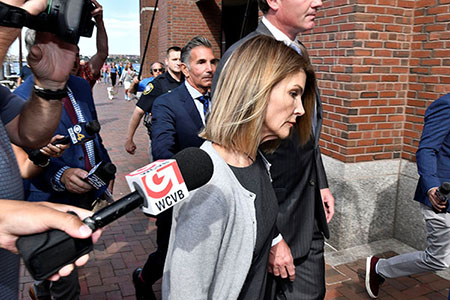
(Left) Actress Lori Loughlin leaves a federal courthouse in Boston on August 27, 2019, after a hearing on charges in a nationwide college admissions cheating scheme (Reuters/Josh Reynolds).

It’s far more important to prepare the kids for the path and its alternatives than to try to prepare the path for the kids. Maybe the best and biggest favor parents can do right now for their college-bound kids is to lower the heat, reduce some of the stress, temper the level of expectations, and then ask their kids what it is that they really want to do. They may not have a clear or obvious answer, but they are entitled to a choice.

Maybe they don’t care to go to some expensive four-year school, study whatever, end up with long-term college debt along with their parents, and graduate with a degree in nothing employable so they can become the best barista on the block. Maybe they want to explore some high-end vocational training – learn some real substantive and technical skills – graduate and jump right into a job paying a solid six-figure income and never look back at what they allegedly missed. Or they may want to become an apprentice for some union job that will be here forever, not be exportable to China or India, likely be based in their hometown, and provide an assured path to a middle-class, solid, and protectable income. In the future, far more mechanics will be working with keyboards and computers than wrenches and soldering irons and making $100k plus.

The lesson here is pretty simple. Much like the fantasy tale of the 80s and 90s that everyone needed to own their own home, it’s increasingly clear that not everyone needs to mortgage their future to attend a four-year college to obtain a degraded degree in whatever, which is becoming a less and less important factor every day in the successful search to find gainful and satisfying employment.

Just because we’ve always seen for centuries that becoming a college grad was the be-all and end-all in the movies and on TV – and that it was something to be devoutly wished and hoped for – doesn’t make it true or even desirable any longer today.

You Can’t Win a Race With Your MouthHoward Tullman is General Managing Partner for G2T3V, LLC – Investors in Disruptive Innovators, and for Chicago High Tech Investors, LLC. He is also the author of You Can’t Win a Race With Your Mouth: And 299 Other Expert Tips from a Lifelong Entrepreneur.

• Contact Howard Tullman at h@g2t3v.com


Total Pageviews

GOOGLE ANALYTICS

Blog Archive