Tuesday, August 04, 2020

All the Problems With Trump's TikTok Fee


All the Problems With Trump's TikTok Fee
The president floats the idea that the government should get a cut of any TikTok deal, which is just beyond belief.


General managing partner, G2T3V and Chicago High Tech Investors @tullman


It’s actually difficult to believe that the President of the United States would inject himself (no pun intended) into the middle of the Microsoft/TikTok discussions, and then demand that a “substantial amount of money” be paid to the U.S. Treasury from whatever agreement might result, as a condition of the government’s acquiescence in any prospective deal.   
Trump’s lifelong mindset is that he and his businesses should get a “piece” of every deal, deservedly or not.  Now he’s dragging the federal government down to his grifter level. His sophomoric “key money” analogy to a landlord/tenant relationship is especially telling.  Throughout his shabby real estate career it was always about using leverage to take advantage of the other parties - renege on commitments - stiff vendors and partners - and basically do whatever was solely in his own interest. 

Say what you will about the lip service to security concerns, the clear message now is that you can buy anything you want from this government, for the right price. And to be very clear, if Trump even understood what he was saying, it’s pretty obvious that he wasn’t talking about traditional taxes, capital gains or even tariffs. He was talking about extorting the parties to the deal to pay the government a bunch of money so the deal would be allowed. The message is that federal approval is for sale-; just like everything else in this administration.  
Frankly, it was stupid of Microsoft to reach out to Trump and involve him in the process. Now the company, not to mention our country’s international image, is paying the price. The old rule is that if you teach a bear to dance, you'd better be prepared to keep dancing until the bear wants to stop. Microsoft CEO Satya Nadella foolishly invited this guy to the party and now he won’t leave without his piece of the action.  

Although, in fact, we really don’t know who is supposed to actually come up with the payoff. While Trump insists that he would expect someone to pay the “very large percentage” of the purchase price to the United States Treasury, that’s about the extent of the thought that seems to have entered into this discussion thus far. As usual, it’s shoot from the hip, then try to back off the obvious errors and have your people attempt to clean up the confusion and the resulting mess. This is a helluva way to run a railroad.  
And for hundreds of other tech businesses engaged in global conversations, arrangements, contracts, partnerships, etc., it muddies the waters and raises new obstacles and problems galore. Trump’s declaration that TikTok has no rights in the U.S. unless he gives them is akin to telling the rest of the world it needs his permission to do business in the U.S. and that he can withdraw that consent at any time. This is no longer any rule of contract law, or standard business protocols - it’s a rule by fiat and by impulse and emotion. And no one really knows what the rules will be down the line.
   
Microsoft is theoretically buying the TikTok assets - not selling them - so is Trump saying that Microsoft also has to pay a premium over and above the payments to TikTok to the Treasury as a deal fee? Or is he saying that TikTok-; which isn’t technically subject to any U.S. jurisdiction from a financial standpoint - would have to pay some large portion of the purchase price to the Treasury for no apparent reason? And, just for laughs, who is going to determine these amounts and in what forum, and who will be negotiating with the parties? Will some government agency now be a part of every global contract conversation or - worse yet - waiting in the wings to jump in and interfere with the negotiations if and when it pleases?  Capitalism can’t operate this way; at least not for long.
For centuries, businesses have required and depended on certain degrees of trust, predictability, and comfort in the laws that govern contracts and other transactions - especially internationally.  That’s ever more so in today’s global economy. This latest farce is just another Trump nail in the coffin of America’s reputation and integrity. And it risks far more in the long term than simply the consummation of a single deal.  


A LIE A MINUTE FROM RUMP - THE CHUMP IN CHIEF

President Trump said in an interview with “Axios on HBO” that he thinks the coronavirus is as well-controlled in the U.S. as it can be, despite dramatic surges in new infections over the course of the summer and more than 150,000 American deaths.
  • “They are dying, that's true. And you have — it is what it is. But that doesn't mean we aren't doing everything we can. It's under control as much as you can control it. This is a horrible plague,” he told Axios' Jonathan Swan.
Reality check: The U.S. is averaging roughly 65,000 new cases and 1,000 deaths per day. The virus has already killed nearly 150,000 Americans, and it spread largely unchecked through almost the entire country throughout June and July.
The big picture: In the interview, which took place last Tuesday, Trump returned to familiar themes and areas where the U.S. really has made significant progress. He cited the dramatic increase in ventilator production, the ramp-up in testing and treatment that has reduced the overall fatality rate from the virus.
  • Yes, but: He painted a far rosier picture of the pandemic than most data would support.
On testing, Trump said, “You know there are those that say you can test too much” — a view that no experts have advocated.
  • The U.S. is experiencing long turnaround times for coronavirus testing, as Trump acknowledged, because of the high demand for testing. But that is largely a function of the country’s high caseload and the number of people at risk of infection.
He also returned to his mantra that “because we've done more tests, we have more cases.”
  • The cases the U.S. has, we would have had with or without testing. We know we have them because of testing, but the massive outbreak here would be a massive outbreak whether we chose to know about it (through testing) or ignore it by not testing.
Trump also seemed to suggest that he did not trust South Korea’s coronavirus data, when pressed on that country’s more successful coronavirus response.
  • There have been no serious allegations, from experts, international authorities or the U.S., that South Korea’s numbers are inaccurate.

MSM: STOP SUCKING UP AND DO YOUR JOB


Mainstream media: Stop admiring good interviews and reform your approach

Columnist
August 4, 2020 at 9:27 a.m. CDT

Axios’s Jonathan Swan deserves praise for his revealing interview with the intellectually and temperamentally deficient president. Pressed on how he could crow about his handling of the pandemic when a thousand people a day were dying, President Trump replied: “They are dying. That’s true. And you have — it is what it is. But that doesn’t mean we aren’t doing everything we can. It’s under control as much as you can control it."

The sight of him shuffling through papers, unable to process unflattering information or respond to questions for which he did not have a stock answer, was sobering if unsurprising. His peevish refusal to recognize the late Rep. John Lewis’s greatness because Lewis did not attend Trump’s inauguration was yet another example of raging narcissism.

However, what is instructive — and disturbing — was the amazement expressed by other media personalities in response. They gawk and applaud as if Swan (like Fox News’s Chris Wallace) did something unprecedented. Instead, Swan — like Wallace — did his job, refusing to be flustered by Trump and eschewing congenial tactics that allow Trump to escape from tough encounters.

I cannot imagine a network anchor displaying the look of incredulity on Swan’s face or retorting “Why can’t I?” when Trump said he couldn’t count coronavirus deaths as a percentage of our population. I cannot envision a cable TV anchor (other than Wallace or CNN’s Jake Tapper) dwelling on a topic for as long as it takes to pin Trump down and refusing to rush off to another topic.

Swan and Wallace expertly displayed their craft, but they (and the reaction of their peers) wound up demonstrating how sadly deficient TV interviewers have been in the Trump era. There are two problems: the personnel hired to do tough, combative interviews and the mindset of too many news outlets.

TV news personalities are hired in part because they are congenial, likable and watchable. They put guests and the audience at ease. They do not allow pregnant pauses. They bail out interviewees who are at a loss for words. This is the wrong skill set for interrogating a president, especially one who is a serial liar. In nearly four years, TV news outlets have not figured this out; some simply threw in the towel and declined to switch to more effective interviewers because their star anchors draw TV viewers.

The TV networks would do better to hire people — lawyers, specifically — who are attack dogs, who do not care about being liked and who do not care if they get “access.” House Intelligence Committee counsel Daniel S. Goldman and Barbara McQuade, former U.S. attorney and now MSNBC interviewer, know how to prepare a line of questions.

(Disclosure: I’m an MSNBC contributor.) They know how to listen to the answer and follow up. They shrug off bluster and body language meant to intimidate them. If the job of the media is to hold those in power accountable and to reveal the truth (not maintain phony balance), this is the kind of person you want grilling administration figures.

That brings us to the larger problems with a good deal of mainstream media coverage: the false supposition that Trump is a rational president whose actions can be analyzed as deliberate policy or political choices; the aversion to describing Trump’s statements accurately (“lie,” “incoherent,” etc.); and the reluctance to give up the false idol of “balance” when one side acts in bad faith. In conducting themselves in this way, mainstream media help prop up Trump, conferring an aura of normality that is not earned. They also let other Republicans off the hook when they should be asking hard questions about their own moral failures. (How can you seriously support someone who blabbers nonsense about coronavirus deaths? Aren’t you embarrassed to defend Trump’s blatant appeals to racism?) And they give cover to right-wing editors, pundits and columnists who concoct elaborate rationalizations and ignore what is in front of their noses — a haphazard, delusional and racist president.

After applauding their colleague Swan, the rest of the TV news universe might engage in some self-reflection. Why have they been so ineffective? Why have they played the false balance game? Do they have the people with the right skill set or have they simply given up asking the hardest questions for the sake of genial entertainment? These are tough but essential questions necessary if we are to have an effective, independent media. Right now, effective inquisitors are islands in a sea of froth and fog.


New INC. Magazine Blog Post by Howard Tullman


It a Great Time to Start a Business -- In an Office
Costs are lower and opportunities greater. But you can't build a culture WFH.
·          
BY HOWARD TULLMAN, GENERAL MANAGING PARTNER, G2T3V AND CHICAGO HIGH TECH INVESTORS@TULLMAN

Whether you're doing it by chance, happenstance or choice, now seems like an interesting and attractive time to start a new business. Many of the best tech businesses around today were started in tough and lean times, rather than in the rosy and flush days of the recent past. And, unless you're thinking about competing with the FAANG Five (or Microsoft), the barriers to entry into thousands of different markets for products and services have never been lower. 

 As for the prospects for success, that's a different question. The answer there is very much dependent on what talents and skills you have (or can hire) and what you're willing to commit in blood, sweat and tears to the effort.  But, make no mistake, it's never been cheaper or easier to try. Infrastructure is inexpensive and readily available. The cloud (AWS and Azure in particular) has made it possible to build your new business almost "by the bit" - renting virtually everything and bootstrapping your operation until it begins to scale.

 Importantly, significant early stage capital is almost irrelevant in this new world, where code and quickness are king. The old VC gatekeepers who controlled the dollars you previously needed to launch so many ventures, and their often foolish and insurmountable requirements and obstacles, no longer matter in the early startup stages. 

 In fact, raising too much money too soon at too modest a valuation can mortgage your own financial future and cap your upside in very painful ways. Substantial war chests are certainly nice to have, but the VC-skewed distribution waterfalls usually accompanying them - and which most entrepreneurs neither pay attention to nor frankly understand - are an expensive curse that keeps on taking for years to come. Distribution waterfalls often come as a complete surprise to the management team when payday finally arrives. So, in a sense, money's really no object at the outset. 

 As far as facilities and real estate go, the WFH (working from home) story is also pretty attractive. While it's difficult to see how Covid-19 virus did anyone any real favors - other than maybe helping us get rid of the worst President in history - the pandemic certainly accelerated the waves of digital transformation in major parts of our lives.  But it has legitimized and basically mandated levels of remote workforces which, while never really super successful in past experiments, are now absolutely an acceptable and long-term part of every business's strategy and future. WFH is here to stay. Having a largely virtual workforce and thereby eliminating the major fixed and relatively expensive costs of maintaining sizable physical offices looks like and, in fact, is a godsend to many established businesses. 

 But here's where things can get tricky: Working from home simply doesn't work if you're a startup. It's a seductive idea - and clearly a time and money saver. And also, the best and quickest way to kill your new enterprise. Every startup's success ultimately depends in large part on the entrepreneur's ability to attract and bring together diverse and talented people and to weave them into an effective and viable unit bound by a single compelling vision and a complementary culture which supports and powers the vision. You just can't get close at a distance.

 For a startup, as important as clever code and quickness clearly are, nothing is more important than effective interpersonal communication. And the culture of the company is the most essential thing to communicate. We communicate culture through stories, through confrontations and commentary, through rituals that help us translate and transmit otherwise awkward or uncomfortable emotions, and through the development of close individual relationships over time and through repeatedly shared experiences. Every successful startup has its history, war stories, and near-death experiences, which everyone is happy to share. These anecdotes bind the business together.

 The best startups develop a compelling culture with a single, and most critical, component: a powerful and contagious work ethic that infects (in a good way) not only the existing team, but every newbie who enters the environment as well. Consistently and continuously communicating the company's culture is the most important job of the founders and it's a non-stop and full-time job especially in the first few years. 

 It's really all about authentic passion.  Something that's missing in boring, painful and sterile Zoom calls, where you lose every drop of emotion and attachment in the process. Zoom fatigue is real and it's not just a matter of tired eyes and sore butts. We all sense that there's no real communication or connection between the participants, which is what is draining all the interest and energy away. You simply can't phone it in, no matter how good the technology. The best new companies make many things, but the most important product is a palpable and enthusiastic excitement that powers the team. That excitement, driven by tension, desire and fear, spurs performance and innovation.  

 Anyone who's ever been there and built an exciting business from scratch will tell you the same things: (1) there's an electricity to a winning startup that you sense the minute you step in the door. You can smell success; (2) there's a tension in the air that's driven by physical proximity, which can't be replicated elsewhere and that's shared by everyone in the company; and (3) there's an immediacy and serendipity enabled by unplanned and unstructured collisions of people and thoughts that generates the best ideas and solutions. 

 None of this energy and passion is present or even possible to communicate in any kind of effective manner in a multi-person, remote video conference. Zoom conferences simply suck all the life, all the juice, and, most importantly, all the spontaneity and give-and-take out of any call, conference, presentation, or webinar. There's no cure now or on the horizon for this sense-dulling, painful and dehumanizing technology because there's no way to replace, replicate or restore the emotional resonance that face-to-face communication creates and sustains. To be fair, it's not Zoom's fault. There's no substitute for being there and there never will be. 

 But it will be your fault, as the founder/CEO, if you're foolish enough to think that you can save money on an office/team space and still get your messages through and build the company's culture remotely or occasionally or with gig workers. It just doesn't work. When you're starting a new venture, everyone in the place needs to be in place. They're looking for immediate leadership and guidance, they need to see the vision being built out, to learn the path forward, and to see how you'll get them to the finish line. It's just not something you can schedule a few times a week or structure in advance. 

 The opportunity, the technology, the competition, and the customers' expectations and demands are all moving too quickly these days to have serious latency in your ability to react and respond in real-time. The world won't wait for Wednesday's call.  And, by the way, just because your coders and other techies have to commit their new code on a regular basis, and have it peer reviewed, doesn't mean that they get to operate in their own little vacuum either. Culture is a two-way street - output without input and direction is an easy way to lose your way. 

The early-stage risks to a new business by a failed or piecemeal attempt to infuse and embed a concrete culture are existential. It's great to have a clear view and an aspiration about your culture, but these things don't get built by themselves. If you get the culture wrong at the outset, you don't get a second chance. Culture isn't part of the game - it is the whole game. 

Work from home may be great for other folks, but it won't work for you.


Sunday, August 02, 2020

NANCY P - IF NEED BE - ANYTHING BUT RUMP


The Tanned Man Has a Green Monster


The Tanned Man Has a Green Monster
Dr. Fauci is now in danger of being lumped into Trump’s envelope of envy, the same place in which he has placed Barack Obama.

Opinion Columnist
·         July 29, 2020

Dr. Anthony Fauci, the nation’s top infectious disease specialist and a leading voice in our battle against Covid-19, has gotten under Donald Trump’s skin.

He won’t lie to make Trump look better or cover for the lies Trump tells. He won’t paint a rosy portrait of our prospects during the pandemic or offer excuses for the Trump administration’s failed response and all the thousands of lives needlessly lost.

Fauci insists on following the science and telling the truth about it, and that means that the American people trust and respect him for it.

But, this — being more popular and well-regarded than Trump — is heresy in this White House. There is but one king in that palace and all his dogs wear his collars. In that conception, Fauci is off the leash.

Trump is a man ruled by jealousies and insecurities. In his mind he is the greater, the best, the supreme, even when he obviously is not. All of which presents him with an ever recurring quandary: How precisely is it that a lying, lecherous, anti-intellectual grifter doesn’t enjoy the same high standing as the honorable and the honest, the well-read and well-behaved?

Tuesday, Trump bemoaned aloud the fact that Fauci enjoys a higher public approval rating than his own, even though as Trump put it: “He’s working for this administration. He’s working with us, John. We could have gotten other people. We could have gotten somebody else. It didn’t have to be Dr. Fauci.”

So, if Trump isn’t high enough to stand shoulder to shoulder, he’ll do his best to cut you off at the knees.

The Trump administration has tried to undermine Fauci and has even attacked him. Trump himself has openly undercut Fauci and questioned his judgment.

Trump’s jealousies are so petty that when Fauci threw out the first pitch at Major League Baseball’s opening day at Nationals Park, Trump lied and said that he had been invited to throw out the first pitch at Yankee Stadium on Aug. 15. As this newspaper reported:

“There was one problem: Mr. Trump had not actually been invited on that day by the Yankees, according to one person with knowledge of Mr. Trump’s schedule. His announcement surprised both Yankees officials and the White House staff.”

Fauci is now in danger of being lumped into Trump’s envelope of envy, the same place in which Trump has placed Barack Obama, a space in which you must endure Trump’s endless attacks because you are something that he could never be: an accomplished person who is also decent.

Obama attended Occidental College, Columbia and Harvard. Trump in one breath cast doubt that Obama actually attended those schools, saying, “The people that went to school with him, they never saw him, they don’t know who he is,” and also suggesting that Obama wasn’t smart enough to go to those schools, saying: “I heard he was a terrible student, terrible. How does a bad student go to Columbia and then to Harvard?”

Apparently Mary Trump, the president’s niece, may know the answer to a similar question. Trump has touted his attendance of the University of Pennsylvania’s Wharton School as “super genius stuff,” but not only did the admission officer who interviewed Trump tell The Washington Post: “I certainly was not struck by any sense that I’m sitting before a genius. 

Certainly not a super genius.” But also, Mary Trump writes in her recently published book:
“Donald worried that his grade point average, which put him far from the top of his class, would scuttle his efforts to get accepted. To hedge his bets he enlisted Joe Shapiro, a smart kid with a reputation for being a good test taker, to take his SATs for him.”

There is no way to independently verify the claim, but it would most certainly jibe with Trump’s lifelong record of fraudulence and fakery.

By the way, in 2017 The Daily Pennsylvanian published an article entitled “Many of Trump’s Wharton classmates don’t remember him,” that included this passage:

“Out of the 269 people The Daily Pennsylvanian contacted while researching this story, 74 of Trump’s classmates responded. Sixty-eight of those alumni said they had never encountered Trump at Penn. Four shared classes with him and two declined to comment.”

As is usual from the king of projection: That for which he condemns another is often an indictment of self.

Trump, who falsely claimed to have written his book “The Art of the Deal,” (it was actually ghostwritten by Tony Schwartz), has accused Obama of having his book “Dreams of My Father” ghostwritten by Obama’s friend Bill Ayers, a white man. As Trump put it:

“Bill Ayers was a super-genius. And a lot of people have said he wrote the book. Well recently, as you know last week, Bill Ayers came out and said he did write the book. Barack Obama wouldn’t be president — and, you know, I wrote many best-sellers, and also, No. 1 best-sellers, including ‘The Art of the Deal.’ So I know something about writing. And I want to tell you, the guy that wrote the first book didn’t write the second book.”

Obama received a Nobel Peace Prize; Trump desperately wanted the same recognition and claims that the only reason he hasn’t gotten it is that the awarding system is rigged against him.

Trump’s jealousy of Obama is now legendary. Trump’s entire presidency is a stand against Obama’s legacy, to knock it down, to erase it.

And when the history is written about America’s response to the pandemic, the story will have two leading men, Fauci and Trump, one in the right and one in the wrong, one working to save lives and one needlessly costing them.

Fauci will be the hero and Trump the villain. This is a Trump nightmare, a logical impossibility. He simply can’t see it this way because as writer Christopher Vogler once wrote, “a villain is the hero of his own myth.”

Is it all ober for Uber?

Howard Tullman
Loop North News


Is it all ober for Uber?

With its latest acquisitions, particularly Postmates, the company seems to be staking out territory everywhere and nowhere. That’s a strategy, but not necessarily a plan.


2-Aug-20 – Uber is on its way to another painful visit to the dunk tank with its latest grandiose announcement, post the Postmates acquisition, that it’s acquiring Routematch, which works with mass transit agencies to match riders with rides.

In other words, Uber is planning to be all things mobile for all people. Another doomed attempt to be a mile wide and an inch deep. Although, in all honesty, the new strategy isn’t really for all people. It sounds more like they want to build the next-gen operating system for newly affluent Millies – if they’re still even riding and running around these days – on the backs of their drivers and now other gig workers as well who are still being badly ripped off.

And, of course, with the virus likely to linger another year or two, Uber’s timing for the latest relaunch – given our reluctance to jump back into the shared-ride world with strange drivers, stale and stagnant cars, and unknown prior passengers – couldn’t be much worse. But I guess everyone’s got to have some sexy story to tell these days. You would think, however, that the guys at Uber itself would know that not every business can be Uber-ized.


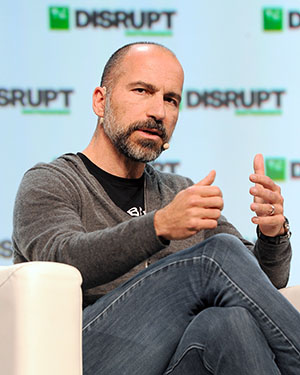
Photo by Steve JenningsI actually feel somewhat sorry for Dara Khosrowshahi, Uber’s beleaguered CEO, and his repeated acts of desperation. It feels a lot like he’s once again the guy dressed as a circus clown who’s walking behind the elephants with a shovel and a satchel.

(Left) Uber CEO Dara Khosrowshahi speaks at TechCrunch Disrupt in San Francisco on September 6, 2018. Photo by Steve Jennings.


He’s been trying to clean up the mess at Uber for what seems like forever and nothing appears to be going all that well. Starting with the busted IPO, then the rulings in the United Kingdom and other places where drivers are employees, and there’s still the continued rash of deviate drivers who seem to be constantly conspiring to embarrass the brand and scare off customers. Talk about stranger danger.

And, let me say right up front about this $2.6 billion Postmates deal, that combining two lukewarm cups of coffee doesn’t get you a hot drink however hard you try and however far you try to stretch the synergy. Not to mention that trying, in a space already crowded with tech behemoths, to do everything for everyone means you’ll most likely end up with a big bag of nothing.

Maybe in a different time and place where time, talent, and resources are abundant, seizing the moment and trying to grab every opportunity and running full speed ahead with the whole bunch made some sense. But not today.

Moving a bulked-up Uber Eats front and center on its newly-designed app and launching two or three other new pickup and delivery services – groceries, packages, people, etc. – obviously made some opportunistic sense at the height of the virus. It was a reasonable and inevitable choice in response to the abrupt disappearance of Uber’s core offering.


And sadly, I do think that the virus and its consequences are going to be with us for years, not months, so the artificially enhanced, upscale, urban-centric, and principally U.S.-based demand for those services won’t disappear any time soon.Adobe Stock


But the short and obvious list of all the major and deeply entrenched players who are already well-established in these markets and just waiting to eat Uber’s lunch is pretty intimidating. And when the elephants are up and dancing, the grass and everyone else standing around takes a beating.

I’ve been an advocate of the power of platforms forever, but this expansion adventure feels like “platform madness” gone wild combined with an approach driven by what I call the Galloway “big bite” theory. It’s a specious strategy driven by ever-escalating market growth expectations rather than good solid business sense.
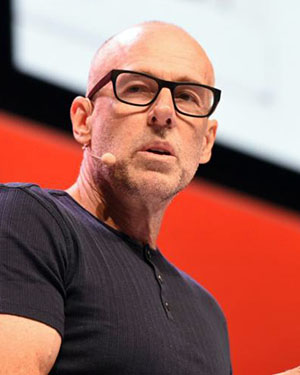
Scott Galloway is a New York University professor and tech gadfly who looks at the tech giants – Uber has become a wanna-be at best at this point – and in every case when he’s talking about their future plans, comes to the same basic conclusion. In order to meet forward-looking Wall Street growth projections, the big tech players – and the aspirants like Uber watching from the sidelines – are going to have to find arguably adjacent markets of enormous size and try to take a “big bite” out of those markets. This is essential because nothing else, including continued sizable organic expansion, will make the New York market mavens and the growth-crazy greed heads and commentators happy.


National Retail FederationGalloway’s current favorite target industries for tech takeovers are education and health care, but no one doubts that the grocery business, as one other example, and last mile logistics for another, are also pretty large. However, not even Amazon with Whole Foods has yet demonstrably mastered the food space and Walmart and Target are gearing up to stomp even more aggressively into the game as well.

(Left) Scott Galloway, professor of marketing at New York University Stern School of Business.


Uber is overmatched, outgunned, and trying to play catch-up in spaces where there’s barely room to maneuver between the big guys. It feels like Dara is playing checkers on a chess board. Or, in more appropriate chess jargon, it’s zugzwang. A chess position where any move loses.

Howard TullmanHoward Tullman is General Managing Partner for G2T3V, LLC – Investors in Disruptive Innovators, and for Chicago High Tech Investors, LLC. He is also the author of You Can’t Win a Race With Your Mouth: And 299 Other Expert Tips from a Lifelong Entrepreneur.

Saturday, August 01, 2020

A Righteous Man Screwed by the Scumbag Rump

Lt. Col. ALEXANDER VINDMAN


We all need to acknowledge his personal sacrifices and join the chorus of hope that will drown out the spurious attacks of a disreputable man and his sycophants and lead to Rump's ouster and humiliation in November - not a day longer and not a day too soon. 

Lt. Col. Alexander Vindman (Ret.), a career U.S. Army officer, served on the National Security Council as the director for Eastern European, Caucasus and Russian affairs, as the Russia political-military affairs officer for the chairman of the Joint Chiefs of Staff, and as a military attaché in the U.S. Embassy in Moscow.

After 21 years, six months and 10 days of active military service, I am now a civilian. I made the difficult decision to retire because a campaign of bullying, intimidation and retaliation by President Trump and his allies forever limited the progression of my military career.

This experience has been painful, but I am not alone in this ignominious fate. The circumstances of my departure might have been more public, yet they are little different from those of dozens of other lifelong public servants who have left this administration with their integrity intact but their careers irreparably harmed.

A year ago, having served the nation in uniform in positions of critical importance, I was on the cusp of a career-topping promotion to colonel. A year ago, unknown to me, my concerns over the president’s conduct and the president’s efforts to undermine the very foundations of our democracy were precipitating tremors that would ultimately shake loose the facade of good governance and publicly expose the corruption of the Trump administration.

At no point in my career or life have I felt our nation’s values under greater threat and in more peril than at this moment. Our national government during the past few years has been more reminiscent of the authoritarian regime my family fled more than 40 years ago than the country I have devoted my life to serving.

Our citizens are being subjected to the same kinds of attacks tyrants launch against their critics and political opponents. Those who choose loyalty to American values and allegiance to the Constitution over devotion to a mendacious president and his enablers are punished. The president recklessly downplayed the threat of the pandemic even as it swept through our country. The economic collapse that followed highlighted the growing income disparities in our society. Millions are grieving the loss of loved ones and many more have lost their livelihoods while the president publicly bemoans his approval ratings.

There is another way.

During my testimony in the House impeachment inquiry, I reassured my father, who experienced Soviet authoritarianism firsthand, saying, “Do not worry, I will be fine for telling the truth.” Despite Trump’s retaliation, I stand by that conviction. Even as I experience the low of ending my military career, I have also experienced the loving support of tens of thousands of Americans. Theirs is a chorus of hope that drowns out the spurious attacks of a disreputable man and his sycophants.

Since the struggle for our nation’s independence, America has been a union of purpose: a union born from the belief that although each individual is the pilot of their own destiny, when we come together, we change the world. We are stronger as a woven rope than as unbound threads.

America has thrived because citizens have been willing to contribute their voices and shed their blood to challenge injustice and protect the nation. It is in keeping with that history of service that, at this moment, I feel the burden to advocate for my values and an enormous urgency to act.

Despite some personal turmoil, I remain hopeful for the future for both my family and for our nation. Impeachment exposed Trump’s corruption, but the confluence of a pandemic, a financial crisis and the stoking of societal divisions has roused the soul of the American people. A groundswell is building that will issue a mandate to reject hate and bigotry and a return to the ideals that set the United States apart from the rest of the world. I look forward to contributing to that effort.

In retirement from the Army, I will continue to defend my nation. I will demand accountability of our leadership and call for leaders of moral courage and public servants of integrity. I will speak about the attacks on our national security. I will advocate for policies and strategies that will keep our nation safe and strong against internal and external threats. I will promote public service and exalt the contribution that service brings to all areas of society.

The 23-year-old me who was commissioned in December 1998 could never have imagined the opportunities and experiences I have had. I joined the military to serve the country that sheltered my family’s escape from authoritarianism, and yet the privilege has been all mine.

When I was asked why I had the confidence to tell my father not to worry about my testimony, my response was, “Congressman, because this is America. This is the country I have served and defended, that all my brothers have served, and here, right matters.”

To this day, despite everything that has happened, I continue to believe in the American Dream. I believe that in America, right matters. I want to help ensure that right matters for all Americans.

Total Pageviews

GOOGLE ANALYTICS

Blog Archive