Monday, July 06, 2015

SF tech firms too focused on solving problems for First World elite

Quinn: SF tech firms too focused on solving problems for First World elite

POSTED:   07/04/2015 12:39:21 PM PDT
|
 UPDATED:   A DAY AGO
Sprig CEO Gagan Biyani speaks with an employee at the company’s office in San Francisco, Calif., Monday morning, March 30, 2015. Sprig is a new
Sprig CEO Gagan Biyani speaks with an employee at the company's office in San Francisco, Calif., Monday morning, March 30, 2015. Sprig is a new mobile meals on demand, app-based service that promises food deliveries within 20 minutes. (Karl Mondon)


SAN FRANCISCO -- Oh, the problems being solved by the engineering might at tech firms here!
A mobile app that sends you locally sourced, 700-calorie meals.
Another that alerts a valet anywhere in the city to help you park your car.
And, of course, the untold others that tell you if your friends are nearby or offer new ways of sharing photos.
And if you just want to say "Yo," a San Francisco startup will help you do that on your smartphone.
"It's a for-us, by-us tech boom," said Andy Smith, a general partner at Center Electric, a venture capital firm.
Whatever happened to the technology industry's utopian and ambitious vision of changing the world?
Sprig CEO Gagan Biyani speaks at the company’s office in San Francisco, Calif., Monday morning, March 30, 2015. Sprig is a new mobile meals on
Sprig CEO Gagan Biyani speaks at the company's office in San Francisco, Calif., Monday morning, March 30, 2015. Sprig is a new mobile meals on demand, app-based service that promises food deliveries within 20 minutes. (Karl Mondon)
I have, in a series of columns, explored the influence of the San Francisco tech scene on Silicon Valley.
In the first, I wrote about how firms in the South Bay are infusing their suburban headquarters with urban touches to appeal to younger, city-based workers. The second looked at the extensive network of tech firm shuttles that have expanded Silicon Valley's boundaries, reaching the five core counties of the Bay Area, and how the entire region is now riding the industry's roller coaster.
In this column, I'm focusing on whether the companies created as part of the rise of San Francisco as the region's tech capital are contributing to the watering down of the industry's overall ambition. My take: They are.
This boom has been knocked for being tech lite, with entrepreneurs working hard to address the First World problems of the young, wealthy urbanite -- where to eat, how to get the laundry done, whom to date, what to drink. Hipness is the business plan.
And many of the sillier ideas are in San Francisco. It makes sense. There's a concentration here of young tech professionals looking for a way to outsource the mundane chores that eat up a lot of time. The dense geography of the city makes it a perfect petri dish for testing services powered by mobile apps of any stripe.
Chef Nate Keller and pastry chef Jessica Entzel admire mini skillets photo props at Sprig headquarters in a former Chevy’s Restaurant in San
Chef Nate Keller and pastry chef Jessica Entzel admire mini skillets photo props at Sprig headquarters in a former Chevy's Restaurant in San Francisco, Calif., Monday morning, March 30, 2015. Sprig, a new app-based business, promises food deliveries within 20 minutes of ordering. (Karl Mondon)
San Francisco's rise as a new tech capital is rivaling the traditional Silicon Valley. In 2014, private firms based in San Francisco received $10 billion in venture investment, a bit more than companies based in Santa Clara, San Mateo and southern Alameda counties combined, which defined the boundaries of Silicon Valley until fairly recently. Critically, startups in San Francisco are attracting more of the lion's share of angel investment. Last year, San Francisco companies received 79 percent of all mobile investments, with travel and photo-sharing apps dominating, according to CB Insights.
But many folks are thoroughly unimpressed with what the city's startups are doing with all that loot.
"What is going on in San Francisco is the death of disruption," said Steve Blank, a serial entrepreneur who teaches entrepreneurship at Stanford and Berkeley.
Many are particularly critical of the rash of companies, mostly based in that city, that are essentially new digital middlemen for existing services. They are often referred to as "Airbnb for X" or "Uber for X," with X being anything -- boats, dogs, food, doctors, alcohol or weed.
The city, says Blank, is "a sea of non-interesting ideas."
Blank and others are right to raise this issue, and investors, tech workers and the general public should do so, as well. Are these startups and the clever minds behind them reaching high enough? If they succeed, will they provide a meaningful public good that justifies the millions of dollars and human hours sunk into them?
I fear the answer is no.
When it comes to money and influence, San Francisco matters more than ever.
In general, these firms are not inventing new technologies but applying existing technology to solve problems.
"We are leveraging the innovation that was done years ago, and not investing enough for the future" said Judy Estrin, a networking technology pioneer who has co-founded eight technology companies.
One may ask, "So what? Isn't applying technology as meaningful as technological breakthroughs?"
But with the popularity of mobile apps that do one task well, we are in a danger zone. They often attract more talent, money and attention than they deserve.
The focus on these mobile apps "swamps out other things," said Yatin Mundkur, a partner at Artiman Ventures in Palo Alto. He knows Ph.D.s in chemistry who are going into mobile apps in the city. "Is that the best use of their resources, for society and for themselves?"
The poster child for the emptiness of this boom may be Secret, a San Francisco firm that created an app for people to chat with others anonymously. It didn't have a clear business model except to gain more users, and most of the chatting was about sex.
Still, in its short, roughly 18-month life, it was the toast of Silicon Valley and received $35 million -- and lots of media attention (I wrote about them, as well). But Secret failed to keep up with competitors, and it didn't offer users something compelling -- like a new way to use technology.
Rather than "pivot" and look for something else to be, the typical move of startups today, Secret simply closed its doors in April. That's to its credit.
Some entrepreneurs, while serving a need they have in their own lives, are trying to do something meaningful. One of them is Sprig, a meal-delivery startup that users access through an app. I recently visited the operation. Set in a now-defunct Chevy's restaurant in San Francisco's Civic Center, Sprig promises what seems to be the impossible -- a healthy, locally sourced meal of under 700 calories delivered anywhere in San Francisco and Palo Alto. In 15 to 20 minutes. For $9 to $14 per meal.
Dozens of workers downstairs prepared the day's dinner, creating a mountain of peeled butternut squash. Upstairs, two Sprig employees with Ph.D.s work on "predictive modeling" -- how to intelligently route cars with perishable inventory to customers.
Gagan Biyani, the chief executive and co-founder of Sprig, admits the idea for the service came out of his own struggle with being healthy while busy building startups.
"It's true that entrepreneurs try to solve problems for themselves," he said. But, he argues, Sprig is about more than finding him a healthy meal. It's about making healthy eating as "convenient as Uber or Lyft."
I am a foodie who likes what Biyani is trying to do. But Sprig isn't disrupting anything; maybe it's offering a higher quality of takeout. And it's hard not to wonder if the two Ph.D.s could be inventing something besides the best way to get "Pineapple and Cherry Braised Pork" to the Marina District.
The excitement about startups like Sprig distorts the valley's values. Ashmeet Sidana, a venture capitalist at Engineering Capital, told me he tries to provide some perspective to entrepreneurs he invests in, reassuring them that what they are doing is important, even if it doesn't go to market in months like a mobile app that delivers flowers.
"If you are doing an app startup, and you are in San Francisco, you may go through six ideas in a year and a half," he said. "People assume that's the norm now. It has an impact on all of technology. The good entrepreneurs understand what they are doing. But the ecosystem needs to be recalibrated."
One of Sprig's backers, Simon Rothman of Greylock Partners, argues that we are experiencing an unprecedented time of innovation and entrepreneurship that will improve society. On-demand startups, in particular, "have deceivingly large impacts on society and are deceivingly large tech plays," he says. "It's about increasing the speed of life. That can feel superficial and unimportant, but it's relatively significant."
Sprig, for example, can improve the long-term health of its customers, Rothman said. Likewise, he points to the potential long-term impact of companies such as Uber and Lyft, which may lead to less car ownership, a cleaner environment and a healthier populace.
"That's where we see the magic in these businesses," he said. "In the aggregate, these things become powerful."
But what's not built into this San Francisco-based boom are questions about the bigger vision. How many Secrets are out there, I don't know, but I fear there are a lot. And the tech industry will look back to this time and wish it had tried to do more.
Contact Michelle Quinn at 510-394-4196 and mquinn@mercurynews.com. Follow her atTwitter.com/michellequinn.

Sunday, July 05, 2015

Why I’m Doubling Down On Israel By Lou Kerner

Why I’m Doubling Down On Israel
By Lou Kerner

No one has a crystal ball that tells the future. But once in a while, we all see something that changes our perspective. And if we actually act on that new perspective it can have a dramatic impact on our lives.
The last time that happened to me was in 2010 when I was angel investing in New York. Someone offered to sell me shares in Facebook at a $16 billion valuation. It was a price which most of the blogosphere was ridiculing. I did a back of the envelope analysis of the company that indicated Facebook would be worth $100 billion in five years. Discounted back, that meant it was worth $50 billion at the time! Now I wasn’t the first person to believe in Facebook. Peter Thiel and Reid Hoffman beat me by five years. But I felt so energized by what I saw, that I was compelled to write my first “research report” in 10+ years (I left a career as an equity analyst at Goldman Sachs in January 0f 2000 to start the TLD .tv). I emailed the report to 150 friends as fodder for future conversations, and thought that would be that. But the report blew up in the press, and it lead to my return to Wall Street as the Street’s first private share analyst. I had a great second run as an analyst, during which I updated my Facebook forecast once, in 2011, projecting it would be worth over $234 billion in 2015 (it’s currently trading at $243B).
My second run as an equity analyst lead to the opportunity to launch The Social Internet Fund (TSIF) in July, 2012. TSIF is a stage agnostic venture fund investing in primary and secondary shares of rapidly growing internet companies. A few months after launching TSIF, I read a great book, “The Prime Ministers”, about an 18-year old from Britain who moves to Palestine in 1947, fights in the 1948 war, and eventually makes his way to the Israeli government in 1958, where he spends the next 25 years, working closely with five Prime Ministers. Reading the book, I was struck by how alone Israel was. Even the U.S. was not the friend I thought it was. Again, I felt compelled to do something, which lead me to AIPAC. As I got more involved with AIPAC, I was surprised to learn that there were active sub groups for lawyers and bankers and real estate execs, but there was no sub group for people in tech. So along with a few others others, we formed the first Technology Group at AIPAC. The speaker at our first event in February of 2013 was Dan Senor, the co-author of “Start-up Nation: The Story of Israel’s Economic Miracle” .
The book, written in 2009, highlights the factors that enable Israel, a tiny nation of just 8.1 million people, to start so many successful companies. Israel is so successful at starting companies, that, as of today, Israel has the most companies listed on the NASDAQ (99, or 1 company per 80,000 people) of any foreign country in the world, other than China (153 companies listed on the NASDAQ, or 1 company per 8,000,000 million people).
Start Up Nation discards the arguments of religious exceptionalism or individual talent as major reasons for Israel’s high-tech success. Instead, the book highlights many other reasons for Israel’s high tech success, starting with the fact that at 61 years of age, Israel itself is a startup, iterating and pivoting to survive. The book also highlights Israeli chutzpah (defined in the book as “gall, brazen nerve, incredible guts…”). But the two major factors that, in the authors’ opinion, contribute the most to Israel’s economic growth are 1) mandatory military service and 2) immigration. The military service point really resonated with me.
The Israeli army is deliberately thinly staffed at the top to enable the decentralized decision making necessary in the military initiatives the army regularly undertakes. Thus, a talented Israeli in his early-to-mid 20's can rise to Commander in the Israeli army, where they are in charge of 100 soldiers and 20 officers, often in intensely pressurized situations. That experience, which is unique to young Israelis, gives them the confidence needed to start a company, and the leadership skills critical to start up success.
After reading the incredible story of Start-Up Nation, I became more open to opportunities to invest in Israeli companies. As a result, in the following year, I made two investments in Israeli companies, Viewbix and IT Central Station. Both companies are doing well. When the tenant anchor in TSIF suggested that TSIF II focus on later stage companies, I partnered with Gil Penchina and we launched The Israel Syndicate on AngelList in April, 2015, as a way to stay involved in earlier stage companies.
The Israel Syndicate closed its first investment on June 9th, in Segmanta. The following week I finally made my way to Israel for, I’m embarrassed to say, the first time in 20 years. What a week! I went with high expectations. They were more than fulfilled. Here’s a brief list of the reasons why I believe Israel is still early in its emergence as a major ecosystem for tech innovation and wealth creation.
I believe the world is flat. In addition to Israel and Silicon Valley, I’ve invested in companies in New York (where I live), Los Angeles (my home town), Toronto, Raleigh-Durham, Toms River (New Jersey) and London. But there is only one Silicon Valley, which continues to dominate in terms of wealth created from tech start ups. There are many reasons for this, but one major reason I’ve always marveled at is how open and accessible the Valley is. I first saw this point written about in a post by the esteemed Vivek Wadhwa who opined in a TechCrunch article in 2011 that:
“In Silicon Valley, sharing information is the normunlike most places in the worldin the Valley, techies are far less secretive and are generally helpful to one anotherSilicon Valley is one giant network...
I have always felt that way about Silicon Valley, and I had never felt that way about another city until my week in Tel Aviv. Not only was virtually everyone I reached out to open to meeting, every meeting included the offer of multiple additional introductions. It felt like I was with family. The joke in Israel is “everyone is just one degree of separation away from everyone else”. In Israel Sand Hill Rd and Market Street are combined, it’s called Rothschild Blvd. Walking on Rothschild with an entrepreneur was one long hug fest. They do a lot of that in Tel Aviv.
I spent a great few hours speaking at a meeting of AlmaLinks, a “global network fostering the next generation of Jewish business leaders”.
Another great example of the openness and collaboration in Tel Aviv is SOSA (as in South of Salame, a riff on SF’s SOMA, which was a riff on NY’s SOHO).
SOSA is a shared workspace. In additional to the normal start ups, more than 40 members of the tech community are members, ranging from VCs, to large multi nationals to incubators/accelerators, lawyers, bankers, and others. It’s a meeting place, and a home for those without a home (be they wayward VCs or multi national corporations). The shared workspace 1871 in Chicago is the closest parallel I’ve seen elsewhere in the world.
Israel has long been a major outpost for Silicon Valley’s largest companies, where they have grown organically and through multiple acquisitions. Intel’s largest R&D center outside of the Valley has long been in Israel, where they now employ over 9,200 people. It’s now impossible to go to a major building in Israel without seeing multiple floors taken by the likes of Google (acquired Waze for over $1 billion in 2013), Facebook (acquired Onavo in 2013, price undisclosed), and Apple (acquired PrimeSense for $350 million in 2013).
Acquisitions are a key part of successful tech ecosystems, as they create wealth that can be poured in to new start ups, and leave a trail of experienced tech executives who can invest in and mentor the next wave of start ups. Yossi Vardi began mentoring and investing in start ups after he sold ICQ to AOL for over $400 million in 1998. With Yossi now focused on his DLD Conferences, the baton has been passed to a rapidly growing list of experienced, talented, and supportive entrepreneurs like Noam Bardin (Waze CEO), Gigi Levy (CEO of online gaming site 888 acquired by Ladbrokes for £240 million 2011) and others who have had successful exits and become active angel investors and mentors.
Israel also enjoys a rapidly growing ecosystem of talented VCs that could hold their own against the best in the Valley. I had the pleasure of meeting with Arnon Dinur of 83 North, Modi Rosen at Magma Ventures, Tal Barnouch at Disruptive, in Tel Aviv, among others. Jerusalem is seeing increasing activity, lead by veteran firm JVP, which is being joined by newer seed stage firms like Jumpspeed Ventures. Israel also has its own highly supportive commercial bank, Bank Leumi, which has long provided the needed support in Israel, and recently launched its Leumi Tech initiative to provide the broad services needed by Israeli tech companies when they come to the U.S..
A long time knock against Israeli start-ups is that they sell too early. But this is changing, as more Israeli start ups become Unicorns and have aspirations for more. CyberArk went public last September, and is now trading at a $2 billion valuation. Wix went public in November, 2013, and is now worth more than $900 million, defying the silly belief that Israel can’t build great B2C companies. When I met with Tomer Bar Zeev of ironSource ($1.1 billion valuation), he clearly stated his aspirations to achieve far more than what ironSource has accomplished to date. While others Israeli unicorns, like Houzz ($2.3 billion) and Taboola have moved to the U.S. to achieve their aspirations, their wins are surely Israel’s wins as well.

In fact, Israeli companies that move to the U.S. are increasingly feeling at home as robust communities of Israelis can be found in New York (242 Israeli start ups are featured on Israel Mapped in New York) and San Francisco (check out Silo, where users get help from their professional network, which started with the Israeli community in Silicon Valley).
Academics is another strong point of the Israeli ecosystem. My visit to the Technion Institute of Technology in Haifa was a highlight of my week. Technion is already recognized as home to one of the world’s leading academic environments for successful technology innovation ecosystems. The initiatives Technion has underway in partnership with Cornell in New York , and with Li Ka Shing in China, will only accelerate Technion’s remarkable ascent. Israel has three other universities ranked in the top 300 in the world (Tel Aviv University, Hebrew University, and Ben Gurion University), not to mention the IDC and its innovative entrepreneur programs.
As with any tech ecosystem, Israel has its challenges. Like San Francisco, skyrocketing housing prices has become a major issue in Tel Aviv, while salaries remain low. This disparity is driving up the the rate of startups in Israel, which can make Israel a challenging environment to attract capital. Even though the amount invested in Israel is climbing, the number of companies receiving VC has remained relatively flat over the last two years.
High marks should go to the Israeli government which has long helped foster it’s tech ecosystem. As I was planning my trip, The Government of Israel Economic Mission in New York made several introductions including to Arale Cohen of seed stage investor 2B Angels. My meeting with Arale, the first investor in Yotpo, a rising star among Israeli tech companies, was a highlight. Within Israel’s Ministry of Economy is the Office of the Chief Scientists (OCS). Among the various projects the OCS supports is a loan program which can provide up to $400,000 in funding for startups doing cutting edge research (broadly defined). The OCS also licenses incubators and then offers up to 5-to-1 leverage for investments the incubators make in startups. Among the 24 incubators currently licensed is one run by Nielsen. You don’t need to be licensed to operate an accelerator, and there are plenty of great programs. AOL’s Nautilis, Coke’s The Bridge, IBM’s AlphaZone and Citi’s Innovation Lab are just a few of the corporate accelerators blossoming in Israel.

Finally, I’m all in on Israel because I want to do things I believe in. I want to be a “missionary” CEO rather than a “mercenary” CEO, as defined by various VCs from Randy Komisar to John Doerr. I’m not very religious, but I find myself caring deeply about Israel’s survival, and the biggest impact I can have on Israel’s survival, is to help Israel thrive. That’s why I’m on a mission to help the Israel tech ecosystem evolve to become the best innovation ecosystem it can be. It’s not about being the next Silicon Valley. It’s about being the best innovation ecosystem Israel can be. I’m clearly not the first person to be so optimistic on the Israeli tech ecosystem. But much like when I invested in Facebook at $16 billion, I think it’s still VERY early days for Start-Up Nation. So I’m all in.

Saturday, July 04, 2015

DTZ TGIF at 1871


New 1871 Accelerator Looks to Create Opportunities For International Startups

New 1871 Accelerator Looks to Create Opportunities For International Startups


615
 
Chicago incubator and tech hub 1871 is hoping that international tech startups will come to Chicago and expand in the United States thanks to a partnership with Sente Advisory Services.
On Thursday, the two organizations announced the launch of the Sente International Startup Accelerator, a 12-week program that will conclude with foreign startups spending four weeks in Chicago, emerging themselves in the tech scene and meeting potential American business partners. So far 1871 has brought in three groups of Turkish startups through its partnership with Sente Advisory and will host a fourth in August.
“Chicago, with its successful business heritage, its technology ecosystem led by 1871, and its strong talent base, provides the best and friendliest launchpad for international startups that are looking to expand and enter the US market,” Sente Advisory founder Serhat Cicekoglu said in a statement. “The program that we run at 1871 has proven to be an effective bridge between emerging ecosystems with global solutions and the US market.”
The program begins with startups spending six weeks with the Sente team in their home countries developing their project, and two weeks preparing for the transition to Chicago through mentoring and specialized programming. Then the startups head to Chicago for a month where they meet with clients and are taught how to pitch their businesses in the US market.
"We believe Chicago is the premier point of entry to the US market for any international company," 1871 CEO Howard Tullman said in the statement, adding "...1871 is uniquely placed to showcase the abundant resources that allow entrepreneurs from across the globe to come to Chicago and thrive."
1871 has worked to brand itself as stopping place and hub for international technology companies and political leaders. It has hosted foreign dignitaries, and has developed partnerships with co-working spaces in London, Tel Aviv and Mexico City.
Image via 1817 

Friday, July 03, 2015

PROPERTY WEEK INTERVIEWS 1871 CEO HOWARD TULLMAN

US entrepreneur Howard Tullman has built one of the most successful tech incubators in the world. He explains what makes Chicago’s 1871 special… and why commercial property is ripe for disruption.
Howard Tullman
Howard Tullman has that rock-star aura that America lends to successful entrepreneurs. In casual clothing, with swept-back silver hair, he could easily pass for 15 years younger than the 70 he turned last month. He says he gets by on three hours’ sleep and fizzes with energy - thanks at least in part to the three litres of Diet Coke he confesses to drinking every day, from giant 7-Eleven ‘double gulp’ cups.
The serial entrepreneur has launched more than a dozen technology start-ups over a career spanning five decades. He is currently the chief executive of 1871, a tech incubator in Chicago’s iconic Merchandise Mart building, which he took over at the end of 2013, just over a year after it was launched. The incubator, aptly named after the year of the great fire that both destroyed Chicago and brought about its rebirth, is now recognised as not only one of the largest tech hubs in the world - but one of the best.
Tullman also regularly lectures on entrepreneurship, is a prolific blogger, avid art collector (he has more than 1,500 pieces), is writing a screenplay - and sits on a host of non-profit and civic boards.
To say he is busy is an understatement. I was lucky enough to catch up with him at the British Council for Offices’ annual conference in Chicago in May and to ask him what lessons he had for other tech incubators looking to emulate 1871’s success, why he thinks the Google office model is no longer the future - and why the traditional property agent’s days are numbered.
Before we can begin, Tullman needs some soda. He is brought a plastic cup of ice cubes and a regular can of Coke, which then sits unopened on the table - caffeine is his poison, not sugar. Instead, he crunches on an ice cube and sets about explaining the secrets of 1871’s success - one of the key elements of which, he says, was building in some real business rigour.
“One of the first orders of business was to address the fact that it was not a ‘tech treehouse’ but it was intended to be a place where we create real businesses and real jobs,” he says. “So we put in place some metrics to measure progress and we had to tell some companies that their businesses were not likely to be successful, so they either needed to change or do something else.”

An intense hothouse

The incubator runs more than 75,000 sq ft in the Merchandise Mart - a 3.5m sq ft art-deco behemoth that is the largest office building in the US, other than the Pentagon - and will expand into a further 50,000 sq ft of space later this year. It is now home to more than 325 early-stage, high-growth digital start-ups, and around 75 businesses have graduated (which generate a collective revenue of around $26m (£17m), have raised around $16m in capital and created about 1,700 jobs).
Work space at 1871
Work space at 1871
Prospective start-ups have to pitch to be a member of the hub - where fees range from $150-$450/month - and competition is fierce. “It’s not really a community centre,” says Tullman, crunching on another ice cube. “We don’t take everybody - we actually form a conclusion as to whether we think they have a realistic prospect of being successful and if we don’t think they do then we don’t admit them.”
Tullman also put in place some industry-specific accelerator programmes within 1871 in key areas, such as real estate, education, technology, food and financial technology - a move he says is crucial when building an incubator.
“You have to figure out that you can’t be all things to all people, so I think you have to say ‘here are the three or four areas that we are going to have expertise in’ - and that has to be credible. So, if you’re in Washington DC, I think you want to have an incubator which has an expertise that is unique to how you deal with the federal bureaucracies. I mean, someone in Miami just isn’t going to open something like that.”
He says 1871 also worked to boost its educational offer, by offering business and technology programmes to its members to help them to fill gaps in their knowledge, experience and skills.
“We regard the education that we provide as supplementary to the basic job, and the basic job is helping them to build a business, grow it, raise additional financing, help them with technology issues they’re going to encounter, help with regulatory issues and eventually send them on the way to be a sustainable business,” he says.
“You have to make a commitment to more than real estate - you have to make a comprehensive commitment to resources; you have to figure out how to connect to the universities, to the venture community, to the city or state wherever you are, so all of that is present, because those are all aspects of the successful development of these businesses.”
The art-deco Merchandise Mart building
But unquestionably, a major part of the success of the not-for-profit, which receives funding through corporate donors and city hall as well as its membership fees, is also its location in the Merchandise Mart, which is so big it has its own zip code. The building, which used to be known for the interior design showrooms, has rapidly evolved into a major tech cluster. Around 1m sq ft of space is now occupied by technology businesses, including Google-owned Motorola Mobility, which moved into 640,000 sq ft of space last year - an area equivalent to around 10 football pitches - after relocating from the north Chicago suburbs.
Tullman says the sheer size of the building and volume of visitors - it attracts 20,000 people a day - helps spark innovation. “All the synergies and happy accidents that stimulate innovation and change through new ideas - the building makes a lot of that possible,” he says. “We have our own rail station in the building, we have our own post office, we have more than 25 restaurants - it’s a unique situation.”
In many ways, 1871 looks like a fairly typical trendy office, with raw concrete, exposed services and ‘hip’ furnishings (albeit all recycled from around Chicago) - but Tullman says the space is rapidly evolving and they are now introducing more closed ‘traditional’ office spaces. “We’re getting rid of the open-plan office concept - we’ve got video that indicates that when people wanted to do anything serious or were trying to concentrate they got up and moved. And when they wanted to meet as a group they moved because the other people shushed them - so they needed to have a space. So we’re going to have some open areas, but we’re going to have a lot more ‘identity areas’: closed areas, conference areas, phone rooms.”
It’s not appealingin a 5,000 sq ft space to have a ping-pong table with people screaming and enjoying themselves
He believes this is also the way the commercial office world will move, as occupiers increasingly realise open plan may not actually be the best thing for their workers - and reduces productivity. “Open plan is cheap and landlords love it, but workers increasingly find it very disruptive. We’re seeing that the Google model just doesn’t work particularly well - it’s not successful,” he says.
“The Google model was that no engineer should have to walk more than 200ft to get food - just some crazy arse thing that they decided - but what you get is micro-kitchens that don’t bring people together and don’t have a quality offering and just result in a bunch of wear and tear and maintenance.”
The key is to offer quality work spaces that are not “novelties” but based around addressing the lifestyle needs of the new generation of millennial workers - such as bike rooms and showers - as well as providing the very best tech offering, such as super bandwidth, unparalleled connectivity for phones and top-grade speakerphones for conferences. “Nobody wants to go into a conference room and spend 20 minutes figuring out how to get the technology to work. They want to walk into a room and press one button and engage with somebody in a Skype conference, end of story - and if they can’t, they’ll do it on their own phone with FaceTime or something else.
“If companies go down the Google model route they’ll quickly become passé - they’ll be focused on food and a couple of other things that are not significant. It’s not appealing in a 5,000 sq ft space to have a ping-pong table with people screaming and enjoying themselves - after hours that’s fine, but during the day people want to work.”

Primed for disruption

The commercial property industry itself is also set for upheaval, believes Tullman. His thinking is partly informed by the real estate tech start-ups that are being incubated in 1871, where there is a dedicated real estate accelerator programme. Businesses in the programme include: CondoGrade, which assigns grades to condominium associations based on their financial health; HerbFront, which helps medical cannabis entrepreneurs connect with real estate owners and provides zoning and mapping tools; PeerRealty, which gives middle-market investors access to developers in hope of creating investment opportunities; and Megalytics, which aggregates third-party data in real time to give lenders a hand with risk assessment.
Tullman speaking at 1871
The start-ups are all focused on applying tech to the real estate industry, which Tullman says is ripe for innovation and disruption. “Real estate is going to be very challenged. The business of real estate has depended since the beginning of time on the inequality of information - and not good information. So, if you were a broker and you knew some space was becoming available, the last thing you would want to do is share that with other brokers, because they may have clients who would compete with you.
“So all of that - that basic premise that I’m a trained expert and I know something the market doesn’t know - will be the largest shift. In a relatively short period of time, we’re going to have perfect information and we’re going to have degrees of transparency that are going to completely change the real estate business, which is based right now
on relationships.
“Relationships won’t go away, but the client will say: ‘I don’t want only you exposing my property to only these four people, because there might be somebody in China who will pay 10 times that to buy my property and we need to take advantage of the fact that there are new entrants into these markets.’ That will be one huge change.”
So is he predicting an end to the commercial property agent, as we know it? “Yes,” is the emphatic answer, and with that, Tullman crunches on another ice cube and slaps the table. “We done?” he asks, jumping up as his mobile rings. And then he’s off, racing to his next meeting - and presumably a hit of Diet Coke - and leaving much for the property world to digest.
  • Property Week was media partner at the British Council for Offices’ annual conference in Chicago

Thursday, July 02, 2015

Howard Tullman ’67 became a force for entrepreneurship


PATHS: HOWARD TULLMAN

  •  (21)
  •  (0)
  • Print this Story
  • Email this Story


Howard Tullman ’67 became a force for entrepreneurship

SARA LANGEN


Being the oldest of six has its advantages, especially in a driven and competitive family.
“My father was very entrepreneurial, and my mother encouraged us to do just about anything we felt we could do,” says Howard A. Tullman, CEO of the tech startup hub 1871 in Chicago. “That was a huge driver. We were raised with levels of self-confidence that far exceeded our actual abilities.”

That early encouragement laid the groundwork for Tullman’s remarkable 45-year career in startups, turnarounds, and management of both public and private corporations and schools. And it was reinforced at Northwestern, where Tullman majored in mathematics and economics at Weinberg College and went on to earn a law degree in 1970.

Tullman practiced law for 10 years, retiring in 1980 to launch an online information services company. Moving into the infotech space, he went on to create several very large database businesses that became public companies. Next came music, computer games, media and entertainment startups, including Eager Enterprises, Imagination Pilots, Tunes.com, the Rolling Stone Network and other successful firms. Then Tullman began creating schools, including Experiencia and Tribeca Flashpoint Media Arts Academy, and transforming others, including Kendall College (whose campus he moved from Evanston to Chicago).

“It’s hard to pick a favorite child. Almost every one of my businesses was a tremendous learning experience, an exciting ride, and a great success,” Tullman says. “I think we created about 7,000 jobs over the years, and we had about a billion dollars’ worth of exits.”

In 2014, Tullman considered retirement “for about two seconds.” Setting that idea aside, he accepted an invitation to lead 1871, whose name evokes the entrepreneurial energy that infused Chicago as the city rebuilt itself after that year’s great fire.  

The incubator has proven true to the spirit of its name, nurturing 325 digital technology startups and graduating about 65 companies since its founding in 2012. It offers a host of amenities for young firms, including programming, educational resources and access to mentors and investors.

“This is really about my interest and desire to give back,” Tullman says. “It’s such a privilege to be able to go to a place every day where you can be enthusiastic about what you’re doing and feel like you’re accomplishing something that’s bigger than yourself.”

Tullman has also visited with the development team for The Garage, an incubator space on the Northwestern campus housed in the six-story parking structure near the Henry Crown Sports Pavilion. Modeled after 1871, The Garage is a flexible workplace designed to foster collaboration. Tullman hopes the new space will whet students’ taste for the adventure of entrepreneurship, even with all its constant ups and downs.

“When you build a business, it’s a journey, but what you take away are the memories of the people that you built the business with,” he says. “The all-nighters, the broken pipes and the crazy Hail-Mary passes to try to save the business — all those are memories that last for life. That’s exactly how I look back at my experience at Northwestern as well.”

- See more at: http://www.weinberg.northwestern.edu/discover/weinberg-magazine/spring-summer-2015/paths-howard-tullman.html#sthash.WoXWvWto.dpuf

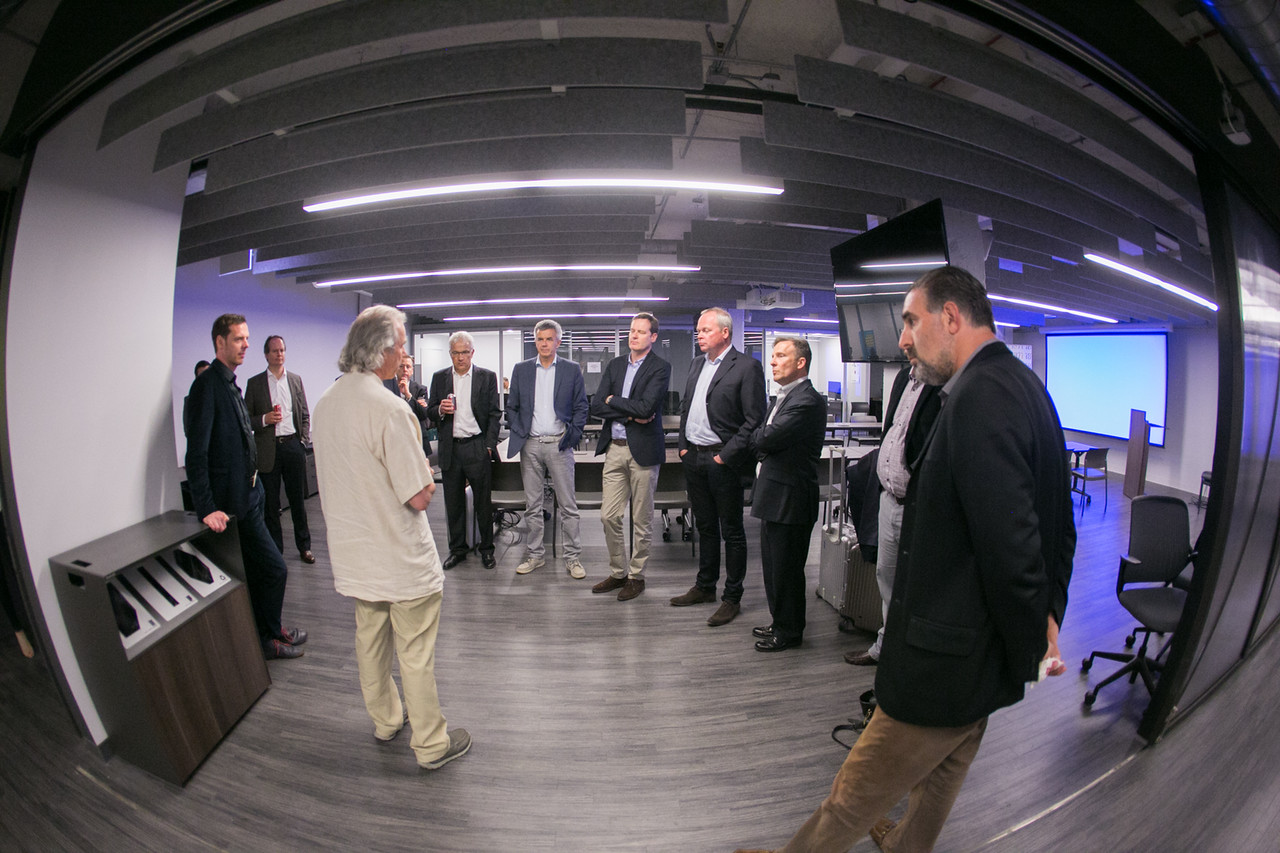
1871 WELCOMES SENIOR EXECUTIVES FROM BMW


Total Pageviews

GOOGLE ANALYTICS

Blog Archive