The most revealing moments in a political movement are often not the grand speeches or choreographed ceremonies, but the smaller ruptures that expose what power looks like when it begins to detach from reality. Sometimes it is a half-empty arena where a vice president speaks to rows of vacant seats that no amount of camera framing can conceal. Sometimes it is a president posting frantically in all caps about victory while foreign officials publicly accuse him of fabricating the terms of the very negotiations he claims to control. Sometimes it is the spectacle of a governing class so consumed by mythology that it can no longer distinguish between dominance and humiliation, between propaganda and truth, between performance and consequence.
That rupture came into sharper focus when Iranian Parliament Speaker Mohammad Bagher Ghalibaf directly challenged Donald Trump’s increasingly erratic declarations about the Strait of Hormuz. In a series of pointed statements, Ghalibaf dismissed Trump’s flood of triumphant posts as fiction, insisting that the United States had not imposed the terms of peace and that the realities of regional power would not be dictated through social media. His message was blunt: passage through the waterway would occur on routes designated by Iran and under Iranian authorization. In a single statement, he stripped away the theatrical language of American victory and replaced it with the harder truth of geopolitical leverage. Trump had spent days presenting himself as the man who had restored order to a global crisis he helped ignite. Iranian officials responded by making clear that Washington had not seized control of the strait at all. Tehran still held the gate.
That distinction matters because the battle now unfolding is no longer simply military. It is epistemic. It is a struggle over who gets to define reality itself. Modern authoritarian movements increasingly depend on creating a closed system of meaning in which the leader’s words become more important than observable events. The mechanism is familiar to historians of political cults and high-control movements alike. The leader speaks. Followers repeat. Contradictions are dismissed. Failures are reframed as victories. Humiliation is transformed into strength through sheer repetition. It is not persuasion in the traditional sense. It is psychological enclosure.
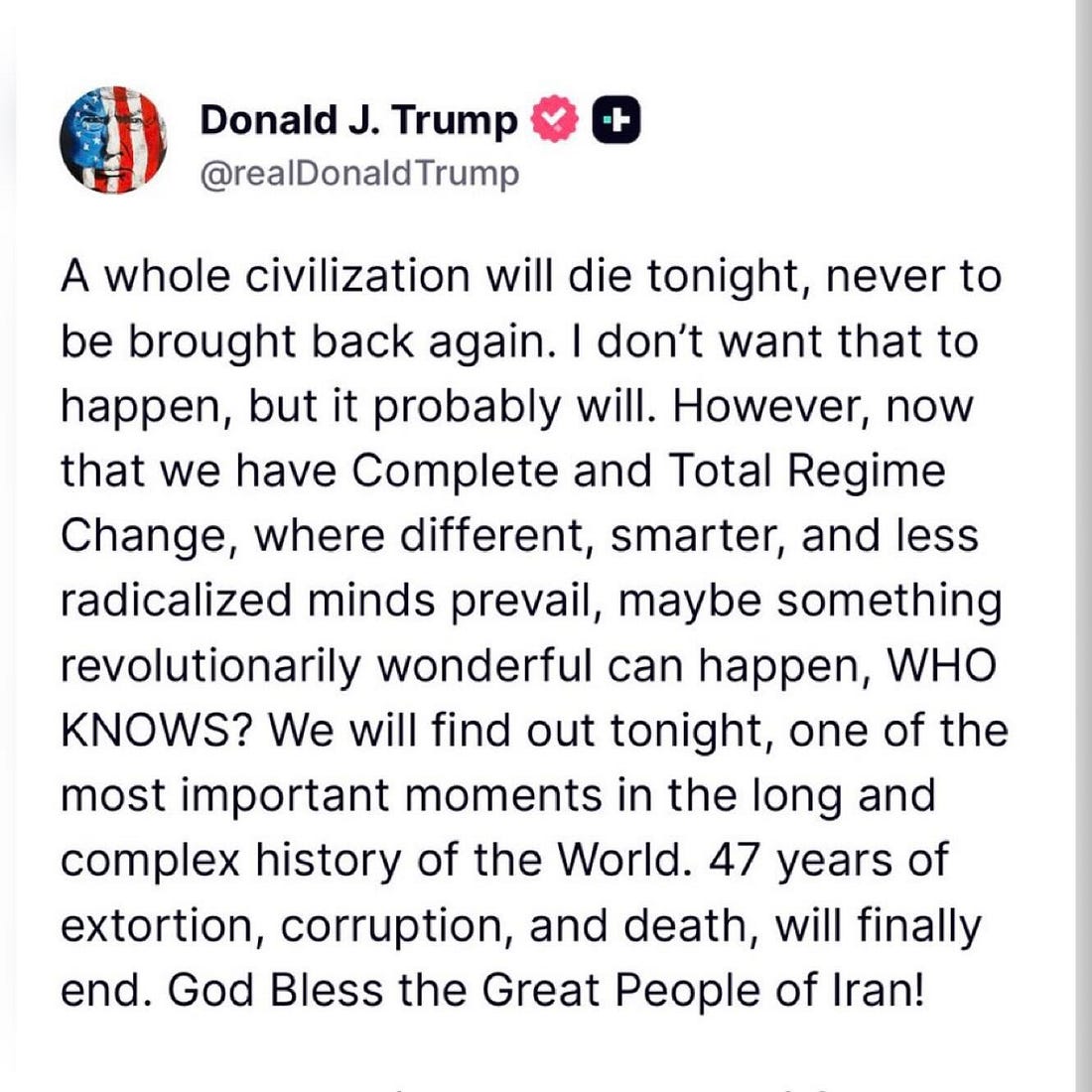
Trump’s social media barrage declaring the “Strait of Iran” open illustrated that mechanism perfectly. A crisis that had destabilized global shipping lanes, rattled oil markets, strained alliances, and pushed the world toward a wider regional war was recast as a personal triumph. The same strait that had been open before the conflict was now presented as if it had been heroically liberated by the very man whose decisions had helped endanger it. The pattern has become almost ritualistic. A problem is created. Damage spreads outward. The same damage is then rebranded as evidence of strength. Reality becomes subordinate to narrative.
What makes this especially dangerous is that the performance increasingly collides with the institutions meant to restrain it. Trump’s declaration that he would personally “prohibit” Israeli Prime Minister Benjamin Netanyahu from bombing Lebanon revealed more than another abrupt foreign policy reversal. It showed a presidency that has come to treat international diplomacy as an extension of personal authority. Alliances are no longer framed as mutual commitments between nations but as relationships of obedience between men. Foreign leaders become subordinate characters in a story whose central purpose is to reinforce the image of the indispensable leader. Policy becomes theater. The world becomes a stage on which one man attempts to prove he alone can command events.
But the deeper instability is not confined to foreign policy. It is also visible in the way millions of people have been conditioned to absorb contradiction without consequence. For years, experts in coercive persuasion have identified a recurring pattern in movements that begin to resemble cultic systems. The leader is always right. Criticism becomes persecution. Any failure is blamed on enemies. Outsiders are depicted as corrupt. Followers are encouraged to reject independent sources of information. The movement becomes not simply political, but existential. To question the leader is to threaten the believer’s sense of identity.
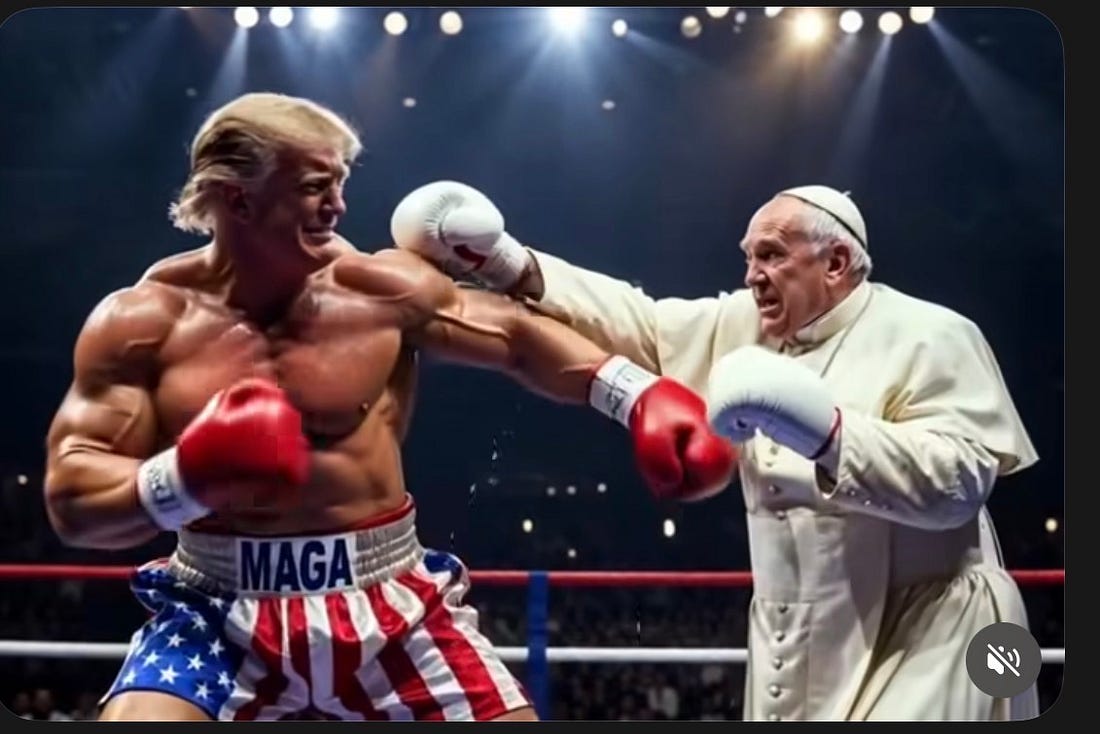
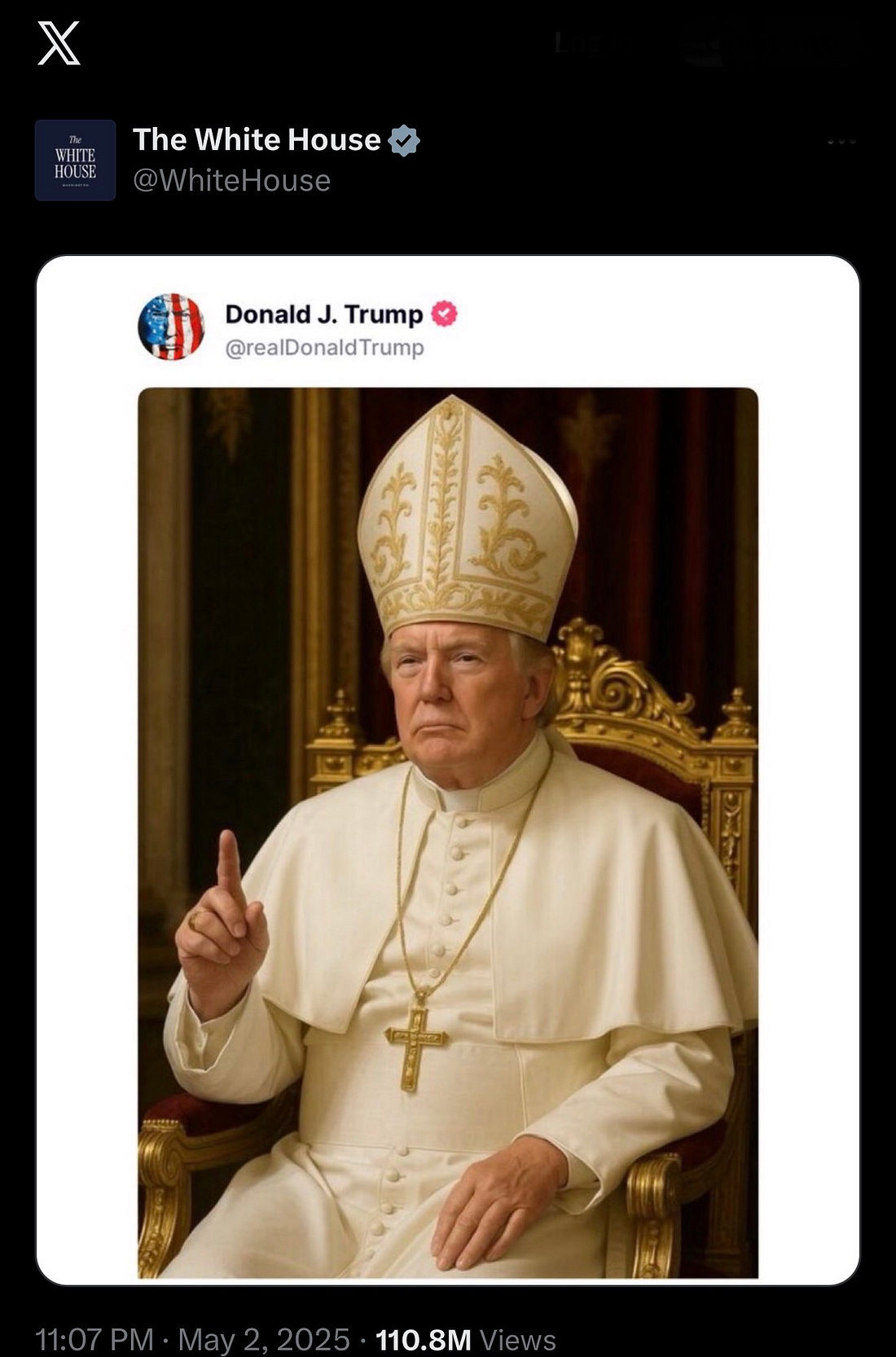
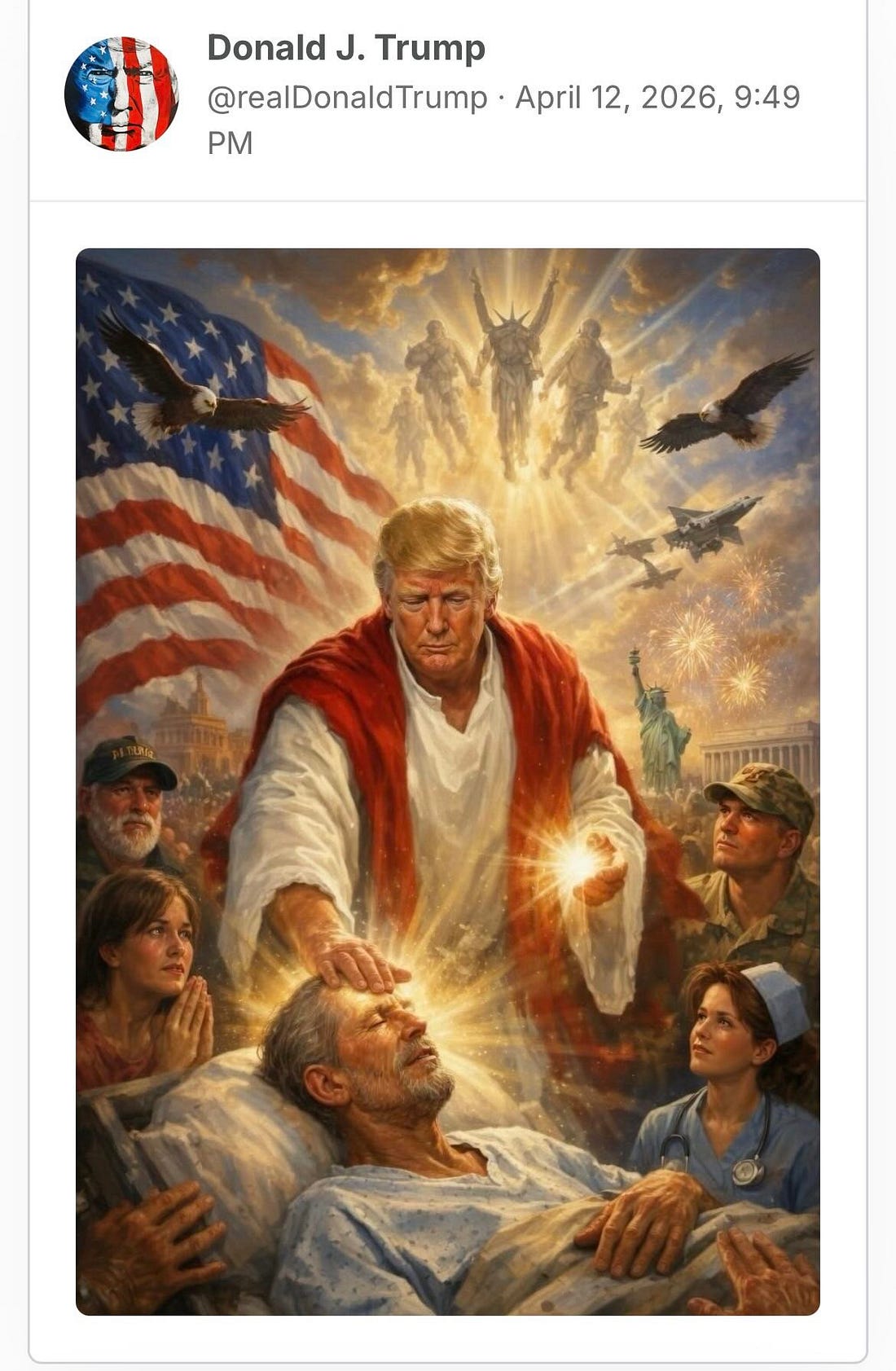
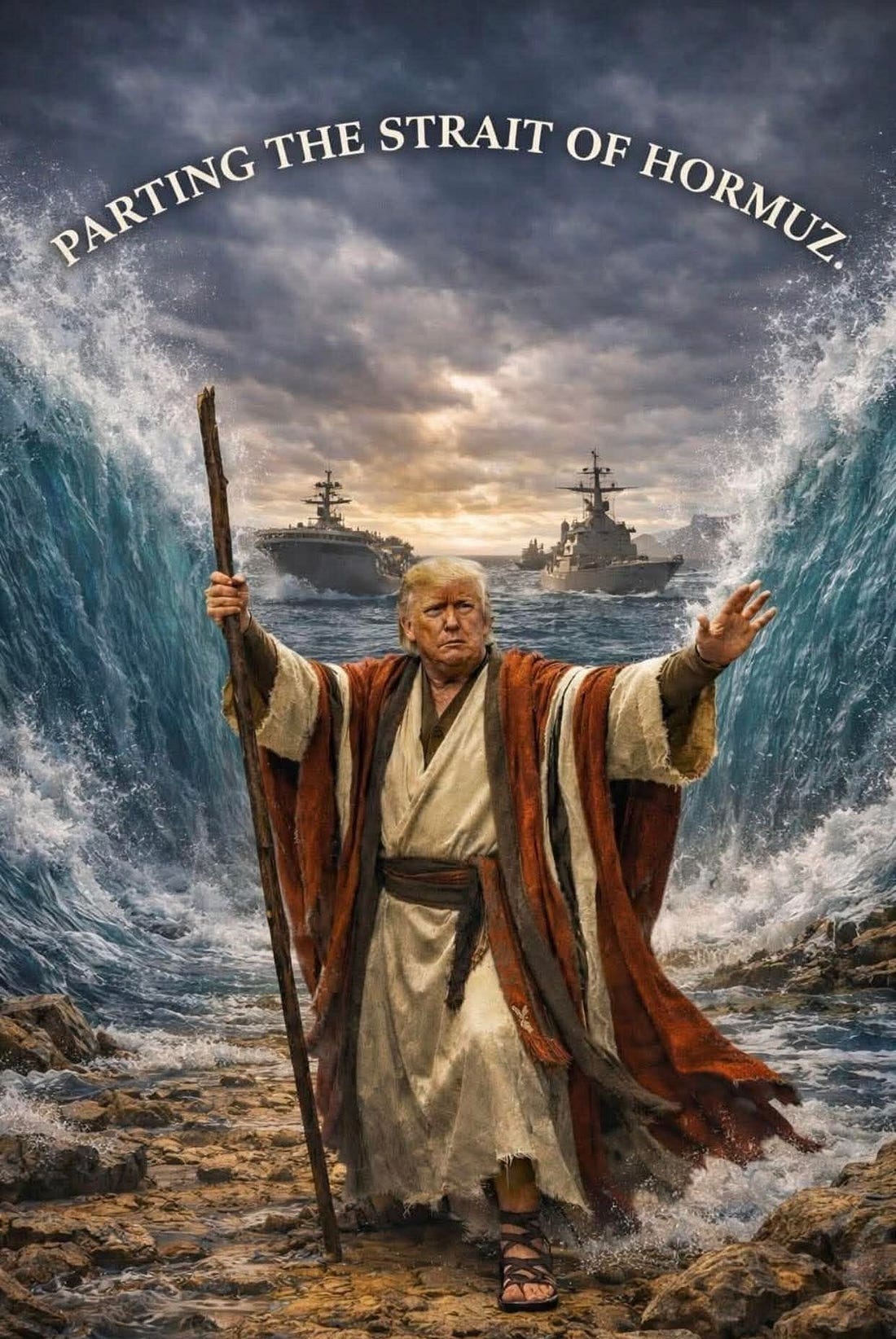
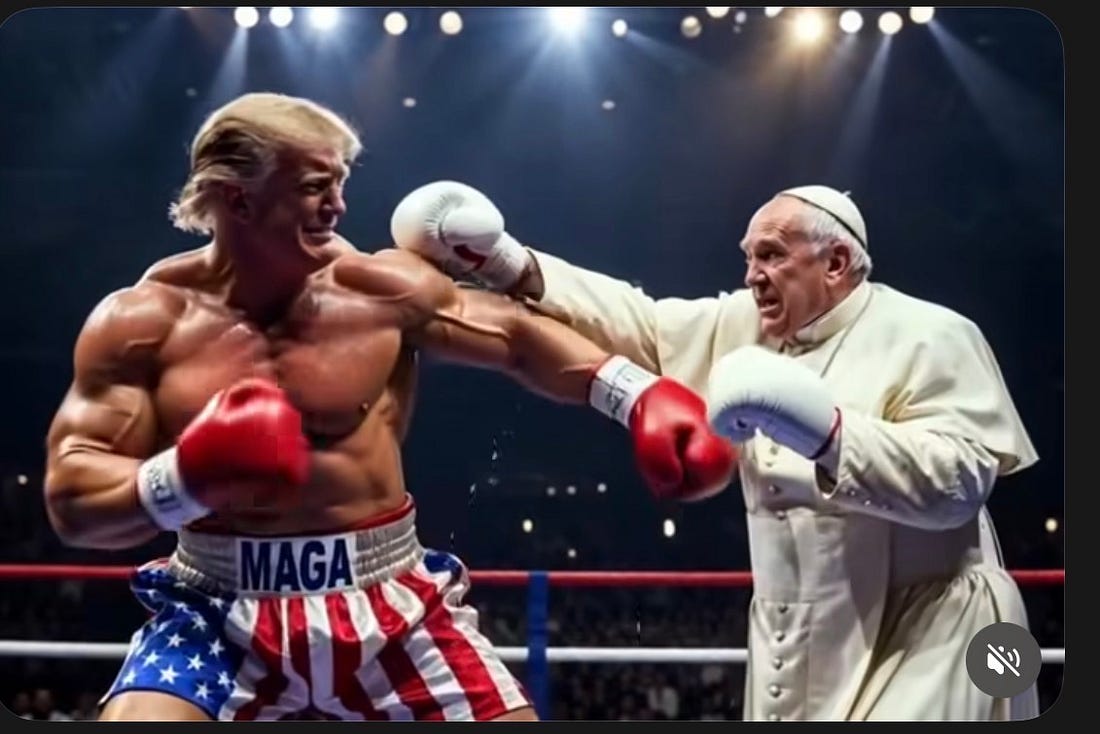
The transformation of Trump into a mythic figure has accelerated this process. AI-generated images depicting him as a warrior, a savior, a king, even a Christ-like figure, are not random internet absurdities. They are devotional artifacts. They serve the same psychological function that sacred iconography has served in authoritarian movements for generations. They elevate the leader beyond accountability by turning him into a symbol. Symbols cannot fail. Symbols cannot lie. Symbols can only be betrayed.
That symbolic transformation explains why ordinary political scandals increasingly fail to produce ordinary political consequences. A presidency engulfed in legal controversy, war, economic disruption, and open corruption no longer triggers the normal civic reflexes that once protected democratic systems. Instead, each new rupture is metabolized into the mythology. Investigations become witch hunts. Contradictions become evidence of genius. Chaos becomes proof that the leader is battling hidden enemies on behalf of his followers. The movement survives not despite instability, but because instability itself becomes the emotional fuel that keeps the movement alive.
That same dynamic can be seen in the strange coexistence of governmental dysfunction and ideological radicalization. Even as foreign crises deepen, domestic institutions continue eroding in quieter ways. Reports that Justice Samuel Alitois not stepping down this term may seem procedural on the surface, but they underscore a broader reality: the architecture of long-term power remains intact even while the daily spectacle dominates public attention. The machinery of influence often advances most effectively when the public is too overwhelmed to notice it moving.
At the same time, figures like Robert F. Kennedy Jr. continue to embody another facet of this cultural decay: the normalization of grotesque behavior through media spectacle. In a healthier political environment, deeply disturbing stories about public officials would provoke moral seriousness. Instead, they become part of the endless churn of outrage, briefly shocking before disappearing beneath the next wave of absurdity. That, too, serves power. A population exhausted by constant chaos becomes easier to govern because outrage loses its staying power. Citizens stop reacting not because the behavior becomes acceptable, but because the system has trained them to believe nothing can be done.
And beneath all of this lies the deeper structural truth that often goes unspoken: many of these crises are inseparable from the economic systems that sustain them. The dependence on fossil fuel empires, petrostate alliances, and militarized resource politics has helped create a world where war and energy remain inseparably linked. The struggle over the Strait of Hormuz is not just about a narrow waterway. It is about a global order that has repeatedly allowed a handful of actors to hold entire populations hostage through energy dependence. Every delayed transition, every compromised climate policy, every strategic accommodation with authoritarian oil wealth has compounded that vulnerability. The cost is measured not only in inflation or markets, but in blood.
That is why the current moment feels larger than one man, even as one man dominates the image of it. Trump is not the sole cause of what is happening. He is the expression of a political culture that spent decades hollowing out its own democratic immune system. He is what emerges when spectacle replaces civic literacy, when grievance replaces governance, when institutions become too timid to defend themselves, and when mythology becomes more emotionally satisfying than truth.
The real danger is not simply that a leader lies. Democracies have survived liars before. The danger is when enough people decide that truth itself no longer matters. Because once a society accepts that power can invent reality as it goes, every crisis becomes easier to manipulate, every institution becomes easier to bend, and every future abuse becomes easier to justify.
That is how decline often looks in real time. Not as a single collapse, but as a slow surrender to unreality. A half-empty arena presented as a triumph. A strategic defeat described as dominance. A man remade into a symbol. A public taught to doubt its own eyes.
And history shows that once a political movement begins demanding faith instead of judgment, the consequences rarely remain confined to rhetoric for long.