
Meet the New Boss; Worse than the Old Boss
Blanche
takes the DOJ to even lower depths.
Apr 16, 2026
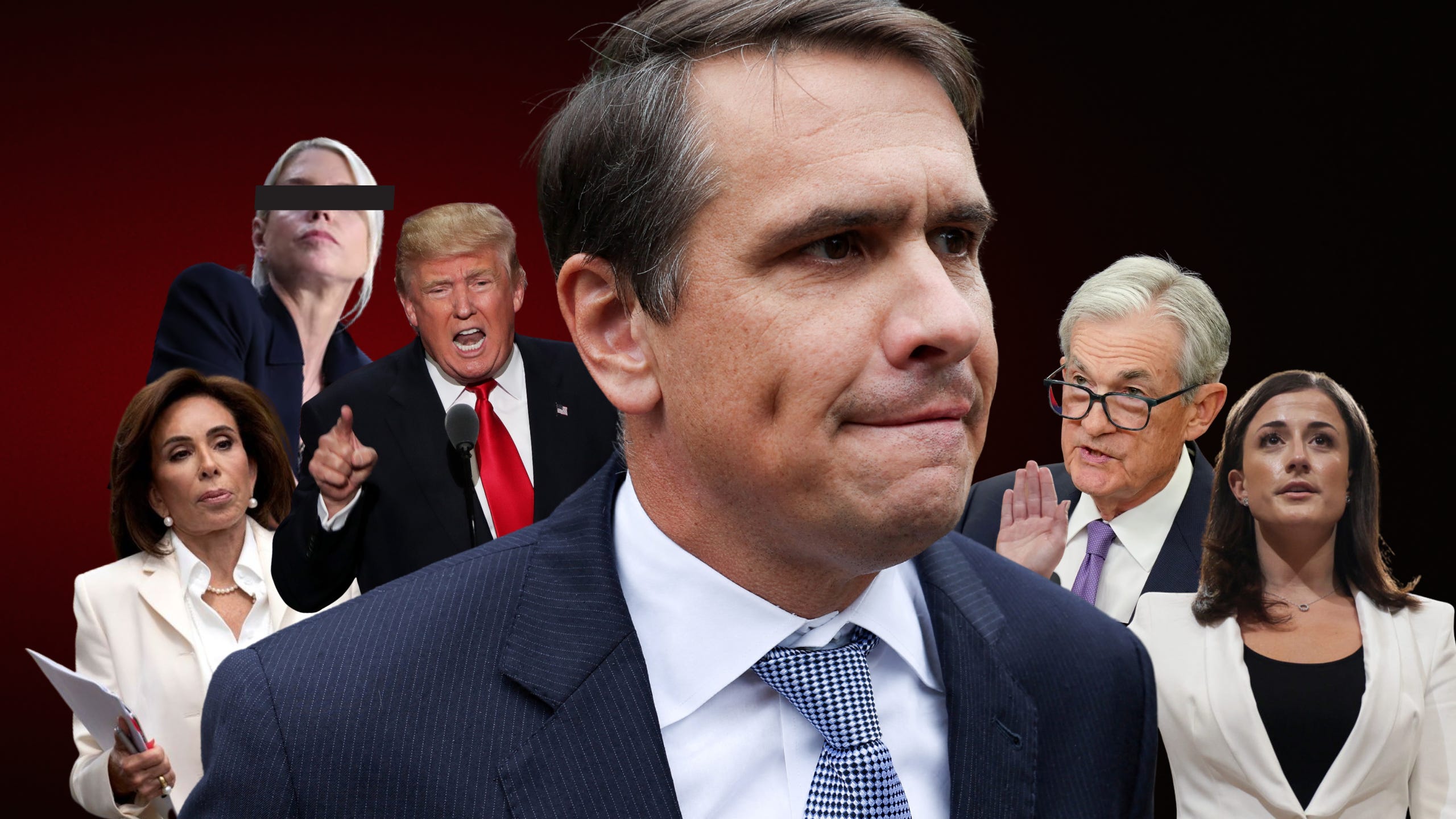
When Pam Bondi was sacked earlier this month, amid reports that her firing offense was, of all things, insufficient zeal in securing convictions of Trump’s enemies, the logical question was: just what more could she have done? Bondi had seemingly pulled out every possible stop to deliver the scalps to the King, foiled only by the checks that exist outside DOJ’s walls, especially grand juries that refused to indict the innocent targets she had placed before them.
At the time, the question seemed rhetorical. It wasn’t. In
Todd Blanche’s three weeks as Acting AG, he has taken screws that seemed fully
turned and tightened them another notch. His initial moves suggest that, hard
as it is to conceive, he will be even more vicious, more slavish toward Trump,
and more willing to jettison the public interest and the rule of law than was
his consummately servile predecessor.
Meet the new boss. Worse than the old boss.
In 14 months, the shortest confirmed tenure of any Attorney
General in 60 years, Bondi managed to eviscerate the mission and good faith of
the DOJ to the point where courts that had always assumed the best of
government lawyers had begun to assume the worst. It was the
antithesis of justice without fear or favor, the Justice Department’s historic
watchword: instead, Bondi’s DOJ delivered favor to Trump’s allies and tortured
his enemies.
Yet in barely three weeks on the fifth floor, Blanche has
done Bondi one better, which is to say the country one worse. The Department,
in April, has moved to whitewash the criminal records of the worst January 6
offenders; fired career prosecutors for working righteous cases now in
political disfavor; deployed loyalist assistants to intimidate the Federal
Reserve in a manner both nakedly political and downright bizarre; and routed a
reprisal perjury prosecution to a division with no conceivable jurisdiction
over it.
Start with the most historically consequential. On Tuesday,
the Department filed a bare-bones motion in the D.C. Circuit seeking to vacate
the seditious conspiracy convictions of the worst January 6 offenders: eight
Oath Keepers, including founder Stewart Rhodes, and four Proud Boys, including
Joseph Biggs and Ethan Nordean.
These men were the architects of the worst assault on
democratic self-governance in our lifetimes. Their prosecutions, for seditious
conspiracy, arguably the most serious and demanding charge in the federal
arsenal, were the hardest and proudest achievement of the largest criminal
investigation in DOJ history.
The seditious conspirators had already received an
outrageous windfall when Trump commuted their sentences on his first day back
in office. Since then, he has embraced them as “hostages,” “unbelievable
patriots,” and “warriors,” and called January 6 itself “a day of love.” The
motion to vacate takes this grotesque revisionism to its logical conclusion.
The four-page motion offered no legal argument, no claim of
innocence, no suggestion of prosecutorial error. It simply declared that
dismissal “is in the interests of justice.”
Whose justice might that be?
On remand, the government will move to dismiss with
prejudice, meaning no retrial is ever possible. The legal system will formally
reflect that Stewart Rhodes and company committed no January 6-related crimes.
At that point, these newly exonerated defendants will be positioned to sue the
United States for malicious prosecution, just as Michael Flynn did, walking away with
1.25 million taxpayer dollars. A collection of pardoned January 6 defendants
has already brought a class action against the Capitol police officers they
overran that day, alleging excessive force. Rhodes and company can now wave their
own dismissals with prejudice.
This is not, as Bondi and Trump might suppose, the triumph
of one political faction over another. The whitewashing of the worst January 6
crimes is an offense against the entire country, Republicans and Democrats,
MAGA and never-Trump alike. The convictions Blanche erases belonged to all of
us.
The second item involves firing people for doing their
jobs, and smearing them on the way out.
This week, the Department fired at least four career
prosecutors who had worked FACE Act cases under Merrick Garland, simultaneously
releasing a 900-page “weaponization” report accusing those same prosecutors of
selective enforcement. They got the knife and the smear at the same time.
The Freedom of Access to Clinic Entrances (FACE) Act was passed in 1994 with bipartisan support, its primary target the physical blockading of abortion clinics, with protections for houses of worship added to bring Republicans along.
The felony cases Garland’s prosecutors brought involved
defendants who physically blockaded clinic entrances. Not people standing
peacefully with signs. The cases were not close calls. In Washington, D.C.,
defendants forced their way into a clinic and blockaded the doors while a
co-conspirator livestreamed it. In Mount Juliet, Tennessee, a coordinated group
physically blocked a patient from receiving care while two ringleaders ran a
deliberate deception operation to delay police. That is the conduct Blanche has
now declared a firing offense to prosecute.
What makes this doubly perverse is the asymmetry Blanche
has enshrined as policy: FACE Act cases involving houses of worship get the
Justice Department’s full attention, as with the tenuous prosecution of Don
Lemon for covering a protest in a St. Paul church; cases involving abortion
clinics are now restricted to “extraordinary circumstances.” Same conduct, same
statute, different outcomes depending on the political valence of the victim.
Then there is Tuesday’s drop-in visit to the Federal
Reserve by two prosecutors in Jeanne Pirro’s office and an investigator.
Chief Judge James Boasberg had already quashed Pirro’s
subpoenas targeting the Fed in March, finding that the government had produced
“essentially zero evidence to suspect Chair Powell of a crime” and that the
investigation was transparently designed to pressure Powell on interest rates.
So Pirro dispatched two prosecutors, Steven Vandervelden and Carlton Davis, to
show up unannounced at the Fed’s Washington headquarters and request a tour of
the renovation project Trump has cast as the source of Powell’s supposed
criminal exposure.
It is hard to overstate how anomalous this is. Prosecutors
don’t make unannounced visits to subjects of an investigation and ask for a
tour. Beyond that, the Fed is represented by counsel, Robert Hur, the former
United States Attorney who investigated Biden’s handling of classified
documents and found no basis for charges. Contacting a represented party
without counsel present is a blatant ethical violation. Hur responded with a
tart letter advising Pirro’s office that if it wished to challenge Boasberg’s ruling,
the courts provided an avenue. That avenue is called an appeal. Pirro has yet
to file one.
A word about Vandervelden and Davis. They are also the same Pirro soldiers who previously tried to indict six sitting Democratic members of Congress for taping a video urging military personnel they need not comply with illegal orders. Vandervelden has no prior federal prosecutorial experience; Davis previously served as a congressional staffer and has a single brief stint as an AUSA to his name.
The result: not a single vote to indict. It’s the first
total shutout in federal grand jury practice that I’ve ever even heard about.
The old saw is that a grand jury will indict a ham sandwich. It wouldn’t bite
on the very different malodorous sandwich Vandervelden and Davis were serving.
The only plausible explanation for the Fed field trip is
raw intimidation, a rattling of sabers, saying we still have you in our sights.
Trump confirmed as much the next morning, telling Fox Business the probe would
continue and that it was “more than a criminal probe.” The President of the
United States, on camera, volunteered that his prosecutors are doing something
other than pursuing criminal justice.
Finally, there is Cassidy Hutchinson, the then-25-year-old former White House aide whose June 2022 testimony remains one of the most consequential public accounts of Trump’s conduct on January 6. She was a loyal Republican staffer with no political animus toward Trump. She simply told the truth under oath, at considerable personal cost, against documented pressure from her Trump-supplied attorney not to, an attorney she eventually discharged.
The prospective perjury charge centers on her relaying what
she had been told by White House Deputy Chief of Staff Tony Ornato about Trump
lunging for the steering wheel of the presidential vehicle. The Secret Service
agent in the car disputed the account; Ornato himself later claimed not to
remember telling her. Relaying in good faith what a senior White House official
told you is not perjury, by any stretch. The willful and material falsehood the
charge requires is nowhere in evidence.
Bondi opened the inquiry in her final weeks as a last-ditch
bid to please Trump. Blanche greenlighted the next step: assigning the matter
to Harmeet Dhillon’s Civil Rights Division. Dhillon is a longtime Trump
personal attorney, an ardent promoter of his 2020 election fraud claims, and an
official who has described her mission as not merely slowing civil rights
enforcement but “turning the train around and driving in the opposite
direction.”
But perjury prosecutions are not her job. Every division in
the Department has its own bailiwick. I don’t know of a single instance in
which the Civil Rights Division has handled a congressional perjury case. There
is no institutional authority to do so. The assignment is designed for one
purpose: to show Trump that the Hutchinson prosecution is in the hands of a
trusted enforcer.
What distinguishes Blanche, and has earned him particular
contempt among former DOJ colleagues, is that he knows better. Bondi was over
her head from day one, a Fox News personality dropped into the nation’s premier
law enforcement institution. Blanche is a former Assistant United States
Attorney who spent years in the Southern District of New York. He knows that
the career prosecutors he has fired acted with integrity and dedication to
justice. He knows the value of the traditions he is feeding through a meat
grinder, because he was formed by them.
Blanche served in a Justice Department where it was
forbidden for the White House even to communicate with DOJ about a pending
case, and he knows precisely why that rule existed and what its abandonment
means. Now he takes pride in turning that rule upside down.
At his first press conference as Acting AG, asked about
Trump’s explicit public demands that DOJ investigate his political opponents,
Blanche said: “It is true that some of them involve men, women, and entities
that the president in the past has had issues with and believes should be
investigated. That is his right, and indeed it is his duty to do that, meaning
to lead this country.”
Whoa. The Acting Attorney General of the United States
describes it as the president’s duty, and a function of his
leadership, to order prosecutions of his political enemies. It is a
breathtaking characterization of Trump’s corrupt agenda, now become the
Department of Justice’s mission statement.
In three weeks, Blanche has made clear there is no floor he
recognizes. He is all in, past Bondi, past any limiting principle. We thought
we had seen the bottom. We hadn’t.
And that gives rise to one question, also unfortunately not
rhetorical: how much lower can he drive the Department of Justice?
Talk to you later.
