
Bari Weiss yanking a 60 Minutes story is censorship by
oligarchy
Weiss ought to cut her
losses, green-light the piece, and try to start acting like an editor – not
like a cog in the machine of authoritarian politics and oligarchy
Tue 23 Dec 2025 14.30 EST
One tries to give people the benefit of
the doubt. But now, when it comes to Bari Weiss as the editor in chief of CBS News,
there is no longer any doubt.
A broadcast-news neophyte, Weiss has no business in that exalted role. She
proved that beyond any remaining doubt last weekend, pulling a powerful and
important piece of journalism just days before it was due to air, charging that
it wasn’t ready. Whatever her claims about the story’s supposed flaws, this
looks like a clear case of censorship-by-editor to protect the interests of
powerful, rich and influential people.
The tug-of-war
over CNN shows how dysfunctional US media has become
The 60 Minutes piece – about the
brutal conditions at an El Salvador prison where the Trump administration has sent Venezuelan migrants
without due process – had already been thoroughly edited, fact-checked and sent
through the network’s standards desk and its legal department. The story was
promoted and scheduled, and trailers for it were getting millions of views.
I’m less bothered by the screw-ups in
this situation – for example, the segment is already all over the internet as,
essentially, a Canadian bootleg – than I am by her apparent willingness to use
her position to protect the powerful and take care of business for the
oligarchy. Which appears to be precisely what she was hired to do.
Journalism is supposed to “afflict the
comfortable and comfort the afflicted”, but Weiss seems to have it backwards.
I can’t know what’s in her mind, of
course, but I know her actions – her gaslighting about how it would be such a
disservice to the public to publish this supposedly incomplete piece, and her
ridiculous offer to provide a storied reporting staff with a couple of phone
numbers of highly placed Trump officials.
Weiss insists that the story needs Trump administration comment before it can
run.
But correspondent Sharyn Alfonsi has
argued – eloquently and persuasively – that 60 Minutes repeatedly sought
substantive comment and was turned down. In a memorable phrase, Alfonsi charges
that if that’s an acceptable reason for spiking a story, it’s tantamount to
giving the government a “kill switch” for any story they don’t like. Just
refuse to comment, and it dies on the vine.
It is also nonsensical of Weiss to suggest – again, gaslighting – that the
piece somehow lacked sufficient newsworthiness because other news organizations
had reported on the prison earlier.
As if to counter this specious claim, a federal judge this week ordered the
Trump administration to submit plans to return the migrants to the US or give
them a hearing. This story is hardly old news.
What’s more, hearing directly from an abused migrant on camera, getting his
description of the torture and seeing the images of inhumane treatment is
striking and newsworthy. TV brings it home, quite literally.
Again, I don’t know what’s inside
Weiss’s head – but I do know the context. In an unusual chain of command, Weiss
reports directly to David Ellison, the son of Larry Ellison, a Trump buddy and
one of the world’s richest people.
The Ellisons control CBS’s parent
company, Paramount Skydance, which is making an aggressive effort to buy Warner
Brothers Discovery. They would have to overcome an offer from Netflix that has
already been accepted.
How? Well, federal regulators (and
therefore Trump, who has expressed his interest) would, naturally, have some
sway over who succeeds.
The Ellisons surely wouldn’t want to antagonize anyone at this critical moment.
And notably, if Paramount prevails, they would control CNN, and could do there
what they’re doing at CBS News – they could install new editorial leadership
that’s more agreeable. Trump has complained bitterly for years about CNN; this
matters to him.
Conveniently, there’s a blueprint
available for how to cozy up to Trump by buckling. A few months ago, as an
earlier Paramount merger was on the line, the company chose to settle a
frivolous legal claim by Trump over 60 Minutes’ routine editing of a pre-election
interview with Kamala Harris.
Stephen Colbert, you might recall,
termed this a “big, fat bribe”. Then his late-night show was canceled,
effective next spring. Ratings, don’t you know?
Bari Weiss is a
weird and worrisome choice as top editor for CBS News
Trump received his settlement along
with a side order of bragging rights, and a few weeks later, the Paramount
merger went through. Yes, everybody got theirs – except the public and the CBS
News staff.
As editor in chief, of course, Weiss
has the power to make the decision she did. That comes with the job.
But it doesn’t make her decision
right. It wasn’t. She’s damaged the institution she’s supposed to be the
steward of and, far less importantly, hurt her own reputation. Inadvertently,
she has also made sure that far more people are aware of this story, and the
horrible underlying situation, than if the story had simply run as planned.
At this point, Weiss ought to cut her
losses, green-light the piece, and try to start acting like an editor – not
like a cog in the machine of authoritarian politics and oligarchy.
- Margaret Sullivan is a Guardian US columnist writing on media,
politics and culture
Yes, Elon, seeking
truth IS the most important goal of journalism
And giving a voice to vulnerable people matters, too
Dec 30, 2025
The famous saying is “never apologize, never explain.” I
understand it’s supposed to promote keeping a stiff upper lip and being stoic,
non-whiny and strong. But I’m not a fan of either part of that directive.
On the contrary, I think it’s wise to apologize when that’s
warranted.
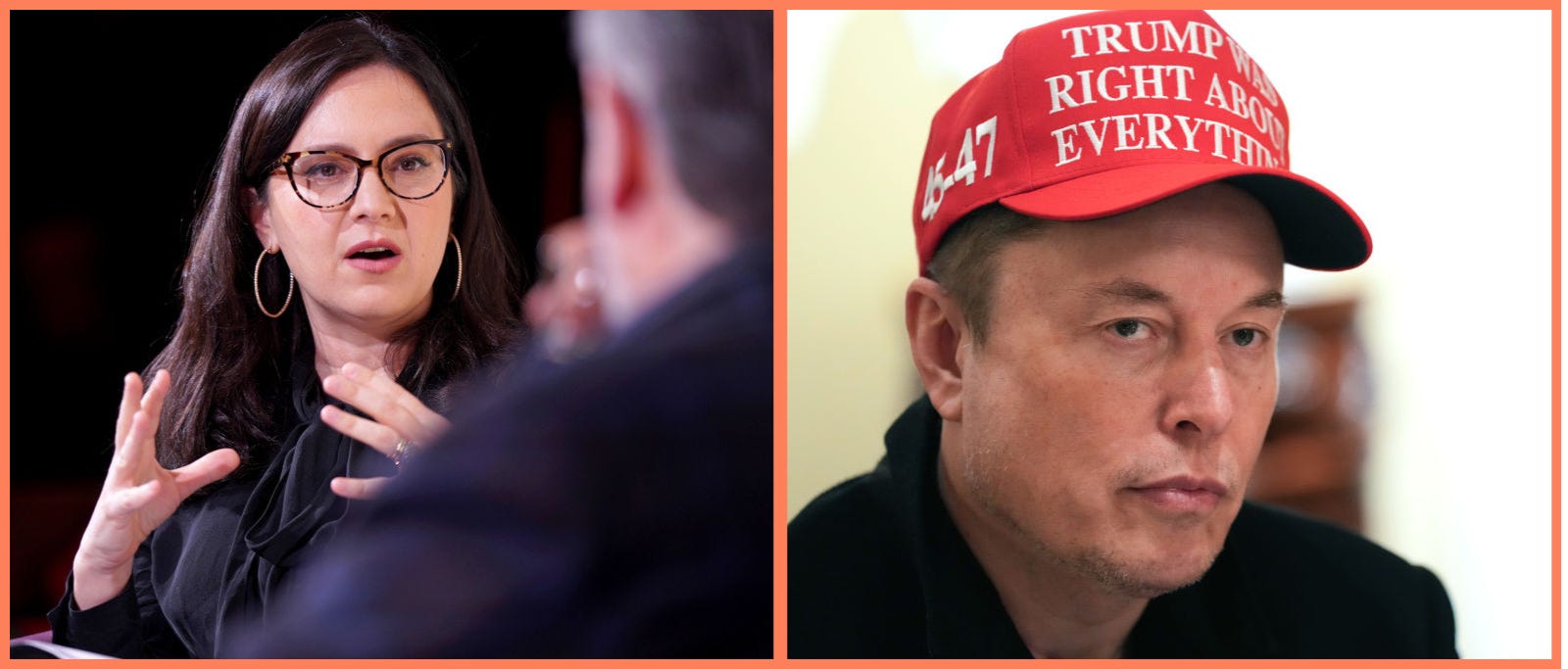
After
critiquing Bari Weiss, I received a response from Elon Musk / Getty Images
As for explaining, I’d like to do a little of that here. No
apologies, though, in this case. So here we go:
My editor at the GuardianUS asked me last week to opine on
the controversy about Bari Weiss — the new editor in chief at CBS News — and
her startling decision to withhold a well-vetted 60 Minutes story just before
it was to be broadcast. As you may know, the story was about a brutal prison in
El Salvador where the Trump administration has been sending Venezuelan migrants
without due process.
It’s a powerful, disturbing segment, and even though it
aired only in Canada, not in the US, you can probably find and watch it, as I did. The
story makes clear the inhumane conditions at the prison, and the cruelty of
sending migrants there. It certainly doesn’t reflect well on the Trump
administration.
My column was critical of Weiss, who I believe has been
installed as editor to move CBS News to the right, as her corporate bosses
clearly want. Her direct boss is the ultra-rich David Ellison, son of Larry
Ellison, who is one of the richest people on earth and a friend of Trump’s.
Notably, CBS’s parent company, Paramount Skydance, is trying to buy Warner
Bros. Discovery (which owns CNN) — and they probably need help from Trump World
to get it done.
Weiss has no previous broadcast TV experience and isn’t
really a news person, though she founded a successful opinion-based site, The
Free Press, and is a former opinion editor at the New York Times. The fact that
she’s the top editor at one of the most storied newsrooms in the U.S. says a
lot about media in this moment.
My conclusion was that Weiss’s decision to keep this
segment off the air was within her rights as editor, but was an unwise decision
— and in fact, a form of censorship by oligarch.
It was a tough column, and I stand by what I said. You can read it here.
Afterwards, I posted it on social media — both on X
(formerly Twitter, and owned by Elon Musk, of course) and on BlueSky. And in
both places, I used a line from the column to pique interest; in retrospect, I
might have made the wrong choice.
I wrote in the social-media posts: “Journalism is supposed
to ‘afflict the comfortable and comfort the afflicted,’ but Bari Weiss seems to
have it backwards.”
Soon after, Elon Musk chimed in.
“No, Marge, you’re supposed to tell the truth,”
Musk tweeted to his millions of followers.
The thing is, Musk and I are in total agreement on that.
Journalism’s first responsibility is to the truth and to the facts. No
argument there.
Later, Fox News emailed me, saying they were doing a story
on the criticism of my column that had followed Musk’s tweet, and asking for my
response. I gave them one; if they did do a story, I never saw it. It was,
after all, the day after Christmas.
That old expression about
comforting the afflicted is supposed to remind us that a part of the
journalistic mission is to give a voice to the voiceless and to hold powerful
people and institutions accountable.
Powerful, rich people and big corporations don’t have a lot
of trouble getting their message out, or getting the best legal representation,
or addressing wrongs visited upon them. But the vulnerable person, by
contrast, often has no voice. That certainly includes the migrant who’s being
treated as the worst kind of criminal — as an animal — and thrown in a mega-max
prison with no recourse and no help.
The 60 Minutes segment on the prison seemed to have that
understanding as its foundation. It said, in effect, “Hey, Americans, here’s
something that your government is doing to your fellow human beings and you
ought to know about it.”
Did the story tell the truth and stick to the facts?
Certainly. The segment had been stringently fact-checked, vetted and approved
by the CBS News standards department and its legal department. It
had been screened internally multiple times, and Bari Weiss had every
opportunity to review it much earlier in the process. The segment had been
scheduled, promoted, and approved at every level.
But then she decided it lacked sufficient on-camera
commentary from top Trump officials such as Stephen Miller. The reporters and
producers said they had asked for a substantive response from those officials
and didn’t get that.
So Weiss pulled the story. It didn’t air as scheduled and
it’s unclear when or if it will ever see the light of day.
Sharyn Alfonsi, the correspondent on the story, charged
that Weiss’s decision was driven by politics, and that a policy of pulling
stories for lack of comment was like giving those under journalistic scrutiny a
“kill switch.”
As I said in my column, Bari Weiss gets to make these kinds
of calls. She is, after all, the editor. I can’t know what was in her head but
it’s my opinion that Alfonsi’s read is correct. The story would certainly
irritate Trump World, and the Paramount Skydance honchos really don’t want that
right now. Did the Ellisons order her to do what she did? I
doubt it. It’s not necessary; it’s understood.
Do editors sometimes pull stories back because they lack
sufficient reporting? Of course they do, and rightly so. I did
that kind of thing myself occasionally when I was the top editor of a daily
newspaper for 12 years. Ben Bradlee famously did the same when his hotshot
Watergate reporters at the Washington Post had failed to nail down a story
sufficiently.
But I don’t believe that was the motivation here.
