


 |
I’m sitting in my living room, cup of coffee in hand, surrounded by Christmas, and I can’t stop crying.
The tree is lit, steady and familiar, and everything in the room looks the way it always does this time of year. Nothing’s been disrupted. Nothing’s been taken away. The quiet holds. The warmth stays where it belongs. And yet, something inside me feels unmoored, as if I’ve drifted a few inches outside myself and don’t quite know how to come back yet.
 |
I look at the ornaments and think about my children when they were small. I remember how they could lose themselves completely in the act of creating. Tongues caught between their teeth. Brows knit in concentration. Fingers sticky with glue as they tried, again and again, to get it just right. I can still hear the snip of scissors through construction paper—the pause, the careful turn before the next cut. Time moved differently for them then. The world shrank to color and shape and the seriousness of being four or five and trusted with something sharp. Their hands moved slowly, deliberately, within a reality that had never let them down. Safety wasn’t something they questioned or named; it was simply the way the world was. It was the room itself.
For Jeffrey Epstein’s victims, childhood was never allowed to remain intact.
That knowledge sits heavily with me today.
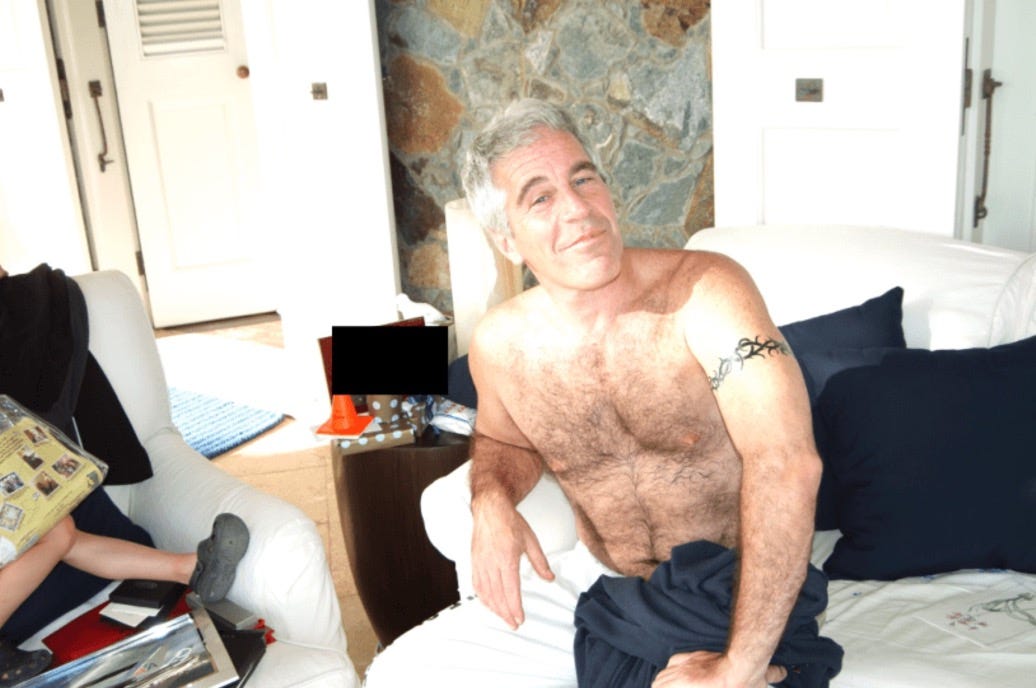
Over the last several days, as the Epstein files keep surfacing, the images are everywhere, and they keep finding me whether I’m ready or not. They’re on the news. They’re on social media. They’re in every public space where this story is still breaking and unfolding. I know they’re there. I know they’re coming. And still—nothing prepares you.
Nothing prepares you for the angle of a leg that looks like it belongs to a toddler.
 |
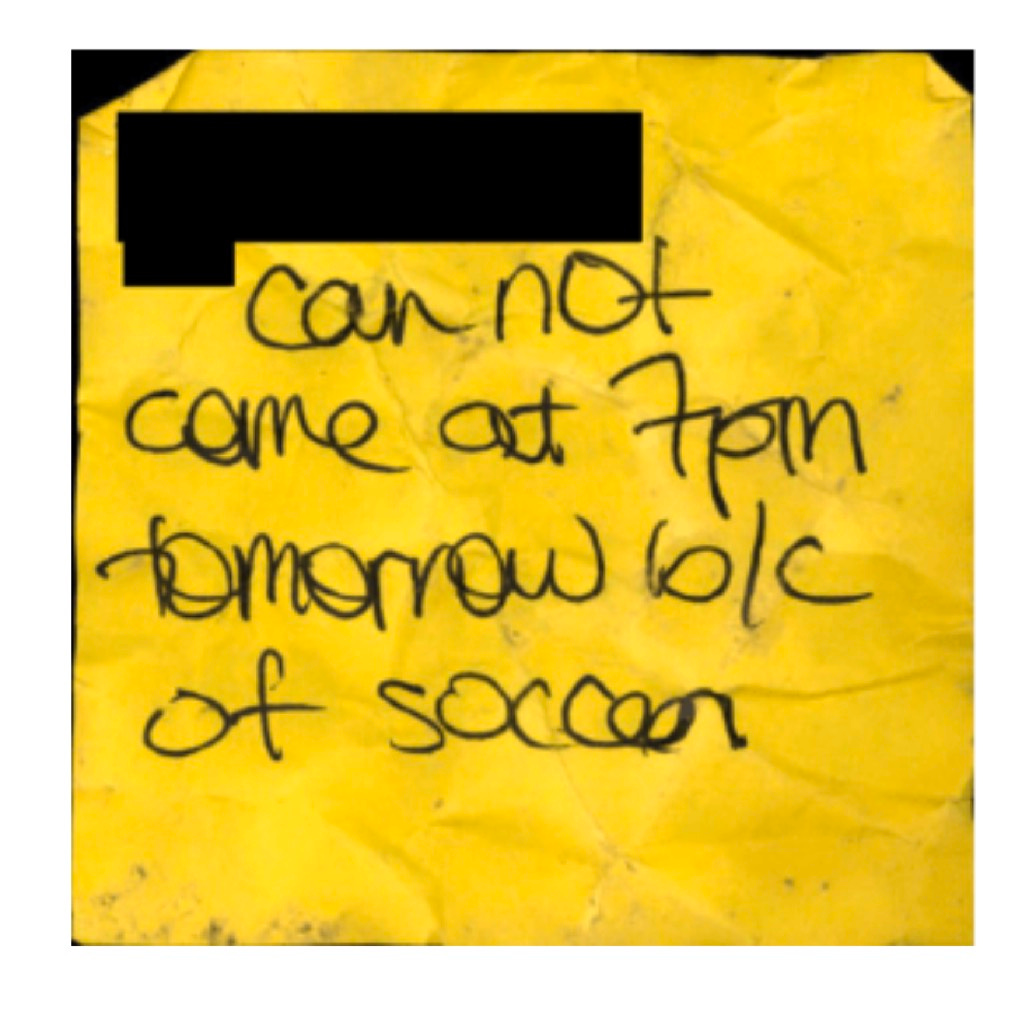
Nothing prepares you for a sticky note explaining that a girl couldn’t make it one night because of soccer. Soccer. A word that should live safely in minivans and muddy cleats and Saturday mornings, not here.
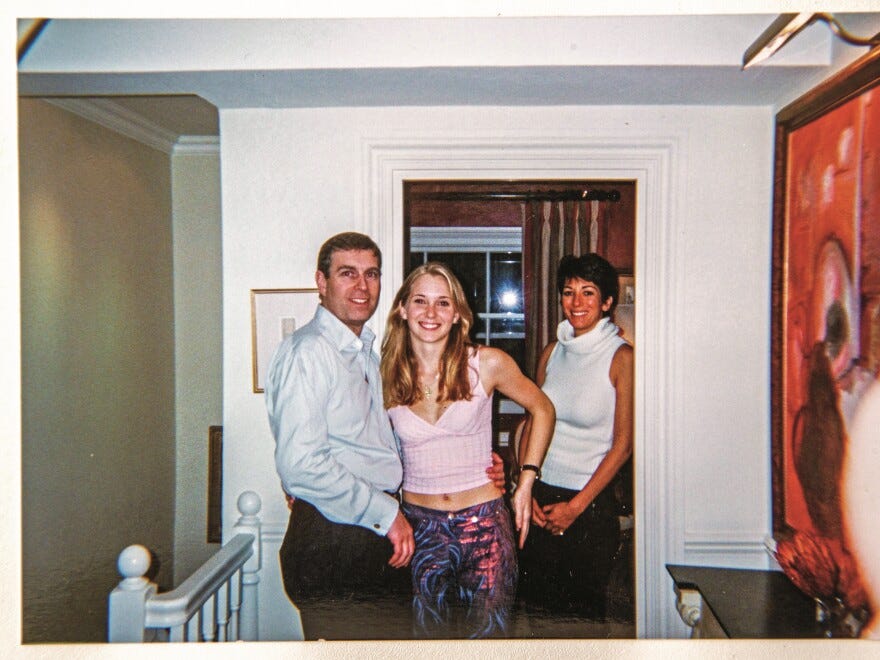
Nothing prepares you for the sheer number of photographs, for how methodical they seem, for the chilling realization that someone took the time to document all of this.
 |
Knowing doesn’t soften it. Anticipation doesn’t dull it. Every one of them still knocks the air out of me, especially the photographs that leave no room for denial. A girl on her knees. Her face blurred. Her small body bearing the weight of what was done.
Their faces are blurred, smudged, as if anonymity could still shield them. But nothing in these images is softened. The blur becomes a spotlight, drawing attention to what cannot be hidden: limbs too slight, postures unformed, bodies that have not yet learned to brace against the world. You see, unmistakably, how young they are—not by their faces, but by the way they inhabit space with the unguarded trust of childhood. The realization lands with a sickening clarity: innocence is visible even when identity is erased.
What’s making it unbearable isn’t only what’s being revealed. It’s what’s being done right now.
The Trump administration, aided by a complicit Department of Justice, is engaged in a calculated and cruel campaign of obstruction in plain sight. They’re flouting the law meant to demand accountability, stretching deadlines and dodging disclosure with open contempt. The truth is rationed and obscured while the women who survived these horrors are dragged back through them yet again. Predators remain protected. Evidence is hoarded, withheld, erased. None of this is subtle or accidental. The truth is being smothered in real time, and witnessing it is fucking horrific.
This is why anger came first, as it always does—swift, sharp, fiercely protective. It surged in and named the truth without flinching: the depravity, the machinery that swallows harm and spits it out below, the predators shielded while survivors are told to wait, to be patient, to bear it. For a moment, that anger anchored me. It gave shape to the horror, carved edges I could grasp in the dark.
But anger is fleeting. It never stays.
What followed was grief. Wide and quiet. Filling the room alongside the glow of the tree and the evidence of a childhood that was allowed to remain intact.
My early childhood was not a safe place. I have no memory of comfort from my mother—no recollection of being held, soothed, or shielded. What lingers is presence as threat: a looming figure that felt wrong long before I had words for wrongness. She was a shadow that swallowed the light, a force that filled the room and pressed the air from my lungs. I remember screaming. I remember pleading with her to stop. I remember fear so absolute it became physical—a cold that seeped through me, marrow-deep. At four years old, I couldn’t name it as abuse, or violence, or evil. But my body understood. Some part of me mapped the danger, etched it into my bones—a warning that never fully faded.
And I remember my father holding me afterward. His arms. His steadiness. The quiet attempt to make me feel safe again. That care mattered. It’s part of me too. But it didn’t erase what came before it, or what followed. I never felt safety from my mother. Not then. Not ever. That absence became its own kind of presence, one that shaped how I learned to exist in the world.
Maybe that’s why this moment feels so crushing.
Because I know what it costs when safety fails. I know how long it takes to rebuild even a fragile sense of trust. I know how violence doesn’t end when the act itself is over, how it keeps working its way forward, lodging itself in decisions, reactions, instincts, long after the damage is done.
That force was already in my body a few nights ago when I picked up Virginia Giuffre’s book and told myself I was ready.
I wasn’t.
I didn’t get far before I had to put it down. What she endured surged up all at once, brutal and undeniable. A child being used again and again, systematically. And a woman left to carry what was done to her for the rest of her life.
Virginia Giuffre is no longer here to speak for herself. While she lived, she told the truth—unflinchingly, at great personal cost. Still, the world failed to protect her. Her absence is a devastating reminder: truth-telling does not promise safety. It does not halt the harm.
Trauma doesn’t ask permission. It doesn’t wait for a quiet moment or a time when you’re strong enough to face it. It arrives when it wants—sudden, unbidden—slipping through the cracks of ordinary days. It weaves itself into the fabric of your life, haunting you whether you’re ready or not. I know this because something that happened decades ago can still feel as close as breath, as sharp as yesterday, whenever the present brushes up against its ghost.
That’s what this moment’s doing.
The story doesn’t move forward; it circles, pulling the same women back into its orbit, again and again. Each new headline tears open wounds that never had time to close. Pages appear, then disappear. Deadlines come and go, untouched by consequence. The truth is grazed, diluted, deferred—while the women who endured it are left to shoulder its weight once more, as if survival alone weren’t already too much to ask.
The questions that matter are sitting in plain sight, unanswered.
Why was a convicted child sex trafficker, sentenced to twenty years for facilitating the rape of children, moved at all?
Why was Ghislaine Maxwell granted limited immunity?
Why’s she now held in conditions that resemble comfort rather than consequence?
And why, when the Epstein files were released, were the images showing Donald Trump deleted?
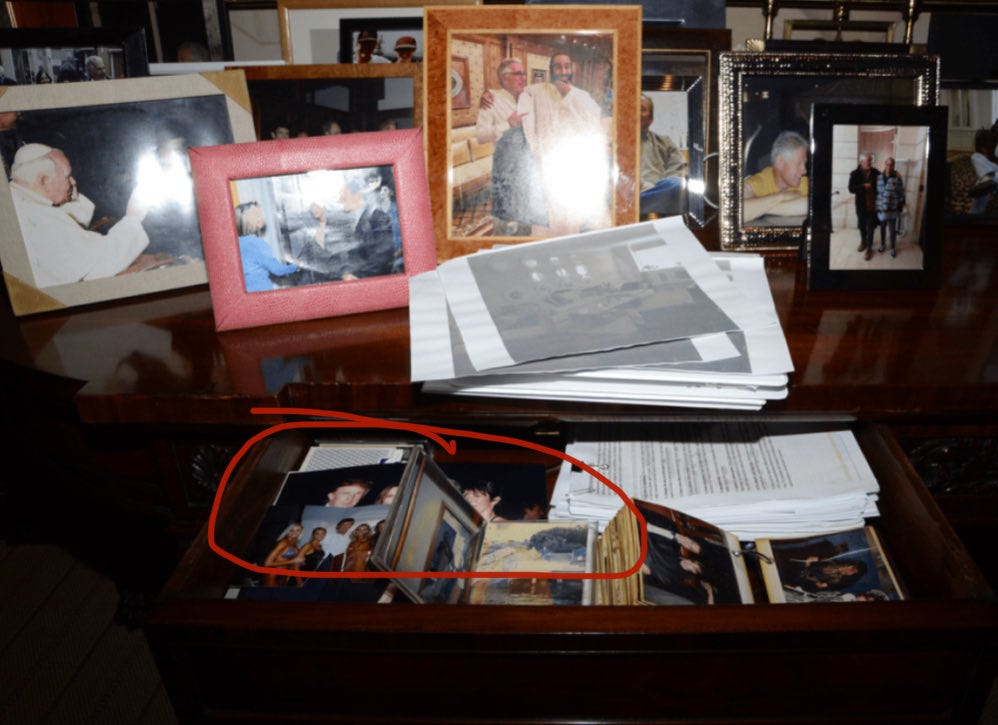 |
Fifteen files removed. No explanation. No accountability. Evidence present one moment, erased the next, as if disappearance could stand in for truth.
I know what being raped in high school did to me—how it unsettled everything I thought I knew about myself, about trust, about safety. The aftershocks still surface in ways I don’t always expect. But even as I live with that, I know there are limits to my understanding. What happened to these women began when they were children. It wasn’t a single wound—it was inflicted over and over, with intention, with persistence. I wasn’t trafficked. I wasn’t returned to harm, again and again, reduced to something to be bartered and used. I can’t begin to comprehend what it means to carry that kind of pain, to have your childhood stolen piece by piece, and then to watch as the world looks away, unwilling to face the horror of what was done while rewarding the ones who did it to you.
This isn’t political. It isn’t partisan. These were children.
I stand with the survivors. With the women still waiting to be heard. With the girls whose childhoods were taken from them. With those whose names we know—Virginia Giuffre, Maria Farmer—and with every survivor whose name we may never learn. So many have been forced to speak a language they never wanted to know. Others are still searching for words, caught in silence. All of them deserve more than waiting, more than empty promises, more than being asked to bear this alone. All of them deserve to be seen, to be honored, to be treated with dignity.
We cannot give them back what was stolen.
But we can sure as shit end the silence that keeps rewarding the thieves.
We must hold every enabler, every protector, every silent bystander to account—because justice delayed is justice denied.
And if you’re a survivor reading this, please know that you are not alone.
You may feel like your story is too heavy. Like your pain is too much. Like no one will believe you or understand you or love you if they know the truth.
But I promise you, your story matters.
Your truth is not a flaw. It is not a stain. It is not something to hide. It is sacred.
And even if no courtroom ever speaks your name, even if no headline ever tells your story, even if no apology ever comes, you are not invisible. You are not small. You are not forgotten.
You are worthy.
And your voice still has power. Even when the system fails you. Even when justice never arrives. Even when the world hands your abuser the spotlight and dares you to smile.
Your voice still belongs to you. And that matters more than anything.
Don’t let them take that from you.
