Showing posts with label UBER. Show all posts

Tuesday, January 16, 2024

NEW INC. MAGAZINE COLUMN BY HOWARD TULLMAN


Why College Jocks and Uber Drivers Are on the Same Team

A recent Labor Department ruling regarding gig workers may also bounce into college football, where players are getting money from "collectives." For businesses and colleges, the definition of "employee" could be a game changer. 


EXPERT OPINION BY HOWARD TULLMAN, GENERAL MANAGING PARTNER, G2T3V AND CHICAGO HIGH TECH INVESTORS@HOWARDTULLMAN1


Last week, the Department of Labor issued a final rule, sure to be challenged by multiple parties, that revisits the employee versus independent contractor classification.  Battles over this issue have raged for years, since having “employees” can cost a business 20%-to-30% more than using freelancers. This is a serious and often existential concern for start-ups, small businesses, and millions of workers in a variety of industries.

Most of the world is already familiar with this debate because Uber and Lyft, along with the very vocal mayors of some major cities, have made such a big deal out of the issue. There are also thousands of new and smaller “gig” businesses that would also be adversely impacted. To me, it looks like another case of the feds trying to “save” a lot of folks (management and labor) from themselves. We’re seeing more and more of these kinds of regulatory intrusions.

In typical federal legalese, the new rule requires workers to be treated as employees if they are “economically dependent” on a company. No one really knows what that means, but there’s a handy list of equally obtuse factors provided by the Labor Dept. that will be considered by the regulators in arriving at their “gotcha” conclusions. None of these metrics is clear or obvious, so it’s going to be a guessing game for the next year or two. It’s like Conan the Librarian -- lots of arbitrary rules and utterly no mercy.00:0001:23

 This feels to me like another case of rampant, manufactured confusion, where the government will be trying to “help” a bunch of people who are perfectly happy with the status quo, especially because their workers will tell anyone who asks that being independent provides them with degrees of freedom, choice, and flexibility that are increasingly valued in the post-pandemic world. Management obviously likes the cost savings, but what it values even more is certainty and stability. And when the government keeps changing the ground rules, that’s very hard to come by.

Another group that would greatly appreciate the government and particularly the IRS butting out of their business is the newly wealthy college athletes, mainly football and basketball players, as well as their schools, who are the latest beneficiaries of the new “collectives” scam created by tax lawyers and state legislators. Belatedly and grudgingly aided and abetted by the NCAA, and lovingly adopted by more than 150 of the colluding schools, these collectives are funded by donors and sponsors who are always looking for crooked ways to pay under-the-table bucks to recruit, retain, and compensate the best players for dear alma mater’s teams.

 The advent of the NIL system (name, image and likeness) approved by the NCAA in July, 2021 after losing a number of court cases filed by student athletes, opened the door to this mischief. It created from whole cloth the concept that each player had a virtual series of personal and salable assets that could be monetized and exploited by, or on behalf of, the player by sponsors and other interested parties. The almost instantaneous creation of the new college collectives brought the donor and alumni class to the party. Donors dump millions into these new college collectives and the collectives pay salaries, bonuses, and other “fees” directly to the recruits, transferees, and rostered players, payments that were long barred by the NCAA because the jocks were considered amateur student athletes. This modest NIL gesture also headed off increasingly aggressive demands by the athletes to participate financially in the huge broadcast and streaming rights payments being shared by the schools. The value of these rights are expected to explode as the big tech companies like Amazon also began bidding on them.  

Much like the scummy Super PACs in politics, which are allegedly required to operate entirely independently of any given candidate but rarely do, the schools are supposed to have nothing to do with the choices, plans, and payments being made to key players, prospects, and transfer portal targets and, more recently, or with the latest programs, which guarantee salaries to entire football teams. That’s in addition to any scholarships as long as the student athletes are still in school and, of course, on the right team.  

 Somehow, the management of these collectives mystically divines exactly what amounts the athletic directors and coaches have to pay which players to make sure that each season dear old Faber College has the best possible football team that money can buy. In the early days, a few of the older and less astute donors didn’t get the memo and admitted that the schools absolutely worked hand-in-hand with these new entities. But those guys were quickly told to sit down and shut up and changed their stories accordingly.

Another verboten topic is that fact that most of the other teams and sports at any given school are completely out of luck and out of the money. It’s a man’s world and, with the exception of a very few female basketball players who have developed NIL values, it’s likely to set back most of the recent Title VII and Title IX progress made at schools across the country. All the talk about the government and the schools acting to benefit all their student athletes reminds me of the main difference between golf and government. In government, as Trump constantly shows us, you can always change your lie.

 This whole sick and destructive system is guaranteed to kill any remaining vestige of amateur college athletics and calculated to ensure that the richest schools will buy their way to the top while hundreds of others will no longer be remotely competitive. The kicker atop this pile of funny money is that the greedy tax guys really overshot the mark.  Many of the new collectives were created as tax-exempt 501(c)(3) charitable organizations. This means that all the donations are tax deductible regardless of how the funds are then used and utterly without regard to whether there is any public value or benefit. Donors get all the strokes and good times, and a tax break as well.  

But just when it looked like things couldn’t get rosier, along comes the IRS and-- no surprise here--reversed its initial approval of these scams. IRS is now telling the collectives that since their basic model has little or nothing to do with charity and everything to do with paying players to pump up the home team, there’s no real reason or justification for any tax exemption. Even more importantly, given the new DOL employee rule, there are discussions beginning about whether student athletes might fall under some of the same definitions and regulations.

Truthfully, in addition to being a tax scam, the whole collectives structure is also a very clear way to help the schools dodge the much bigger bullet of having the government decide, once and for all, that if student athletes are being paid to play ball, then they should be treated as employees with all the associated benefits. By sticking the collectives in the middle of the process and tacking on the fig leaf of charitable work, the schools are insulating themselves from these exposures and from such realistic future prospects as player unionization and major player demands for revenue and profit sharing.

As much as the players think they’re getting a great deal, in reality they’re just getting crumbs from the multi-billion-dollar business that college football represents for their schools.

Tuesday, November 14, 2023

NEW INC. MAGAZINE COLUMN FROM HOWARD TULLMAN

                 TikTok Now Tops Twitter in Adult News


TikTok Has Tons of Lessons to Teach Entrepreneurs

The wildly popular app may be a target of a China-wary Congress. But what it has accomplished is something that we can't ignore. 


BY HOWARD TULLMAN, GENERAL MANAGING PARTNER, G2T3V AND CHICAGO HIGH TECH INVESTORS @HOWARDTULLMAN1


Leaving aside all the crazy MAGA conversations about whether TikTok is really another subversive scheme by the Chinese Communist Party (along with Covid-19 and Fentanyl) designed to poison the minds of young Americans, the fact is that there's an enormous amount that entrepreneurs and business builders can learn from the popular app.  How is it that, rapidly and remarkably, TikTok has taken over online entertainment media, peer-to-peer education, celebrity commerce, news, and even everyday political conversations?

TikTok has become the short-form, algo-driven, sugary sweet, bite-sized attention grabber that is here to stay whatever you hear or think about the Chinese boogeyman. And it's about a lot more than video recipes for baking drug-laced brownies, fixing your fantasy face, or parkour pranks and bungee jumps. TikTok is a powerful and valuable resource that is changing the daily behavior of tens of millions of people worldwide -- an emancipating revelation for young and old listeners and learners as well as a lightning-fast tool for distributing and democratizing news, content, and commerce. More than a third of the users say that TikTok is where they get their daily dose of news and, overall, they open the app on average eight times a day.

The core and critical TT lessons are less about the content (so much of which is admittedly useless crap) and far more about how TikTok emerged, quickly and continually morphed, and set about eating the lunch of the traditional entertainment and media in what I would call a textbook case of Clay Christensen's vision of disruptive innovation.  Except today it happens in triple time. Quick and dirty, simple to use, bottoms up entry, ignored and ridiculed by the big guys for too long, constant iteration based on user feedback and very smart technology. And then, all at once, TikTok is sitting on top of the heap. Creators and visitors today are on the app more than 95 minutes a day on average and about 26 hours a month. 00:00

01:53


Yet the TikTok takeover wasn't exactly an overnight success or even much of a surprise to the folks who were watching and living through the process. Anyone who thinks that the TikTok creators are just a bunch of kids rather than the next generation of entrepreneurs simply isn't paying attention --- attention being the critical currency of today and tomorrow. The TikTokers have absolutely mastered the triple talents of grabbing attention, leveraging virality and engineering authentic engagement. Half a dozen of the TT leaders each have more than 50 million engaged and active followers who are willing to share and spread the gospel daily.

Maybe what spooks the politicians is that TikTok is just getting started in building its economic engine. Already, more than five million U.S. businesses actively use TikTok, including Inc.  Sponsors, brands, and advertisers are welcome, and TikTok is building out management and agency support as well as a marketplace for creators to assist in the process of matching the proper parties with the best messengers. TikTok will be the lead sponsor of the 2024 Met Gala. (See https://newsroom.tiktok.com/en-us/tiktok-goes-to-the-met .)  Creators will soon be able to sell their merch directly. A billion-dollar TikTok Creator fund will provide direct financial payments to attract, support and compensate new creators. And, in a throwback to the old days of appointment TV, TikTok is launching nightly programming which -- just a guess -- may be the last nail in the coffin of the very old, stale, and tired late-night TV shows.

So, if you're trying to build your business and create buzz, here are four of the most important TikTok tactics to keep in mind.

1.     Build a Culture of Support, Cooperation, and Partnership with your Key Players.

Only two industries call their customers "users" -- tech businesses and drug dealers. TikTok decided early on that even "influencers" was too passive a description and not a strong enough identity. "Creators" meant power, agency, and talent as well as a desire to make something. They are happy to work together, collaboratively, and competitively, and alongside TikTok to make their dreams and desires real. Unlike Uber, which treated its drivers as disposable cogs, or other sites which initially served everyone but the talent, TikTok made creators the central focus of its attention from the outset and the creators returned the favor. More than 80% of TikTok's 1.1 billion monthly active users have posted a video. It's a two-way partnership and a mutual admiration society.

2.     Explain and Insist Upon a Fierce Work Ethic, Accountability, and Everyday Output.

Creators listen and learn from their peers, copy, and build upon the best work they see elsewhere. They quickly realize that it's a 24/7 undertaking if they want to keep up, build their base, and hold on to their followers. Everything is about speed and currency and, if you don't have something new and different to say today, your visitors will quickly go elsewhere. Interestingly enough, in this rapid-fire world, chunky clunky, unpolished video reads as authentic rather than amateurish. Another lesson the old-time makers never learned.  Nonetheless, for the serious creators, it's still a much higher bar than many beginners realize and a lifestyle that leads to exactly the same kind of rude awakening which many new employees in other startups and high-growth businesses experience as well as early burnout. Success in this space also requires that the company itself be attentive, responsive, and infused with the same sense of urgency as all of the other parties.

 3.     Keep Moving the Cheese and Stay Ahead of the Competition.

When the competition wakes up, we want them to find our smoldering campfires while we're already over the next hill. Iteration and constant improvement are the whole ballgame, and no one has moved faster than TikTok. While the traditional players continue to ask their users to fit within their systems, TikTok listens aggressively to its creators' needs and moves quickly to respond. A great example is the length of permitted videos which started at one minute, moved to three minutes, and is now at 10 minutes. That opened up new opportunities and changed the game entirely. This adjustment was largely creator and data driven. Engaged viewers are far more willing than anticipated to watch their favorite creators' work for longer periods of time.

4.     Make Sure Your Technology is Top Notch.

While the front ends of the various video players may look similar, it's what's under the hood in terms of technology and how the specific content is parsed, selected, and delivered to each follower that really differentiates the competitors. TikTok's development of the "For You" page algorithm represented a material departure from the way that the game had been played and a major growth accelerant as well as a powerful tool in securing and cementing engagement. Previous programs fed visitors content from sites that the given viewer followed - a somewhat closed loop and really limited discovery. TikTok's system listened and watched what you were actually selecting and viewing in full as well as what you skipped over and then - from a vastly larger universe - selected and sent you content that the algorithm thought you'd most enjoy. This was a page taken right out the Steve Jobs bible. His famous quote: "People don't know what they want until you show it to them." TikTok did just that.

TikTok has plenty of old and new competitors, but no equals on the near horizon. If politics and regulators don't get in the way, it's hard to imagine that TikTok won't overtake Facebook and Google in the next year or two and become the world leader in social media.

Tuesday, April 26, 2022

NEW INC. MAGAZINE COLUMN BY HOWARD TULLMAN


Blockchain's Threat to Uber

It's always fascinating to watch a tech platform evolve into a true disrupter. Uber was one, but now the disruptor stands to be disrupted. 


BY HOWARD TULLMAN, GENERAL MANAGING PARTNER, G2T3V AND CHICAGO HIGH TECH INVESTORS@TULLMAN


As WeCrashed, this season's most cartoonish financial porn offering, makes abundantly clear, WeWork had about as much to do with actual technology as Olive Garden does with authentic Italian food. WW was a pathetic series of desperate lurches, a fantastical story and a mouthful of buzzwords foisted upon millions of millennials by an egomaniac aided and abetted by a fawning press and a gaggle of greed heads from Benchmark, Chase and elsewhere.  The WW carcass as well as other co-working spaces, which were never novel to begin with, survive in a much-reduced form -- validated and sustained in some unexpected respects by the pandemic -- while the entrepreneur and his spouse are out of the picture, having been both booted and bolstered by billions in severance payments.

Super Pumped, on the other hand, attempts to demonstrate in an equally superficial and overamped fashion how Uber created and deployed a truly exceptional and revolutionary technology -- albeit in often illegal, anticompetitive, and fraudulent ways.  But Uber's tech actually did change the daily behaviors of tens of millions of consumers while it simultaneously destroyed the lives and livelihoods of thousands of taxi drivers worldwide. Uber's founding CEO was also abruptly ousted and similarly showered with billions by his board to induce him to quietly drive off into the sunset.

But in the residue of Uber's rancid corporate culture there remains a very large and powerful component that continues to dominate several industries through the implementation and extensions of its innovative technology. Uber, and to a lesser extent Lyft, continues to be a forceful demonstration of the power of platforms and the "winner take all" nature of big tech. At the same time, thousands of other eager entrepreneurs who tried to replicate Uber's model in different industries and verticals and almost universally failed. 

Yet there may actually be a serious challenge to Uber itself on the near horizon and-- as buzzwordy as it may be --blockchain could be the next big disruptor, an enabling technology for a revolt by the oppressed masses. I won't try to explain blockchain technology here. Suffice it to say that blockchain's success and staying power so far suggests the strong likelihood that it can be the basis for a relatively simple, decentralized, and low-cost information sharing and payment system-- one that's both secure and stable and universally accessible. Such an information system would enable a scenario calculated to supplant and undermine the big guys in the ridesharing business. It might be called the FAIR system, pun intended.

(1)  A passenger in a ridesharing vehicle could directly and instantly transfer payment to the driver through a simple mobile-to-mobile transaction fully enabled and documented by the blockchain without any requirement that the payment move through either Uber, Lyft, Curb or any other central taxing and/or gatekeeping hub, platform or parent company. And without any of those entities extracting the typical current fees of 30% to 50% of the fares.

(2)  The passenger and the driver could negotiate the fare (or it could be stipulated by specified travel zones similar to those in D.C. and elsewhere) and no portion of the payment would be retained by any parent company or other intermediary apart from any modest fees associated with the payment system itself. However, a portion of each fare (perhaps 10%) would be set aside to create an ongoing pool, which would be shared by all drivers and all passengers and allocated in real time dynamically based on their individual activity within the system as compared to all the activity in the system.

Participants on both sides of each transaction would be owners in common of the enterprise as well as active participants in it. The more they drove or used the system, the greater the value of their ultimate ownership in the overall enterprise would be over time. In blockchain terms, they would be "miners" building their own net worth through their own actions, which create tokens or other forms of convertible and transferable currency. And to be clear, the fares being paid by the passengers and the payments being received by the drivers would still be more attractive and more equitable than the current schemes, where the prime beneficiaries are the parent companies.

(3)  While over time the enterprise could be externally funded and the collective owners could vote to develop some or all of the systems that now make up the ridesharing universe, this isn't initially required or even a financially prudent step at the outset. The new FAIR payment and sharing system would simply piggyback on all the work already done by Uber, Lyft and others and the initial pools of drivers and passengers would presumably be Uber and Lyft drivers (many of whom already operate under both companies' brand umbrellas) and rideshare customers - all of whom would now be effectively working for themselves and actually being fairly paid for their services in addition to accruing long term value for their nest egg and/or retirement.

(4)  The ironic charm of such an approach would be that, initially, drivers could be summoned by prospective riders using all the functionality of the current Uber or Lyft applications but requested rides would be quickly canceled once the driver and rider had connected in real life and the alternate FAIR payment system would be used instead. There's nothing more satisfying or smarter for an entrepreneur than building your business on someone else's rails.  And - given Uber's grievous history - this would be the sweetest form of comeuppance possible.

This is merely a simple example of the coming waves of innovation and disruption that we can all expect as the vertical pressure for decentralization combines with a new, highly mobile and highly motivated workforce looking for more control over their own lives. This workforce is far more interested in transacting in peer-to-peer and horizontal environments rather than the top-down hierarchies of old. Big tech and big business beware - nothing is the future forever.

APR 26, 2022

The opinions expressed here by Inc.com columnists are their own, not those of Inc.com.

Sunday, August 02, 2020

Is it all ober for Uber?

Howard Tullman
Loop North News


Is it all ober for Uber?

With its latest acquisitions, particularly Postmates, the company seems to be staking out territory everywhere and nowhere. That’s a strategy, but not necessarily a plan.


2-Aug-20 – Uber is on its way to another painful visit to the dunk tank with its latest grandiose announcement, post the Postmates acquisition, that it’s acquiring Routematch, which works with mass transit agencies to match riders with rides.

In other words, Uber is planning to be all things mobile for all people. Another doomed attempt to be a mile wide and an inch deep. Although, in all honesty, the new strategy isn’t really for all people. It sounds more like they want to build the next-gen operating system for newly affluent Millies – if they’re still even riding and running around these days – on the backs of their drivers and now other gig workers as well who are still being badly ripped off.

And, of course, with the virus likely to linger another year or two, Uber’s timing for the latest relaunch – given our reluctance to jump back into the shared-ride world with strange drivers, stale and stagnant cars, and unknown prior passengers – couldn’t be much worse. But I guess everyone’s got to have some sexy story to tell these days. You would think, however, that the guys at Uber itself would know that not every business can be Uber-ized.


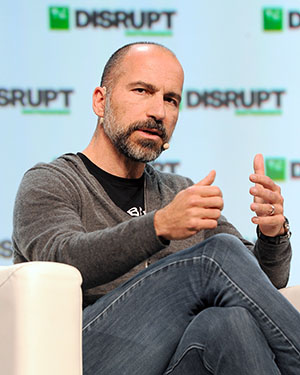
Photo by Steve JenningsI actually feel somewhat sorry for Dara Khosrowshahi, Uber’s beleaguered CEO, and his repeated acts of desperation. It feels a lot like he’s once again the guy dressed as a circus clown who’s walking behind the elephants with a shovel and a satchel.

(Left) Uber CEO Dara Khosrowshahi speaks at TechCrunch Disrupt in San Francisco on September 6, 2018. Photo by Steve Jennings.


He’s been trying to clean up the mess at Uber for what seems like forever and nothing appears to be going all that well. Starting with the busted IPO, then the rulings in the United Kingdom and other places where drivers are employees, and there’s still the continued rash of deviate drivers who seem to be constantly conspiring to embarrass the brand and scare off customers. Talk about stranger danger.

And, let me say right up front about this $2.6 billion Postmates deal, that combining two lukewarm cups of coffee doesn’t get you a hot drink however hard you try and however far you try to stretch the synergy. Not to mention that trying, in a space already crowded with tech behemoths, to do everything for everyone means you’ll most likely end up with a big bag of nothing.

Maybe in a different time and place where time, talent, and resources are abundant, seizing the moment and trying to grab every opportunity and running full speed ahead with the whole bunch made some sense. But not today.

Moving a bulked-up Uber Eats front and center on its newly-designed app and launching two or three other new pickup and delivery services – groceries, packages, people, etc. – obviously made some opportunistic sense at the height of the virus. It was a reasonable and inevitable choice in response to the abrupt disappearance of Uber’s core offering.


And sadly, I do think that the virus and its consequences are going to be with us for years, not months, so the artificially enhanced, upscale, urban-centric, and principally U.S.-based demand for those services won’t disappear any time soon.Adobe Stock


But the short and obvious list of all the major and deeply entrenched players who are already well-established in these markets and just waiting to eat Uber’s lunch is pretty intimidating. And when the elephants are up and dancing, the grass and everyone else standing around takes a beating.

I’ve been an advocate of the power of platforms forever, but this expansion adventure feels like “platform madness” gone wild combined with an approach driven by what I call the Galloway “big bite” theory. It’s a specious strategy driven by ever-escalating market growth expectations rather than good solid business sense.
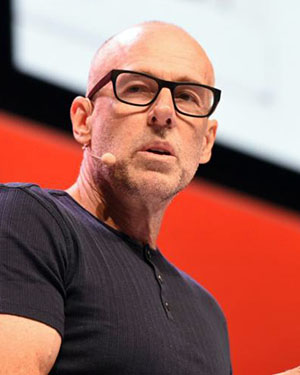
Scott Galloway is a New York University professor and tech gadfly who looks at the tech giants – Uber has become a wanna-be at best at this point – and in every case when he’s talking about their future plans, comes to the same basic conclusion. In order to meet forward-looking Wall Street growth projections, the big tech players – and the aspirants like Uber watching from the sidelines – are going to have to find arguably adjacent markets of enormous size and try to take a “big bite” out of those markets. This is essential because nothing else, including continued sizable organic expansion, will make the New York market mavens and the growth-crazy greed heads and commentators happy.


National Retail FederationGalloway’s current favorite target industries for tech takeovers are education and health care, but no one doubts that the grocery business, as one other example, and last mile logistics for another, are also pretty large. However, not even Amazon with Whole Foods has yet demonstrably mastered the food space and Walmart and Target are gearing up to stomp even more aggressively into the game as well.

(Left) Scott Galloway, professor of marketing at New York University Stern School of Business.


Uber is overmatched, outgunned, and trying to play catch-up in spaces where there’s barely room to maneuver between the big guys. It feels like Dara is playing checkers on a chess board. Or, in more appropriate chess jargon, it’s zugzwang. A chess position where any move loses.

Howard TullmanHoward Tullman is General Managing Partner for G2T3V, LLC – Investors in Disruptive Innovators, and for Chicago High Tech Investors, LLC. He is also the author of You Can’t Win a Race With Your Mouth: And 299 Other Expert Tips from a Lifelong Entrepreneur.

Wednesday, May 22, 2019

New INC Magazine Blog Post by Kaplan Institute Exec Director Howard Tullman


Make Sure You Get Your Story Straight
The way you describe your company to the outside world is absolutely critical. Investors and customers aren't interested in your formula or financial analysis--they want to be able to connect emotionally and intellectually to what you're selling them.


No ever invested in a new business because of a number. It’s always about the story. Telling that story quickly and effectively in a way that creates a connection- ideally intellectually, but always emotionally - is the key to success. Well-drawn and clearly demonstrated analogies are among the most powerful tools in this process.

Of course, it’s also easy to lard it up and overdo it so you end up not “selling” anything. We see this high concept idea every day in the movie business where each new pitch is the next Top Gun with a twist or an animated version of To Kill A Mockingbird.

Buzzwords, brands and tech jargon are other tools we use as comparative shorthand for more complicated explanations. They can certainly save some time, but they can also lead you and your listeners pretty far afield quite quickly. They aren’t a substitute for actually thinking through and clearly understanding what the underlying processes and mechanisms are that you expect to drive your business and why and how they work. As a leader, it’s especially important to understand that your words matter and have consequences. If you’re impatient, flippant or just not careful and considered in your language, it’s very easy to lose credibility with the world in general and especially with your team, customers and investors.

Not too long ago, everywhere you went you’d hear why some early startup was the new “Uber of….” whatever and why this NUber was just as likely to succeed. This pitch quickly became a tired tale and eventually turned into a bad joke because the alleged parallels in so many cases made no sense at all. One size, one approach and one methodology NEVER fits all.

Interestingly enough, at the moment, while he tries to pick up the pieces of a totally busted IPO, the CEO of Uber is telling everyone who’s still willing to listen that Uber’s the next Amazon, which is just another unfortunate example of trying to pile on to someone else’s story and their success. Who wouldn’t want to be sitting in Jeff B’s shoes these days? But it’s becoming clearer and clearer that there’s only one Amazon and Uber isn’t even close to ever being No. 2. Uber may have built and mastered some impressive tech around logistics and geography, but real businesses are still required to eventually make real profits and Uber isn’t in the same universe as any of the main platform guys who are continuing to print money.

So, if the Amazon analogy won’t cut it, how about latching on to another buzzword or two to try to make your case? In the recent S-1s for both Uber and Lyft, the pair constantly alluded to the idea of “network effects” and how their business models so aggressively and effectively exploited the exponential “flywheel” benefits of building larger and larger two-sided networks. These claims turned out to be mostly BS and maybe the market actually figured this out as well along with the non-economics of their basic business models.

The truth is that there are NO clear network effects at all in the ridesharing business. In fact, the larger the network of drivers grows beyond a certain level that assures their ready-and-rapid availability to the riders, the less money each driver makes. That means the more likely they are to either quit or become a dual driver for the competition as well. The gig economy is nothing but poison for the giggers, even if it takes them a little while to figure that out and bail. Most workers in the gig economy leave within a year. And if life wasn’t tough enough for the drivers, the National Labor Relations Board just ruled that they are independent contractors and not employees, which doesn’t bode well for all the pending lawsuits seeking better wages and benefits.

In addition, there’s a tipping point after which the potential improvement in driver response time (because there’s a driver waiting on every block) actually adds no value to the end user’s experience although it does dramatically increase congestion and pollution. Frankly, we all need at least a little time to get our acts together before the driver shows up.

Similarly, the more users there are for a particular service, the more demand there will be for a ride in crunch times, the more likely that there will be surge pricing, and the less attractive the overall experience becomes for each user. As with so many things, saying doesn’t make it so. Getting bigger isn’t necessarily the same as getting better - especially for the little folks.

Another phrase that’s fraught with peril - especially for startups - is “product/market fit”. The idea that there comes a day when all the planets magically align, the dogs are all eating the dogfood, and all is right with the world because you’re achieved product/market fit is a fleeting fantasy because it suggests that you’ve reached a plateau where you can take a break, catch your breath and prepare for the next marathon. You should only be so lucky. As our politicians regularly show us, it’s almost always too soon to declare victory.

The truth is that it’s a dangerous illusion and a temporary respite at best because the customers never sleep, and their demands never cease to grow larger and larger. It’s a “What have you done for me lately? world. Your customers’ expectations, desires and requirements are perpetually progressive, and the changes never end. This means that the product or service dimensions and even the size, scope and characteristics of the market are in constant flux and continual need of enhancement, improvement and change.

The present has never been a more temporary state. There’s no finish line when you’re building a new business and, of course, the competition is always running right behind you and very happy to take advantage of any breaks in your momentum. So, while it’s always important to briefly celebrate the milestones and the team’s successes - large and small - you can’t take your eye off the ball or your foot off the accelerator and relax. Finding product/market fit is fine, but it’s only a step in the journey and a waystation along the path.

 Bottom line: None of us has the luxury of Humpty Dumpty, who said to Alice: “When I use a word, it means just what I choose it to mean - neither more nor less.” In our lives and businesses, words usually have pretty clear meanings and often serious consequences. Be very careful what words you use because you may be eating them some day.


Tuesday, July 08, 2014

1871 CEO HOWARD TULLMAN JOINS LEGISLATORS AND LOBBYISTS AT UBER PUBLIC POLICY PANEL


FOR IMMEDIATE RELEASE
July 8, 2014

Uber Announces Job Growth Projection at New Midwest Headquarters
Technology company announces 425 Midwest jobs by end of 2016 under current rideshare regulations and market conditions
CHICAGO, IL – On Tuesday, Uber Technologies was joined by Illinois lawmakers, business leaders and tech community members to showcase their new Midwest Headquarters here. During the event, Andrew Macdonald, Uber’s Regional General Manager for the Midwest and Canada, highlighted the economic impact the company has had on the city of Chicago and announced projected job growth for Uber’s Midwest hub.

Under existing regulations and market conditions, Uber projects it’s Midwest headquarters will more than quadruple in size between now and 2016. The Midwest office started 2014 with 45 employees, a number that quickly grew to 75 staff members and is expected to reach approximately 500 employees by the end of 2016.

These employment projections are separate from, and do not include, the thousands of drivers who partner with Uber to provide expanded transportation options to tens of thousands of riders in the Chicagoland area.

“Our presence in the Midwest is expanding because riders and drivers love Uber,” said Macdonald. “We are continuing to build our internal staff to meet the growing consumer demand for rideshare services and those new jobs will have an impact throughout the region. Uber has proven to be a boon to Chicago’s economy and we expect that growth to continue under the current regulatory environment.”

Uber’s new office in the West Loop is 16,000 square feet and the largest to-date for the technology company. Guests toured the new space while hearing from the Uber team about their plans for a greater economic impact in Chicago coupled with their commitment to improving the quality of life in every Chicagoland community.

“Innovation and opportunity is the key to growing the economy for centuries to come,” said Howard Tullman, CEO, 1871. “Uber’s success and commitment to Chicago demonstrates the possibilities that technology can offer to consumers and communities as a whole. We are thrilled to have Uber as a partner in creating an exciting tech hub here in Chicago.”

Uber is making a noticeable impact in Chicago. The company has infused $192M into the local economy and makes it possible for the drivers that partner with them to earn an income on a flexible schedule. The app makes it possible to get a ride in neighborhoods ignored by the taxi industry.

The company announced an initiative earlier this year to help veterans earn a living as a driver partner and is partnering with numerous other local community organizations.

“Public policy is one area where we can continue to improve and send a message to entrepreneurs that Chicago is the place to grow their business. Uber’s job projections exemplify exactly how we can grow the business and tech community in Chicago by getting public policy right as they did in the Chicago City Council,” said Sarah Habansky, Vice President, Illinois Technology Association.


Total Pageviews

GOOGLE ANALYTICS

Blog Archive