

 |
Readers might remember that in September 2024, just before the election, Peter Pomerantsev and I launched Autocracy in America, a narrated podcast series that examined the autocratic ideas and practices already present in American life. The Russian chess champion and political Garry Kasparov took over the podcast for season two. Now I’m hosting another five episodes. The central argument: That the Trump administration is making radical, unprecedented changes to American institutions, and by doing so, is seeking to transform the American political system as well.
All of the episodes include testimony from ordinary Americans whose lives have been changed by politics over the past year, as well as conversations with legal experts, historians and others. They explain how these institutional changes could eventually affect not just immigrants, not just civil servants and not just scientists but all of us, by eroding the rule of law, and by altering the political playing field and making it harder for anyone else to win elections.
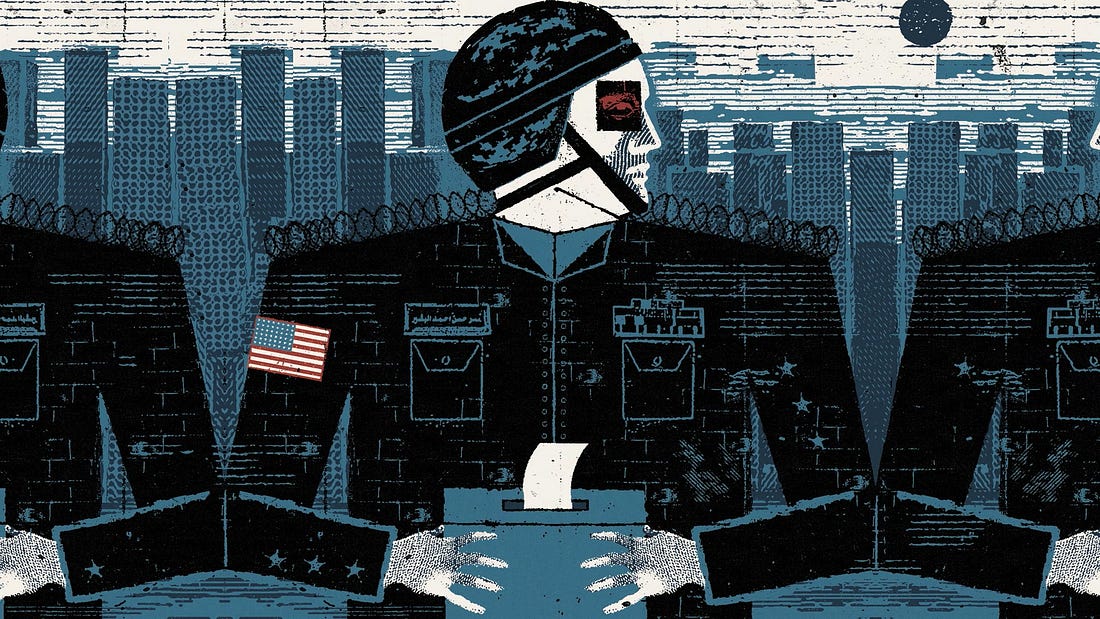
Although we recorded these interviews before Christmas, the first espisode turned out to be eerily relevant. The subject is the transformation of ICE into a type of national police force. Although this has been covered as an immigration story, America’s immigration and customs agents aren’t only being used for that purpose. Even before the horrific murder in Minneapolis this week, the Trump administration had already begun to use ICE and the National Guard to project power, to demonstrate that it can operate without restraint and in defiance of the law. Armed, unidentified masked men now patrol the streets of some American cities. They are seemingly allowed to harass, arrest or even kill other Americans, as well as immigrants, with impunity. They are allowed to break the law. This kind of paramilitary force could have other uses in the future. For example, it could be used to intimidate people and prevent them from voting.
To explore this subject, I spoke to George Retes, a U.S. citizen who was detained by ICE and kept in prison without explanation for three days, as well as two experts from the excellent Brennan Center for Justice at NYU. I asked them about the legality of the deployment of these agents and soldiers, and the precedents. It seems any American can now be detained or harassed, or even killed. Has anything like this ever happened before? The American National Guard are being used as puppets in a presidential game—is that legal too?
Margy O’Herron of the Brennan Center reminded me that the the great majority of immigrants in the system are only being charged with a civil offense, if anything. But ICE are operating much as if these folks are criminals.
They’re arresting them. They’re detaining them. And the Fourth Amendment and the Fifth Amendment do still apply to immigrants. They apply to immigrants in the same way that they apply to citizens. There’s no distinction in the law. So without those things, ICE is arresting people and taking people out of the country without any kind of process, without alerting them that they’re going, without allowing them to talk to a lawyer—that is not lawful; it’s unconstitutional. Those rights exist, and they should be protected.
She also pointed out that the impression of impunity is coming from the administration itself:
Well, I think there is a sense from the top that the agents who are taking these actions are not gonna have any consequences for those actions. For example, there was a video that circulated quite broadly of a woman who was pushed by an ICE agent outside the New York immigration office. She was shoved across a hallway, and she fell. She ended up being hospitalized. Initially, ICE came out with a statement that said that type of action was unacceptable, but a few days later, it was reported that that ICE agent was back on the job.
The administration also has cut many of the oversight offices that are supposed to be places that compile and check that kind of abuse. These are really important offices that field thousands of complaints every year on exactly this kind of behavior. And instead, now we have to rely on the courts exclusively to take these actions.
I asked Liza Goitein, also of the Brennan Center, if the purpose of troop deployment in cities is just to make people afraid to participate in public life? She said perhaps it was:
I mean, it’s certainly the predictable effect of deploying the military on the streets on a sort of routinized basis—to change people’s behavior so that they are afraid to exercise their rights, so that they do behave differently.
So my concern is that we’re moving towards a status quo in which the cities of this country really feel like police states. And to me, a police state is a place where the presence of—whether it’s the federal military or law enforcement—is so heavy and the chill on people’s exercise of their rights is so acute that people are really kind of living in fear, and they’re changing the way they behave.
Listen to the full episode on the Atlantic website, or read the transcript here
To hear all five episodes right away, subscribe now to The Atlantic
You can also listen elsewhere:
Apple Podcasts | Spotify | YouTube | Overcast | Pocket Casts
Using Lies to Justify Violence
I discussed these same issues with Tim Miller of the Bulwark (as well as Venezuela, Greenland and Iran). More importantly, Tim also talked to Jacob Frey, the Mayor of Minneapolis, whose clarity has been so important in the past few days. Listen here:


Kleptocracy Tracker
Continuing to monitor conflicts of interest, ostentatious emoluments, outright corruption and policy changes that will facilitate outright corruption. (Read my original article, Kleptocracy Inc and check out the SNF Agora Institute chart)
December 22
Before divesting from cryptocurrency assets valued between $159,000 and $485,000, Todd Blanche issued a Justice Department memo ending investigations into crypto companies, dealers, and exchanges that were launched during the Biden administration (crypto deregulation is actually the subject of my next podcast episode).
Since his reelection, Trump and his allies have raised more than $2 billion for political projects, with hundreds of top donors having benefited—or operating in industries that have benefited—from the administration’s actions or statements.
December 31
The Trump administration has significantly scaled back new investigations into white-collar crime while also undoing many notable Biden-era prosecutions.
US regulators collected 61% less in fines for money laundering and sanctions violations in 2025, bringing total collections for the year to just $1.7 billion.
Trump Media & Technology Group announced it would distribute a new cryptocurrency token to shareholders in partnership with the Crypto.com exchange, driving the company’s shares up more than 9%.
January 1
Trump allies on the board of the Kennedy Center have treated the institution’s budget as a personal slush fund, awarding thousands of dollars’ worth of no-show contracts to friends.
January 2
In the second half of 2025, President Trump’s team raised more than $100 million for a super PAC, much of it from wealthy donors and companies with matters pending before the administration.
January 5 [after Venezuela]
An anonymous user on Polymarket appeared to profit from insider knowledge, placing bets on Maduro’s ouster just before the start of the US operation and netting more than $400,000.
Before launching the raid that captured Maduro, Trump hinted to executives at a handful of oil companies that “something was coming.”
Hedge fund Elliott Investment Management—owned by Trump ally and donor Paul Singer—is poised for a massive windfall from its recent acquisition of Citgo, the refining firm owned by Venezuela’s state-run oil company. Maduro’s ouster could lead to increased Venezuelan oil production, likely providing cheaper feedstock to Citgo’s Gulf Coast refineries and boosting the company’s value.
Several American companies, including Microsoft and McKinsey, are paying up to $1 million each to sponsor a Davos venue that will host Trump and other US government officials during the annual conference.
January 6
Trump Mobile’s T1 golden smartphone, which was slated for release last August or September, has yet to materialize, even as the company continues to collect $100 deposits for the device.
January 7
Trump claimed he would personally control proceeds from Venezuelan oil sales following the US invasion.
World Liberty Financial has applied for a banking license from the Treasury Department, a move that would broaden its access to the traditional financial system.
January 8
A Ukrainian government commission awarded a contract to mine one of the country’s state-owned lithium deposits to a consortium of Trump friends and allies.
Since Trump returned to office, many specialty auditors responsible for examining private equity and venture capital firms have left the IRS, leaving the agency without staff possessing the expertise needed to complete these complex audits.
