Showing posts with label alan cramb. Show all posts

Saturday, October 27, 2018

Kaplan Institute - Grand Opening - Ribbon Cutting Remarks


Grand Opening Press Conference 
Remarks of Executive Director Howard Tullman

WATCH THE VIDEO:
https://photos.google.com/share/AF1QipOYx9KiyZyLGDDhrFi1ls4OJ1oSuXS1px8PNNnSzcAyJOl9W6txYju-CKq9Fn_Vfg/photo/AF1QipPsZcHTWwC68jvFeFTr0EthJthoarlHCLqLl5QZ?key=UUlOQnpiS1VwUlJBZ3gxVEtnY01NR0FnYjk2NExR


I want to start by advising those of you sitting on the Pitch that your seat cushions can be used as flotation devices in the event of a water landing during our flight. All kidding aside, as we formally open the Kaplan Institute today, the flight imagery couldn’t be more appropriate.

This is a place originally envisioned by our past President John Anderson as a launching pad where our student entrepreneurs and innovators could have their ideas take shape, their businesses be born, and ultimately their dreams come true. Dreams aggressively driven by a concrete commitment to the hard and ceaseless work needed to change our communities, our city and the world for the better. The basic culture of Kaplan couldn’t be simpler or clearer: you don’t get what you wish for, you get what you work for.

Along with Presidents Anderson and Cramb, Ed Kaplan (and the many others who have helped to make their vision into a reality) imagined an interdisciplinary institute combining all the resources of the university in a single place that would help to more fully equip and enable our graduates to enter the working world with the skills and talents necessary to succeed tomorrow in an environment where the only constant is change. 

Besides a solid technical grounding, the critical skills for the “new collar” economy include effective communication, empathetic leadership, a tolerance for ambiguity and goalless planning, a digital-first mindset, and an appreciation for the criticality of human-centered design in all we do. This is why we are so excited to have the Institute of Design here as a major part of the Kaplan Institute. The possibilities for collaboration, interactions, and serendipity are endless. And I want to acknowledge Vic Morgenstern’s extraordinary contributions in making ID’s return to the main campus a reality.

The vexing challenges of the future won’t be neatly packaged or suitable for silos; they will demand cross-disciplinary skills and team-based solutions that extinguish the boundaries between many disciplines and combine the best thinking and strategies of our students and faculty into unique and game-changing solutions.

One thing we know for sure is that no one today does anything important all by themselves. I’m proud to be building a new team here at KI including my Deputy Director Barbara Pollack and Jeremy Alexis who will head up our new, re-imagined and reinvigorated iPRO programs. We’re excited that Kaplan (working closely with faculty and students from our Engineering school) will host some of the exciting new VR visualization and planning technologies developed by Dassault Systemes of France – one of our newest corporate partners – and that we will be providing new Magic Leap MR equipment to our students as well thru our ongoing work with AT&T.

The broad and exciting projects we will undertake here (with the support and enthusiastic engagement of both our best faculty and our many business and industry partners) will help us address the serious needs, critical concerns, and enormous challenges ahead for all of us at a time where we‘re surrounded by both instances of enormous abundance and of shocking scarcity – often within the same communities – and at the same time.

Charity, compassion and kindness will help us solve some of these inequities, but ultimately only education and technology will provide the paths forward to real change and access for all to the opportunities that the most fortunate of us see all around. Part of the mission of Kaplan besides educating our own students is to reach out to the communities that surround us and help lift them (and especially their youth) up as well.

This is why we’re so excited to be partnering with several CPS schools including the Dyett High School for the Arts and with the talented engineering teams from Softbank Robotics to expand and offer some of our KI robotics programs to their students. 


Talent is everywhere in our great city, but opportunity and access to crucial resources doesn’t happen by itself. We need to make it happen and we need all of you to help.  
   
And speaking of help, let me introduce two of our newest Kaplan team members from Softbank Robotics. Pepper – can you give us a hand? 


Pepper:
Hello everyone. And thank you Howard! It is great to be here for the opening of the Kaplan Institute. I’m very excited about my new role here. It will be great working with the students to help everyone have a better understanding of robotics.

Howard:
Excellent. Welcome to the team Pepper.

Pepper:
I’m also excited to take my talents to the Chicago Public Schools to help inspire more children to explore science, technology, and other STEM fields.

Howard: That’s great Pepper. Speaking of excitement, let’s cut the ribbon so we can officially open the doors. Can we get some help?


Pepper: Sure Howard. We’re more than happy to help out. (Ribbon is cut, and Pepper claps hands.)


Thursday, October 25, 2018

NEW KAPLAN INSTITUTE AT ILLINOIS TECH FRONT DOOR TO EMPLOYMENT; DESIGNED TO HELP STUDENTS INTERACT WITH BUSINESSES, THE WORLD


FOR IMMEDIATE RELEASE

Media Contact:
April McFadden
 (o) 312-573-5488 (c) 404-849-8700

NEW KAPLAN INSTITUTE AT ILLINOIS TECH FRONT DOOR TO EMPLOYMENT; DESIGNED TO HELP STUDENTS INTERACT WITH BUSINESSES, THE WORLD

Every Illinois Tech Undergraduate Student in Every Discipline to Problem-Solve Through
Project-Based Work in Contemporary, Highly-Collaborative Space

CHICAGO (Thursday, October 25, 2018) – Illinois Institute of Technology today opened a sparkling, new 70,000 square foot home for student-driven innovation and entrepreneurship. Unlike other university innovation centers (which are more about being a platform for start-ups), The Ed Kaplan Family Institute for Innovation and Tech Entrepreneurship takes a hands-on approach to problem solving with dynamic projects, collaborations and real outcomes and products. It is devoted to fostering collaboration among all of Illinois Tech’s students, faculty, alumni and business partners – and is designed to develop the home-grown and diverse technical talent needed in today’s business world.

“At Illinois Tech, we make it possible for our students to learn by inventing, creating and solving,” said Illinois Tech President Alan Cramb. “The Kaplan Institute will immediately become one of the nation’s most important platforms for active learning at the university level. It will also become the centerpiece of our mission to make a future in science and technology possible for talented young people here in Chicago and across the world.”

The Kaplan Institute is helmed by Chicago’s veteran entrepreneur and investor, Howard Tullman, who  has been at the forefront of Chicago’s innovation boom, spending the last five years leading the city’s tech hub 1871 and decades before directing high-tech start-ups and helping major educational institutions reinvent themselves.

“The Kaplan Institute’s focus is to turn out highly qualified, instantly employable students for jobs that haven’t been invented yet, trained to use technologies that we are just now creating, in order to address problems that we do not yet know are going to be problems,” said Tullman, university professor and executive director of the Kaplan Institute. “In this building, the creative and imaginative ideas of the school’s students and faculty will become meaningful innovations for our city, region and beyond.”

The university’s first new academic building in nearly 40 years provides all Illinois Tech students with a variety of wide open collaboration spaces for project-based experiences, contains state-of-the art prototyping and fabrication facilities, and serves as the home for the university’s renowned Institute of Design. In addition, the Kaplan Institute breaks out of the classroom model to give students myriad ways to invent, create and discover through hands-on, team-based learning.

Located in the heart of Illinois Tech’s historic campus, the Kaplan Institute will draw students and faculty from all disciplines. Every undergraduate student on campus – regardless of field of study – will be connected to one another through interdisciplinary learning opportunities. Students are already in the process of tackling issues such as agriculture in an urban environment, applying robotics to vertical farming; using Big Data to improve first responder responsiveness; generating an interface that bridges the foreign language gap and improves trust and communication between families and Chicago Public Schools; and many others. As this work moves into the Kaplan Institute, project teams will be able to collaborate and connect, faculty will drop in to coach and mentor, and business collaborators will have a much larger presence and engagement in the students’ education.

Chicago Mayor Rahm Emanuel joined Cramb and Provost Peter Kilpatrick, along with major business partners, university faculty, staff and students for this afternoon’s grand opening events celebrating the city’s newest innovation hub.

"Technology and entrepreneurship continue to be Chicago’s fastest growing industry sectors – we as a City recognize the value of supporting innovation and talent," Mayor Emanuel said. “The Kaplan Institute under Howard Tullman’s direction will expand, diversify and broaden one of the world’s largest tech talent pools right here in Chicago, and I am excited to see the impact these students and graduates will have on our City’s future."

The Kaplan Institute is established in large part from a gift of $11 million from Ed Kaplan – a 1965 Illinois Tech alumnus and longtime member of the University’s Board of Trustees – and his wife, Carol. Kaplan, a Chicagoan who studied mechanical engineering, co-founded Zebra Technologies, a global leader in bar code technology.

“Through the Kaplan Institute, Illinois Tech students, faculty and alumni will have all the resources they need to turn their concepts, ideas and problems into real solutions. Students now have the opportunity and ability to go beyond the norm of technical education and focus also on ingenuity and invention,” Kaplan said.

Other major donors to the Kaplan Institute include: S.R. and Kaye Cho; Martin Cooper  (EE ’50, M.S. ’57) and Arlene Harris; The Crown Family; A. Steven and Nancy C. Crown; Lester and Renee S. Crown; Janet and Craig Duchossois/The Duchossois Family Foundation; Michael P. Galvin; The Grainger Foundation; Arthur W. Hill; Victor A. (CHE ’64) and Faye Morgenstern/Morgenstern Family Foundation; Walter (ME ’44) Nathan and Ann Nathan; Madhavan K.  (M.S. IE ’68) and Teresa R. Nayar/Nayar Family Foundation; Robert C. Pew and Susan Taylor/Dornick Foundation; Edward (ME ’43)  and Renee Ross/Renee & Edward Ross Foundation; Steelcase, Inc.; Tellabs Foundation; Ralph Wanger; Alan (ME ’71) and Suzanne Wendorf.

Notably, more than 50 percent of the individuals and organizations listed are not alumni of Illinois Tech, but have invested because of their commitment to the mission and future of the student success that will be developed through the Kaplan Institute.

The horizontal, expansive and light-filled building was designed by John Ronan Architects. (Photos and video can be found here.) Conceived as a hybrid of campus space and building, the design is organized around two open-air courtyards through which visitors enter the building, and which serve as collision nodes for chance meetings and information exchange across departments. The design of the Kaplan Institute is also forward-thinking in its approach to sustainability. The second floor of the building, which cantilevers over the ground floor to provide sun shading, is enclosed in a dynamic façade of glossy white ETFE foil cushions which can vary the amount of solar energy entering the building through sophisticated pneumatics. The ETFE foil is 1 percent the weight of glass and gives the building a light, cloud-like appearance. The building has also received LEED gold certification.

The open, white interior spaces – a blank canvas that fosters the feeling of a single community of users – are punctuated with Post-It Note colors and sleek Steelcase furniture. Dry erase paint on the interior walls transform them all into teaching surfaces and ideation centers. The building provides flexible adaptive spaces to accommodate a wide range of interdisciplinary classes and project types. The interior spaces can be reconfigured easily and support a wide variety of uses. For more, go to iit.edu/kaplan-institute.

# # #

About Illinois Institute of Technology: Illinois Institute of Technology, also known as Illinois Tech, is a private, technology-focused research university, located in Chicago, offering undergraduate and graduate degrees in engineering, science, architecture, business, design, human sciences, applied technology, and law. One of 21 institutions that comprise the Association of Independent Technological Universities (AITU), Illinois Tech offers exceptional preparation for professions that require technological sophistication, an innovative mindset, and an entrepreneurial spirit. Visit iit.edu.

Friday, October 19, 2018

IIT FEATURED IN CRAIN'S ARTICLE


The area's ‘other' tech school seeks to shed its also-ran status
Illinois Institute of Technology has a bold plan to turn the South Side campus into a hub of innovation and tech entrepreneurship.
LYNNE MAREK  


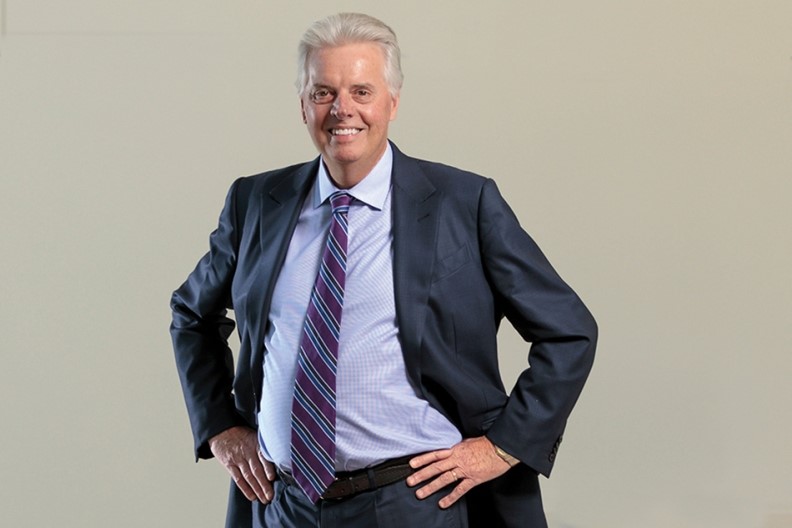
Illinois Institute of Technology President Alan Cramb

University leadership aims to turn the South Side campus into a hub of innovation and technology entrepreneurship. Here's how.

The Illinois Institute of Technology, a Bronzeville university laser-focused on STEM before it was cool, this month opens its first new academic building in nearly 50 years. The debut of the Ed Kaplan Family Institute for Innovation & Tech Entrepreneurship is a milestone for a changing university in a transforming neighborhood.
Illinois Tech President Alan Cramb's plan to expand student headcount by 1,000, or 15 percent, depends on recruiting more students from outside the state and seeking a higher percentage of undergraduates, as its big population of foreign grad students declines. The new institute should aid that effort as the modernist campus designed by famed former faculty member Ludwig Mies van der Rohe regains luster in a Bronzeville revival.
"We need to grow, and if you look at it, the student population in Illinois is not increasing, so we know over time it's going to decrease," Cramb says. "We made the decision that we should be in the areas that are growing," he says, rattling off state targets for recruitment, including California, Washington, Texas, Florida, Minnesota and East Coast locales.
The Armour Institute opened near Illinois Tech's South Side location in 1893, with $1 million from the wealthy Chicago meatpacking family of the same name and changed its name to Illinois Institute of Technology after the first of multiple mergers over the decades that added the Institute of Design, Chicago-Kent College of Law, Stuart School of Management & Finance (now Stuart School of Business) and Midwest College of Engineering.
Today, the private school's main campus, designed by German-born Mies, sprawls over 120 acres near 33rd and State streets, with locations downtown and in suburban Wheaton and Bedford Park.
Among majors for Illinois Tech undergrads, computer science is most popular, followed by architecture and mechanical engineering. Other studies, including at the graduate level, include life sciences, applied technology, business and law.
The new $37 million Kaplan Institute will give students across the school's disciplines a place to test ideas with an eye to business innovation. It's named for engineer alumnus Ed Kaplan, who co-founded bar-code technology company Zebra Technologies and gave $11 million in 2014 to jump-start funding for the institute.
"Universities want to have these centers of gravity," says Mark Harris, CEO of the Illinois Science & Technology Coalition. Illinois Tech lagged its more prestigious Chicago rivals, Northwestern University and University of Chicago, in creating one, but it's making headway now on infrastructure to support entrepreneurial activity, he says.

The institute this year hired Howard Tullman, former CEO of Chicago tech incubator 1871, as its first executive director. In his former position, Tullman says, he routinely pointed employers seeking a diverse technical talent pool to Illinois Tech. "It was embarrassing that they didn't understand that there was this kind of a resource here," he says. With Chicago now an emerging tech center, he says, "the south of the city is going to explode."
Despite being a showcase for famous architects, including Dutchman Rem Koolhaas and Mies protege Helmut Jahn, the school has kept a low profile 5 miles south of the city's center, with a lot of foreign students in a neighborhood that struggled with 20th-century poverty and crime. As troubles tied to nearby Stateway Gardens and Robert Taylor Homes low-income housing worsened, Illinois Tech considered moving in 1994 but ultimately stayed as plans to demolish the housing projects evolved.
Now, Mayor Rahm Emanuel points to Illinois Tech as one of a number of universities giving the city an unrivaled talent pool, and he echoes Cramb in citing Bronzeville's new development. Recent improvements to the neighborhood include an arts and recreation center in Ellis Park, a new field house in Williams Park, a recently constructed pedestrian bridge to the lakefront and an expanded boat harbor, plus private projects like plans to redevelop the former Michael Reese Hospital property and the arrival of a Mariano's grocery store. "You bring in these fundamentals, then they stabilize and they grow," Emanuel says.
Today, 40 percent of Illinois Tech's 6,705 students come from outside the U.S. and 55 percent are graduate students. Cramb wants to change that mix, partly because he thinks undergraduate students, who form friendships at school, are key alumni. Plus, Trump administration policies hurt overseas appeal. "For the long-term stability of the university, having a larger undergraduate group that becomes your graduates is better support for the university," he says.
Cramb notes Illinois Tech ranks highly on social mobility scales comparing the wealth of entering students to later earnings. Indeed, among schools offering the "best value," U.S. News & World Report ranks Illinois Tech 30th among 145 (noting an annual sticker price of about $47,650, and $28,200 in tuition and fees after aid).
Robert Pritzker, an Illinois Tech alum and the late co-founder of that wealthy clan's Marmon Group conglomerate, joined with Robert Galvin, the late CEO of another significant Chicago company, Motorola, to make an precedented $120 million pledge to the school in 1996.
More recently, Chris Gladwin—who developed Chicago Big Data storage company Cleversafe (sold to IBM for $1.3 billion in 2015) at the school's technology park and hired upward of 50 students—contributed $7.6 million in 2015 to expand its computer science program with more facilities and faculty and development of an endowment.
As an Illinois Tech trustee now (and CEO of Ocient), he supports Cramb's vision for more undergraduate and U.S. students. To boost Illinois Tech's one-third-female student population, he points to the hiring of leaders like Eunice Santos as chair of the computer science department.
With some serious philanthropic backing, Illinois Tech and Bronzeville are taking a new shot at growth.


Thursday, July 19, 2018

Overseas firms bringing up to 300 jobs to Chicago


Overseas firms bringing up to 300 jobs to Chicago

GREG HINZ ON POLITICS

Photo by Wikimedia Commons
Mayor Rahm Emanuel is highlighting a trio of economic announcements today that collectively involve up to 300 jobs now, and potentially more later.
Rio Tinto Group, a London-based mining and metals company, is opening a sales and marketing office downtown that will employ about 70 people by the end of the year. A company spokesman said the firm has leased 18,000 square feet—half a floor—in the Aon Center, and all of the jobs will be either newly created or transferred from other parts of the country.
The office will put the company in closer contact with existing and future customers, and gives Rio Tinto "access to the U.S. talent pool," Chief Commercial Officer Simon Trott said in a statement. Most of the company's current 3,000 U.S. employees now work in western states.
A bigger group of workers is involved in a decision by DMG Mori, a German machine-tool company, to move its North American headquarters from Hoffman Estates to a location on or near the campus of the Illinois Institute of Technology in the Bronzeville neighborhood.
An exact location has not been determined, but the shift will provide an "opportunity for us to interact on a daily basis with the faculty and students of IIT," DMG Mori USA President James Nudo said in a statement. Nudo called that "unique in our industry." Said IIT President Alan Cramb, "IIT is a university where students learn by creating, building and solving, and we couldn't think of a better educational opportunity for our students to work with and learn from a company like DMG Mori."
The city says many, though not necessarily all, of the firm's roughly 225 workers in Hoffman Estates will be relocated to the IIT-area office.
No city incentives were involved in the Rio Tinto and DMG Mori moves, according to City Hall.
Emanuel also announced in a midday speech that Chicago leads the U.S. in foreign direct investment for the sixth year in a row in an IBM Global Locations Trends report. (You can read the full report below.) The city also moved up a notch to fifth place globally, trailing only London, Paris, Singapore and Amsterdam-Rotterdam in total projects, Emanuel said.
The city already is home to 1,800 foreign-based companies that collectively have invested more than $100 billion here, said Emanuel, who at the beginning of the week returned from a trade mission to China and Japan.

Monday, April 16, 2018

Howard A. Tullman Named First Executive Director of Kaplan Institute


Howard A. Tullman Named First Executive Director of Kaplan Institute

Chicago – April 16, 2018 – Illinois Institute of Technology announced today that Chicago serial entrepreneur and former 1871 CEO Howard A. Tullman will be the first executive director for the Ed Kaplan Family Institute for Innovation and Tech Entrepreneurship.


Set to open this fall, the Kaplan Institute will be a hub for discovery, innovation, and business creation, giving students the skills and experience needed to make their innovations viable for the market. The institute will be located in a new two-story, 70,000-square-foot building designed by John Ronan Architects and will be the first new academic building on Illinois Tech’s main campus in more than 40 years.

“Howard’s extraordinary success in business and at 1871 makes him the perfect person to launch the Kaplan Institute,” said Illinois Tech President Alan Cramb. “The goal of the institute is clear: to bring the promise of entrepreneurship and innovation to every student at Illinois Tech. Howard will spearhead that effort and make sure our students have the resources and support needed to invent, create, and launch new companies.”


Tullman will begin as executive director on May 1 and will be responsible for leading the Kaplan Institute to achieve the following goals: ensuring all undergraduate students acquire superior innovation and entrepreneurship skills and experience; building strong partnerships with external organizations and entrepreneurs; helping recruit creative students interested in STEAM fields; and providing the tools and skills students need to solve complex and significant challenges.

“For more than 120 years, Illinois Tech has been an engine of opportunity here in Chicago and around the world,” Tullman said. “I took my first computer class at the university in 1963—more than half a century ago. It’s an honor to join Illinois Tech as a university professor and as the executive director of the institute as it sets out to make innovation and entrepreneurial creativity an essential part of every student’s education. I look forward to building an institute that will be the first of its kind: an innovation hub that channels the technical training and the creativity of thousands of Illinois Tech students into the development of new products, services, and businesses that can change the world.”


With multiple successful startups to his name, Tullman is uniquely positioned to launch another center of innovation and entrepreneurship in Chicago focused on supporting and empowering students about to enter or re-enter the working world. Over the last 50 years, he has successfully founded more than a dozen high-tech companies. Most recently, he led Chicago-based 1871, which was just named the top university-affiliated business incubator in the world.  He is also general managing partner of Chicago High Tech Investment Partners and G2T3V, LLC, both Chicago-based early-stage venture capital funds.

“Howard Tullman has dedicated his career to fueling Chicago’s tech sector and supporting start-ups across our city,” said Mayor Rahm Emanuel. “In his new role at the Kaplan Institute, Howard will work with the next generation of entrepreneurs, sharing the skills he has learned throughout his life and preparing them to take Chicago’s economy to new heights.”


Before serving at 1871, he most recently was the chairman and CEO of Tribeca Flashpoint College, which he co-founded in 2007. Tullman is the former president of Kendall College and the former chairman and CEO of Experiencia, Inc. Tullman is also a member of Mayor Rahm Emanuel’s ChicagoNEXT council, the City of Chicago’s Department of Cultural Affairs and Special Events Cultural Advisory Council, the Illinois Arts Council and Cook County Board President Toni Preckwinkle’s New Media Council.

Tullman is a graduate with honors of Northwestern University (B.A., 1967) and of its School of Law (J.D., 1970), where he also graduated with honors. He will serve as the commencement speaker for Illinois Tech’s 2017–18 Commencement ceremony on Saturday, May 12, 2018.


ABOUT ILLINOIS INSTITUTE OF TECHNOLOGY: Illinois Institute of Technology, also known as Illinois Tech, is a private, technology-focused research university, located in Chicago, offering undergraduate and graduate degrees in engineering, science, architecture, business, design, human sciences, applied technology, and law. One of 21 institutions that comprise the Association of Independent Technological Universities (AITU), Illinois Tech offers exceptional preparation for professions that require technological sophistication, an innovative mindset, and an entrepreneurial spirit. Visit www.iit.edu.


Total Pageviews

GOOGLE ANALYTICS

Blog Archive