Showing posts with label LOUDER THAN A BOMB. Show all posts

Thursday, May 14, 2015

1871 CEO Howard Tullman Remarks at Illinois Humanities Council Award Benefit Luncheon


                 Before I start, I just want to say that all of our thoughts and prayers go out to Martha Lavey for a speedy and full recovery. No one in the City has been a greater advocate for the arts and for the humanities.

               I want to begin by thanking the Illinois Humanities Council for this great honor and the leadership and staff of the IHC for doing all of the hard work that it takes to pull off something as challenging as this program. I’m also thankful for the work the IHC does every day because - in my life - art isn’t optional or nice to have – it’s essential. A culture is measured by its aspirations and its dreams and those dreams are dreamed by its artists.

            I also want to say how grateful I am to the 3 co-chairmen for today’s event – Joel Henning, Murray Peretz and Richard Price – whose support, commitment and generosity are unparalleled and who ALWAYS answer the call whenever I ask for their help. They are good and steadfast friends and great humanitarians as well as consistent supporters of the arts in their own right.  I also want to thank Marie Tillman and Joe Shenton for all their help with today’s luncheon and especially Marie for agreeing to give a few closing remarks on the program today.

            I want to thank my wife Judy for all her support, encouragement, patience and understanding for many decades now and for only occasionally saying: “Are you really going to buy THAT painting?” and only rarely saying: “Oh, no, not another business.”

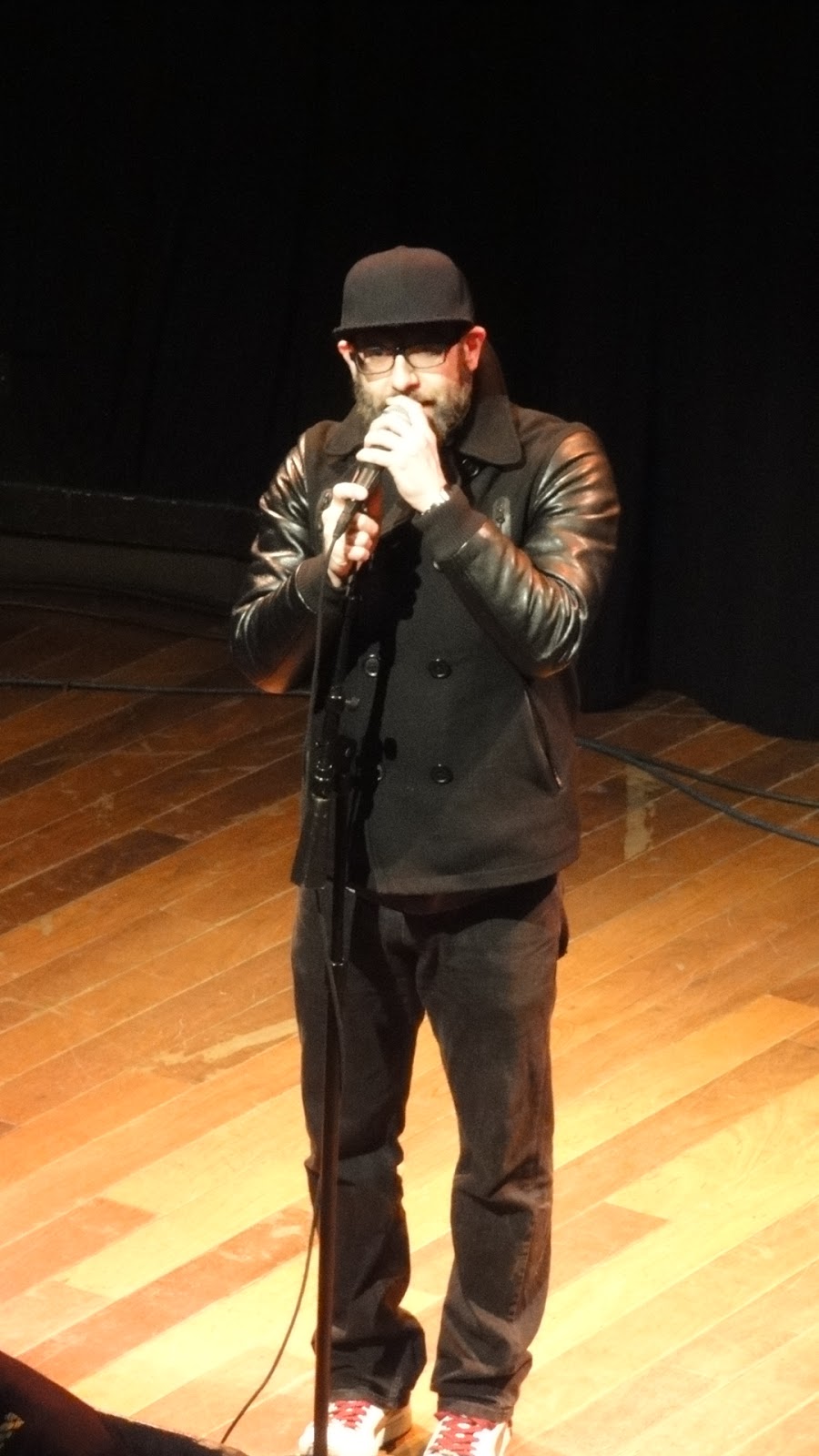
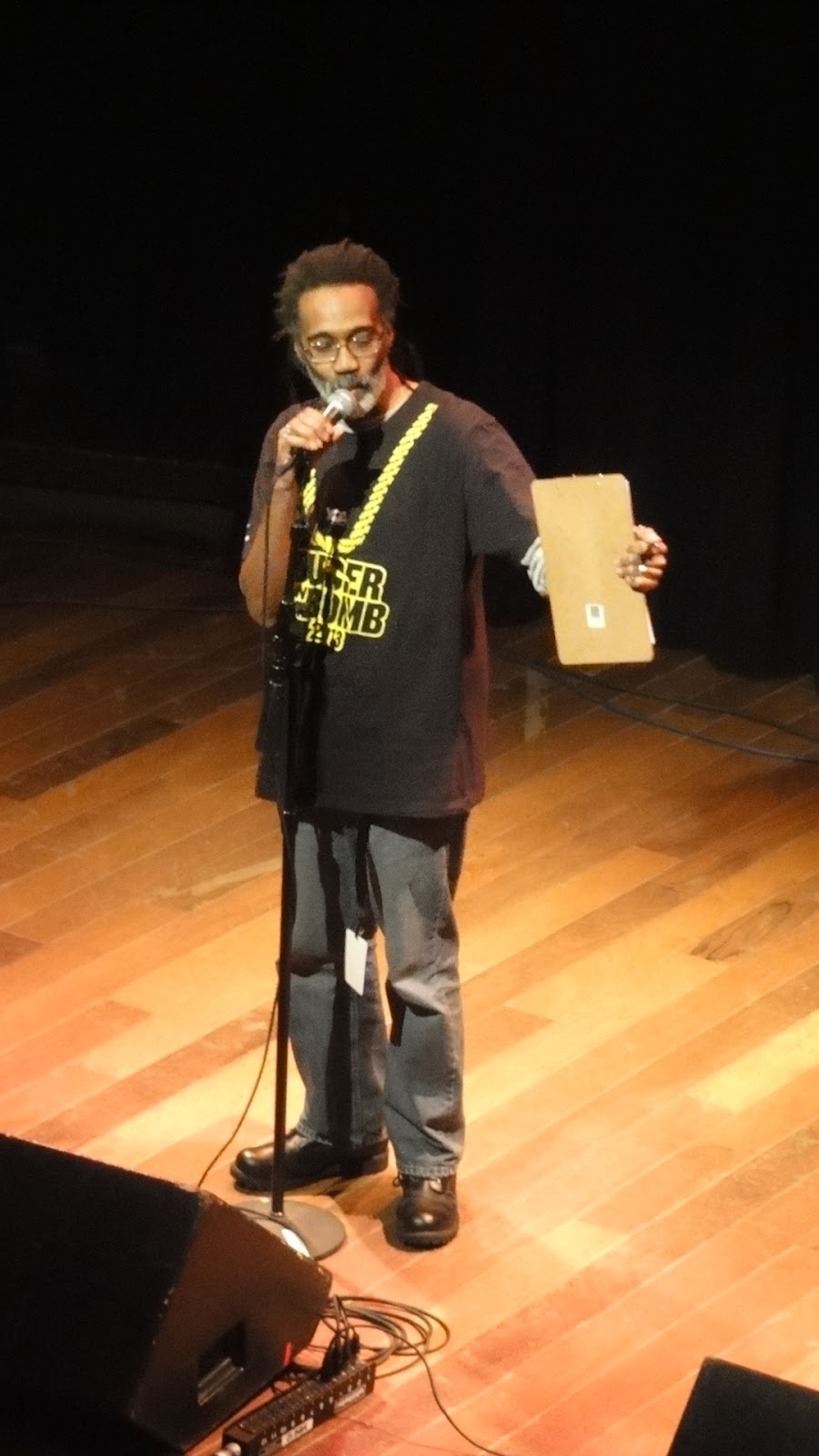
            I want to thank Kevin Coval and the crew from Louder than A Bomb for their participation in today’s event. We’ve been friends and supporters of Kevin’s work for many, many years and I continue to be amazed at the growth and the depth of his work and its impact on our city and on all of our citizens.

            And finally, for our meals, my many friends at Lettuce (and especially our guest chef Andrew Shedden from Mon Ami Gabi) as well as my long-time pal Marc Schulman from Eli’s. Marc and I have worked together on many different things over the years starting when I moved Kendall College from Evanston to its new home on Goose Island.

            I was reminded of that particular adventure most recently when I was proud to see (in connection with the recent hoopla here in the city) that more than a dozen of my chefs from Kendall have been honored over the years by the James Beard Foundation. I didn’t season the soup, but I like to think that I helped to set the table. And I didn’t do it alone – Barb Pollack who’s here with us today was an important partner in the creation and development of the “new” Kendall College and in all our major projects since then.

            I had a similar flashback a few years ago when Christo’s wife, Jean-Claude passed away. We had worked together more than 40 years ago on a series of multiples for the Men’s Council of the Museum of Contemporary Art. I was also lucky enough to support and see the realization of their Central Park Gates project in 2005 (which was only 26 years in the making) and it was truly a dream come true.

            In fact, Christo taught me a number of valuable lessons about passion, patience, persistence and perseverance that I reference and rely on every day in my writings and in my work with hundreds of entrepreneurs who are every bit as much dreamers as Christo.

            He taught me three things in particular that I would share with you:

            (1) that you should never agree to knowingly surrender your dreams;
            (2) that it’s a good plan to always have more dreams than memories; and
            (3) that a man isn’t really old until his regrets take the place of his dreams

           I’m happy to report that I’m still dreaming every day. And that I’ve learned over the years that the development of dreams and their transition into concrete realities always follows the same path:

            (a) initially, they seem impossible;
            (b) eventually, they seem improbable; and then
            (c) ultimately, they seem inevitable.

            The most important trick - while you’re waiting for the world to catch up - is to always be drawn by your dreams rather than being pushed by your problems. The second crucial element is to have the support of talented people beside you because today no one accomplishes anything important all by themselves. Being an artist or an entrepreneur may seem lonely at times, but you’re never really alone.

            One other important difference at 1871 is that our dreams come with deadlines and even the grandest ideas are soon obliged to generate invoices. Great companies start with art and end up with science. But actually I’ve found that there’s very little difference between artists and entrepreneurs which is what makes my present work so exciting.

            Whether at Kendall, Experiencia, Flashpoint or 1871, it turns out that the demands that true art makes are really no different from what it takes to be a successful entrepreneur. Three basic things: sacrifice; discipline and integrity. While there are few things more intimidating than sitting before a blank canvas or an empty sheet of paper and waiting for the light bulb and the inspiration to strike; the truth is that the process of building a new business from scratch really isn’t that much different. Mostly it’s about getting started and putting one foot in front of the other. It’s a lot less about inspiration and a lot more about perspiration.

            In fact, the most important thing that any good artist or entrepreneur will tell you is that ultimately it’s not even about creativity. Creativity is often necessary for great works, but it’s not sufficient. What ultimately gets the great work done is a great deal of work.

            You’ve got to show up.

            You’ve got to sit down and get started.

            And you’ve got to have the strength to do that each and every day.

That’s the process. It never changes. You do what you have to do. You do it the best you can. You do it that way every time. And it’s funny how often things work out pretty well.

            Because in the end, it all comes down to a simple truth:

YOU DON’T GET WHAT YOU WISH FOR,
YOU GET WHAT YOU WORK FOR.

Thank you again for this honor and for honoring me with your presence here today.  

Saturday, October 04, 2014

Louder Than a Bomb about to blow up


Louder Than a Bomb about to blow up


A noted Chicago poet named Carl Sandburg once wrote, "I'm an idealist. I don't know where I'm going, but I'm on the way," and so there sat one evening last week a somewhat less well-known Chicago poet named Kevin Coval, who is certainly on his way.
If everything falls into place over the next months and into the next years, Coval and the institutions he has helped guide, Young Chicago Authors and the annual Louder Than a Bomb youth poetry festival, will spread to cities around the country and into the sensibilities of thousands of young people.
"Yes, it's ambitious, but this is essential," he says. "Many young people feel that they aren't heard, that their stories aren't represented in the dominant culture or popular media. And if they are, they are marginalized, trivialized. We want to change that."


Young Chicago Authors (YCA, youngchicagoauthors.org) was founded in 1991 by author-educator Robert S. Boone, who expressed its mission by saying, "Kids have stories to tell, they have arguments to complete, they have poems they want to write. And they will, if you give them the right prompts, if you give them the time to write and if you're there to listen."
Coval joined the organization, which sends professional writers into schools to teach and talk about writing, in the late 1990s as an unpaid volunteer. Born and raised in Northbrook, he fell in love with hip-hop and its poetry when he was 9. He was bar mitzvahed, and by the time he was a freshman at Glenbrook North High School he was feeling that "the words, the messages of hip-hop made me want to wrestle and deal with who I was. It brought me to the library, had me reading outside the classroom."


He was elected vice president of his senior class and was a very good basketball player, a guard on powerhouse Glenbrook teams. After college, he dived into this area's burgeoning hip-hop/spoken-word scene, performing around town. He began teaching in the public school system and also working as one of the unpaid volunteers for YCA, kicking off what would be hundreds of trips to area high schools.
Almost immediately he began to realize that "what we were doing was helping to change that traditional paradigm of the classroom. We wanted to know of the kids, 'What do you think?' and sometimes that was the first time any of them had been asked that. And I'd hear, 'Well, I don't have anything to say,' and we'd push further and further, trying to get to the uniqueness of each of their lives in the hope that, in order to express themselves, they would fall in love with words and ideas."
Coval had an idea for showcasing the young writers, and so was born in 2001, in collaboration with YCA's then executive director, Anna West, Louder Than a Bomb (LTAB), in which teams of high school students would compete onstage in spoken-word events. Its first year featured four teams and 60 students.Coval started to sense "that in the Chicago area, so segregated by income and race, there was a commonality in the vibrancy of the stories of young people, no matter what school or neighborhood."
"We certainly felt that we were on to something good and important," says Coval, who in addition to teaching and organizing has also managed to publish a number of collections of his own work, including "Schtick," "L-vis Lives!," "Everyday People" and "Slingshots: A Hip-Hop Poetica." "To see a kid from Highland Park not just hear but appreciate the words of a kid from Englewood and vice versa, there was such respect in that, such hope."


Each year, the number of schools and students involved in LTAB increased, from Lawndale, Deerfield, Englewood and places in between. This year's event in late winter attracted more than 750 students representing more than 100 schools.
But it was a film about the 2008 competition that helped launch national awareness and fuel ambitions. "Louder Than a Bomb," produced and directed by local filmmakers Greg Jacobs and Jon Siskel (louderthanabombfilm.com), focused on four teams as they prepared for and competed in the event. The movie won prizes at film festivals and received raves from dozens of movie critics. The late Roger Ebert of the Sun-Times ranked it among the 10 best documentaries of 2011, and Gerauld Blanks of the Milwaukee Journal-Sentinel called it a "modern masterpiece of the level of Steve James' 'Hoop Dreams.'"


"The first screening we had was in Palm Springs, (Fla.), early in 2011," Coval says. "We had a theater packed with 2,500 kids, teachers, parents, and after the film one young boy asked, 'How can we do this here?' It had never occurred to me until that moment that what we were doing in Chicago could work in other cities."
Later that year, the YCA board recruited Rebecca Hunter to become its executive director. She was an alumna of Redmoon Theater, where she served as both producing director and executive producer. In addition she has been based in London and Belfast organizing literature festivals, cultural programs, conferences and events.
"I knew the reputation of the festival, of course, but didn't really know all of the things that YCA was doing. Its programs were terrific and important, allowing for Louder Than a Bomb to exist," she says. "Frankly, things were not as bad as I thought. They weren't great. There was money to run YCA for about six months but not much hope beyond that. But there was so much potential, the notion that we could evolve, spread across the map, a populist and not an elitist organization.
"When I met Kevin, we talked about the work, about his vision for young people, the ecology of programming. When I was offered the job, I told him, 'I'll take it if you're in.'"
He was, and she did, and they got to the chores of straightening out the business side of the operation and helping other cities launch their own LTAB events.
"The film focused all eyes on Chicago," Hunter says. "We were responding as best we could to the many requests for help and information and guidance. There was a national picture emerging."
Last autumn she hired another Redmoon alum, Sean Michael Kaplan, as national director/special operations. He has helped create a five-year strategic plan for expansion and been charged with raising money and finding new revenue streams. Born and raised in Chicago, he was director of development and media relations for Redmoon and was an actor, writer and director in the Unites States and Europe.
Kaplan has successfully managed — he has been called by more than one of the potential funders he approached "charmingly persuasive" — to get substantial contributions from such high-profile sorts as actor Alec Baldwin and singer-songwriter Kenneth "Babyface" Edmonds and many others less well known, such as the locally based Feinberg Foundation, operated by sister-brother Janice and Joseph Feinberg.
He also approached Helen Zell, the wife of billionaire real estate man Sam Zell, the former owner of the Tribune. The couple have been generously philanthropic through their Zell Family Foundation, as in $50 million in 2013 to the University of Michigan, the largest gift in the college's history, to permanently fund its Master of Fine Arts in Creative Writing Program.


Helen Zell is a 1964 graduate of the university's department of English language and literature. She says, "I had read a lot about the (LTAB) poetry events. But learning about the work being done by Young Chicago Authors made me realize that something incredible was happening there.
"Many of these kids in schools are struggling in the classroom. (YCA and LTAB) creates a culture that gives them a space to be part of the public discourse, gives their lives meaning through self-expression, reasons to go to school," she says. "I was an easy sell, and Sam and I are very discriminating and careful about where the money goes. (She wrote a check for $100,000). And I did this with the understanding that I could be used to leverage others to contribute."
Surprisingly, she has yet to meet Coval, and so she will no doubt be fascinated to hear about his unusual relationship with money. In 2004 he turned down an offer of $20,000 to make a television commercial for Bass Ale, in which he would be identified as a "Chicago poet." He rationalized this what-is-he-nuts? decision by saying, "I work with so many young people, trying to help them find an authentic voice. I was offered that money, and that's a lot of money. But the whole thing didn't seem authentic to me. I felt that if I did the commercial, it would be a betrayal of the community of artists and of young people."
Now, he says, "The money we are raising is the means to an end. It will help us change the culture of young people across the country, and, perhaps, when those young people become adults, they can change the world."
Coval has a missionary's zeal, but it is genuine. Hunter calls him the "face of our organization," but he is also its heart and its soul and its conscience. He sees himself as a teacher and organizer, much in the mold of his idols, poet Gwendolyn Brooks and writer Studs Terkel.


Before his death, Terkel returned the compliment, saying, "Kevin Coval is a new, glowing voice in the world of literature. In his voice is our hope for a new world of peace, grace and beauty."
Coval knows that the vast majority of the thousands of kids participating in LTAB and the various YCA programs will not make their livings as poets or writers, just as those playing on high school baseball fields or volleyball courts will not become professional athletes.
"They will benefit on many levels," he says. "What could be better than allowing all of these young people, who may have notebooks and thousands of scribbled stories hidden under the mattress, speak their piece. That matters."
At this very early stage in the five-year plan, YCA/LTAB has been able to hire nearly a dozen people, some as "teaching artists" and many of them YCA/LTAB alums, and begun a collaboration with Chicago Public Schools to institute a Chicago Writers curriculum now being test-piloted in 12 schools.
"And we are constantly being approached by other cities," says Hunter. "There is no sign that this will slow down. Many people are interested primarily in (LTAB), but that just begins the conversation about the impact our programs can have day to day beyond the stage."
Few have as intimate a knowledge of YCA/LTAB as does Ken Bennett, who Kaplan recruited to be an adviser to its National Trustees Council. Currently Mayor Rahm Emanuel's deputy chief of staff and director of the Mayor's Office of Public Engagement, he has two sons who have been through the YCA/LTAB programs. One is Chancelor, known professionally as Chance the Rapper and a rising star on the hip-hop scene; the other is recent high school graduate Travis, following in his brother's footsteps.
"I actually feel as if I have been an adviser for years," Bennett says, followed by a chuckle. "Both of the boys were involved in high school, and I immediately, on a very personal level, saw the impact Kevin has on young people. I have seen him change so many lives.
"But it is important to remember that this is not only about what goes on the stage at (LTAB)," he says. "What goes on behind it — the instilling of a strong work ethic, the freedom of self-expression, the exposure to the arts — this sort of thing is needed in every city in this country. These young people have a message that needs to get out there."
Those sentiments are echoed by Dr. Hilton Hudson, an interventional cardiologist, one of only a handful of African-Americans in that field. He has joined YCA/LTAB as chairman of its National Trustees Council
"I first heard about (LTAB) from, of all people, one of the anesthesiologists I was working with," said Hudson, who also runs a publishing firm that he says could one day offer opportunities to YCA/LTAB writers. "I became impressed on multiple levels. This is life-changing, confidence-building. I have never asked my friends for anything in my life, but I have been making calls asking them to help fund this remarkable thing."
You could have gotten a glimpse of "this remarkable thing" Tuesday night as dozens of teens of all colors and backgrounds gathered at the modestly appointed YCA headquarters on North Milwaukee Avenue for WordPlay, the longest running open-mic event in the city. Coval is usually there on Tuesdays and was this night, as were Hunter and Kaplan.
They were working in offices, and Coval was watching the parade of kids take the stage. There was some music, but most of the night was filled with words. Some were rough, some were playful, but all of them seemed part of a powerful message, and in the middle of it all, Coval leaned over and whispered to a friend. "This," he said, "is where I like to be."
Rick Kogan will be following the progress of YCA/LTAB in periodic reports.

Wednesday, February 20, 2013

Total Pageviews

GOOGLE ANALYTICS

Blog Archive