
Brand Extensions Are Supposed to Create Value. The Grammys Show How They Can Destroy It.
BTS recently pulled its newest album from award considerations after the Grammys announced a new music category. It’s an important lesson for entrepreneurs about diluting your brand.
EXPERT OPINION BY HOWARD TULLMAN, GENERAL MANAGING PARTNER, G2T3V AND CHICAGO HIGH TECH INVESTORS @TULLMAN
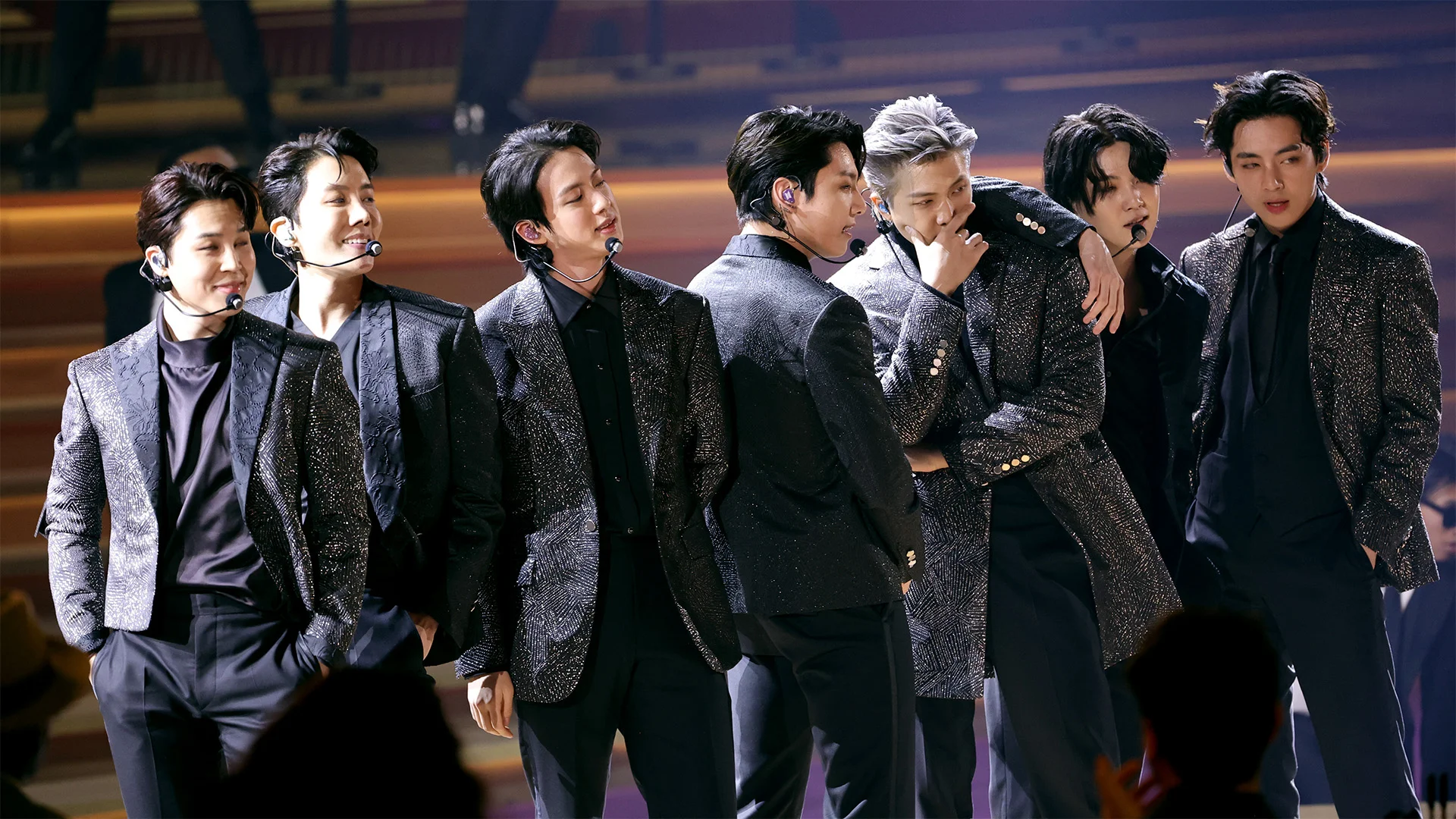
TS perform onstage during the 64th Annual GRAMMY Awards at MGM Grand Garden Arena on April 03, 2022 in Las Vegas, Nevada. Photo: Getty Images
I wrote some time ago about how BTS, one of the biggest bands in the world these days, was developing their own platform that would permit them to “own” a direct and persistent connection to their fans that was free of the many gatekeepers and parasites that have traditionally controlled the music industry. This would permit them to sell swag, special access, live podcasts, and eventually even tickets fee-free to their fans. Another upcoming artist, GiaNina Paolantonia, has similarly built her own platform and app in order to communicate with, connect to, and engage with her fans and followers.
The music industry is like a multi-headed hydra, however, and always has another card to play. The Grammys, an industry organ for decades, just announced a new music category specifically for Asian music in a transparent and expansive attempt to segregate BTS and all the other popular artists and bands from South Korea and elsewhere in Asia. Keeping these performers in their new and narrow vertical prevents these massively popular and emergent artists and rapidly growing music groups from dominating the main award categories which the “industry” prefers to reserve for their own in-house acts. As a reaction, BTS pulled its newest album from award consideration and urged others to do the same. Years ago, the same approach and treatment was used to keep Michael Jackson out of the Grammy Pop category even as he was declared the “King of Pop” and had some of the biggest and best-selling albums in history. And don’t get me started on the years-long shabby treatment accorded to everyone in the Hip hop world.
What really struck me about this latest move was the unbelievable proliferation of award categories that the Grammys have manufactured to continue to slice, dice, minimize and otherwise control the artists and the entire awards process along with all the acclaim, access, financial rewards and other benefits that accompany such recognition. In 1959, there were 28 award categories. Today, albeit more than half a century later, there are 100.
You can decide what real value or meaning any of the “minor” awards actually has, even assuming that the typical consumer actually understood what criteria went into each award and what behavior, achievements or results it recognized and acknowledged. The more tangential awards, of course, the less meaningful each becomes. Spread a mile wide and an inch deep, even the performers can barely bring themselves to sincerely express their gratitude for the Potemkin efforts. The brand and the bragging rights diminish in direct proportion to the number of categories and trophies much like childhood sporting events where virtually everyone’s a winner just for showing up.
Alas, the music biz isn’t alone in meaningless brand extrapolations. We’ve seen dozens of aborted attempts to spread a brand gloss over a grossly mismatched product. Colgate beef lasagna, vegetable-flavored Jell-O, Life Savers soda, Frito Lay lemonade, Cosmopolitan magazine yogurt and my personal favorite, Harley-Davidson perfume. There’s a lot to be said for sticking to your knitting. It may not be new and exciting, but it will likely keep you from falling flat on your face. Brands aren’t concrete and can stretch reasonably far, but not to excess.
There’s no one greater than JD Power at creating an award for every suitor in every automotive category and now expanding into virtually any and every imaginable area of products or services under the sun. You too can win a narrowly drawn JD Power award for the best of something accomplishment in your space—whatever it may be—and even if it’s only for your efforts on Sundays in months having 28 days. You get the idea. Winners galore and all willing to pay wonderful fees to use and promote that recognition in their advertising.
A close second in the race for exponential category growth and the clear winner in shamelessness are the fine folks at Guinness World Records, who invite the entire world to invent records of all types and sizes and then submit them to Guinness for a very costly validation process (Guinness is happy to provide paid consultants to advise applicants) along with judges and witnesses.
Once the months’ long confirmation process is concluded, Guinness provides a framed piece of paper with their brand and seal which recognizes the newly created and established record. They’ll also sell a framed “You Were There” Guinness certificate to every attendee at any Guinness record-setting event. Here again, the very DIY nature of this “record” creation process and the massive number of claimed records makes one wonder about the value of the end product and frankly what the Guinness name or brand even brings to the process. Nonetheless Guinness claims that it receives almost 1000 record proposals and applications per week and over 50,000 submissions a year.
A pair of Chicago twin brothers who have taken and documented over 82,000 selfies since the Apple iPhone camera was front facing enabled in 2010 are the likely holders of the putative Guinness World Record for “selfies taken by twin brothers” and to date, as their application process proceeds, no one has come forward to dispute or contest this amazing achievement. Taking a page from Michael Jackson, they now call themselves the Selfie Kings. Apparently, in the world of world records, saying makes it so.
