
Trump is using lawsuits to attack free speech and make the Epstein jokes go away
Trump’s reaction to a comedian reveals something far more dangerous.
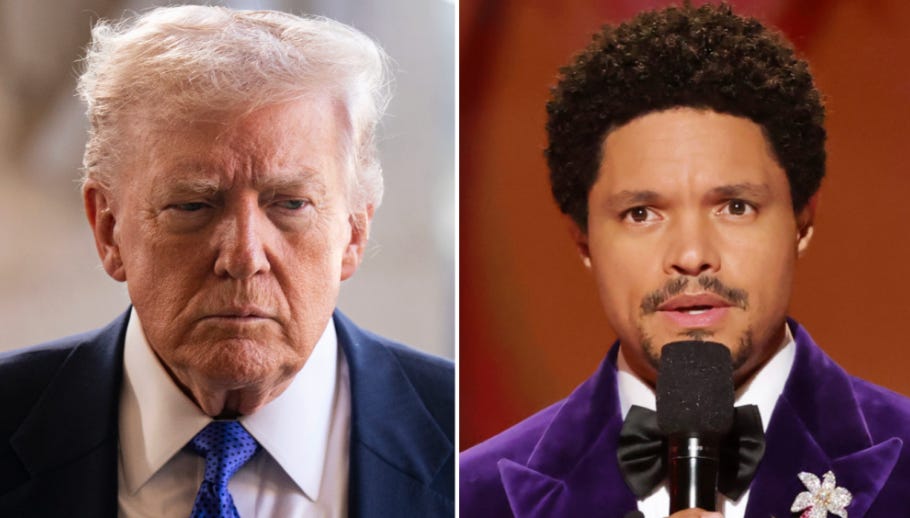 |
The 68th Annual Grammy Awards were meant to be a night of music, spectacle, and maybe even a little harmeless controversy. Instead, they became the latest flashpoint in Donald Trump’s growing campaign against critics, after a joke from host Trevor Noah triggered a late-night presidential meltdown and fresh threats of legal retaliation.
Trump’s meltdown was triggered after Billie Eilish won Song of the Year, Noah quipped that the Grammy was coveted “almost as much as Trump wants Greenland,” before adding that since “Epstein’s island is gone, he needs a new one to hang out with Bill Clinton.” Then came the punchline that sealed it: “I told you it’s my last year. What are you going to do about it?”
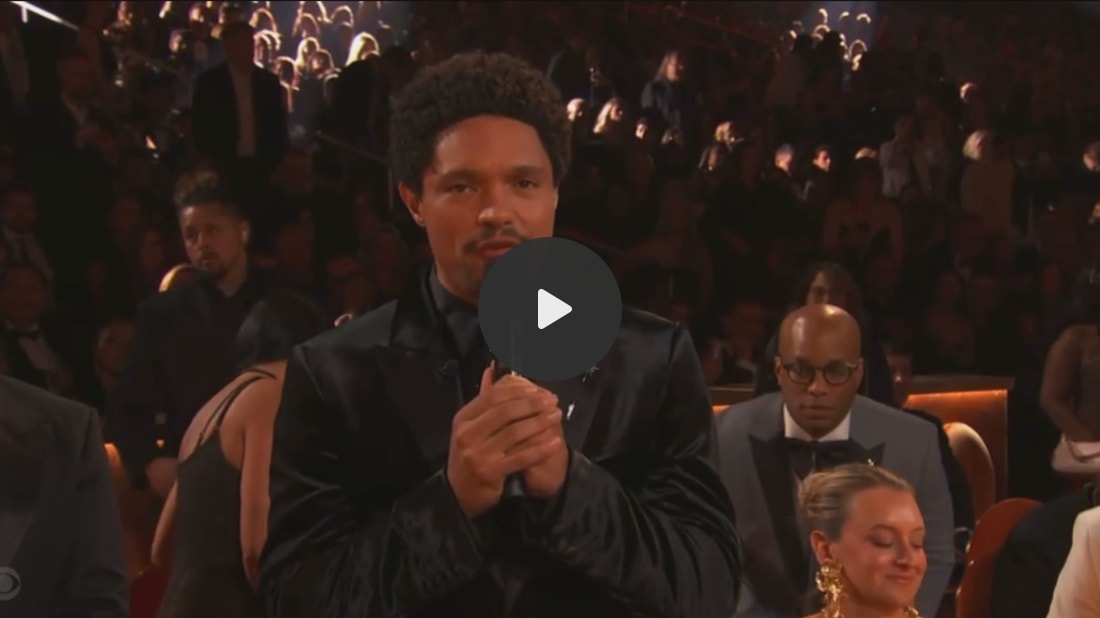
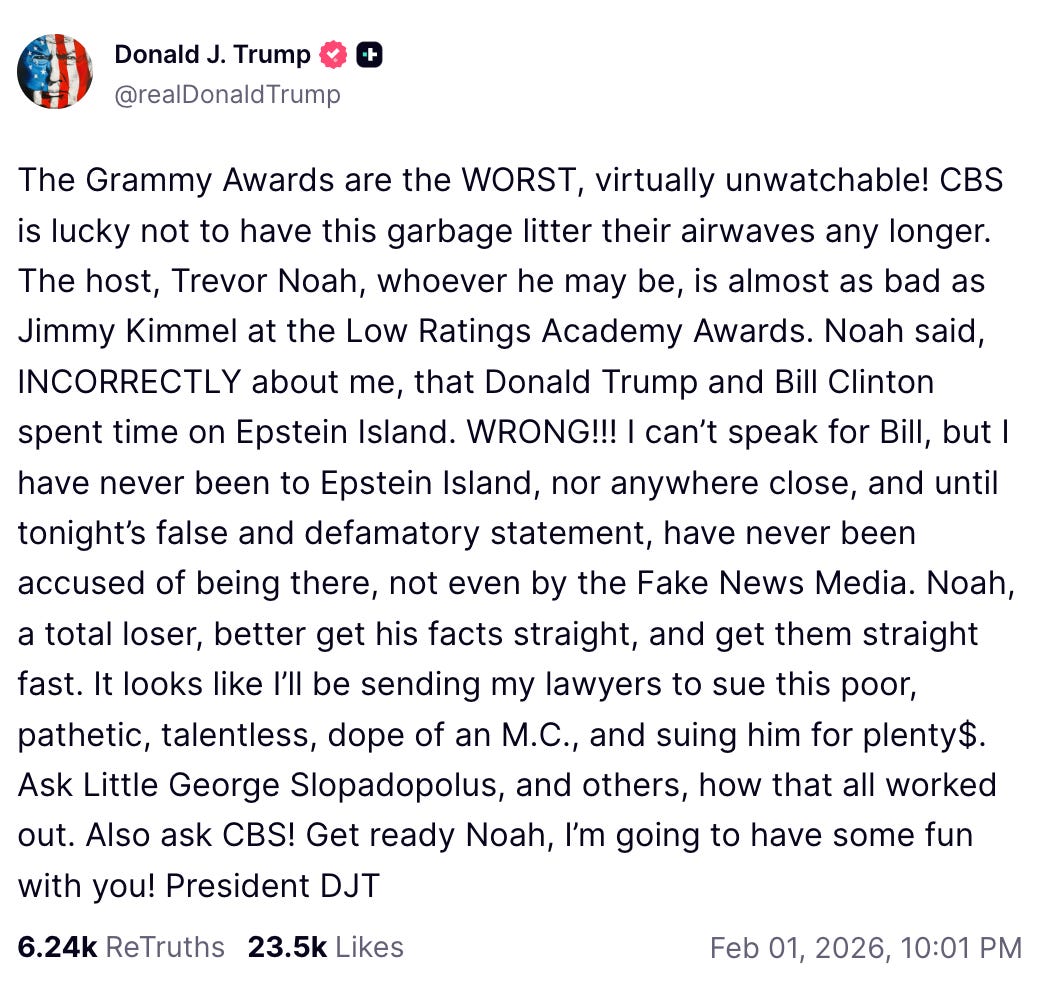
Within hours, the president was melting down on Truth Social, announcing that he planned to sue Noah for what he called a “false and defamatory” joke. Trump declared the Grammys the “WORST, virtually unwatchable” awards show and accused Noah of being “almost as bad as Jimmy Kimmel,” a comparison Trump seems to reserve for comedians who mock him publicly.
“Noah, a total loser, better get his facts straight, and get them straight fast,” Trump raged, insisting he had “never been to Epstein Island, nor anywhere close,” and threatening to send his lawyers after the “poor, pathetic, talentless, dope of an M.C.” for “plenty$.”
 |
Throughout the Grammys, artists openly condemned Trump’s immigration crackdowns and ICE raids. Kehlani lashed out at Trump directly. Bad Bunny earned cheers for his anti-ICE acceptance speech. Billie Eilish urged people to “keep protesting” and declared, “No one is illegal on stolen land,” prompting a standing ovation.
Trump explicitly referenced his past lawsuits against ABC and CBS as proof that suing critics into silence “worked.” He warned Noah to “get ready,” promising, “I’m going to have some fun with you!” — language that sounds like a mob boss reminding the crowd who still carries the bat.
Trump’s threat against Noah fits into a longer and well-documented pattern. Since returning to office, Trump has repeatedly used the prospect of lawsuits, regulatory pressure, and public intimidation to target critics in the press and entertainment industries. He has openly encouraged defamation suits against journalists, threatened broadcast licenses, and celebrated past legal actions against media companies as proof that aggressive litigation can be used to “keep them in line.”
Legal experts have long noted that defamation claims brought by public officials against comedians, satirists, and journalists face extremely high constitutional barriers. Under longstanding Supreme Court precedent, public figures must prove “actual malice” — that a statement was knowingly false or made with reckless disregard for the truth, a standard intentionally designed to protect political speech, parody, and criticism. Jokes and satire, in particular, are afforded broad First Amendment protection.
Civil liberties groups and press freedom organizations have warned that even meritless lawsuits can still function as a deterrent. Strategic lawsuits against public participation, often referred to as SLAPP suits, are frequently used not to win in court but to impose legal costs, create stress, and discourage future criticism. Trump has repeatedly framed his threats this way himself, boasting that prior legal actions forced media outlets and individuals to back down.
Trump’s response to a late-night awards show joke is another example of a president willing to test how far intimidation can go, and how much speech can be chilled, before constitutional protections are meaningfully enforced.
The point isn’t to win in court. The point is to make the cost of speaking out so high that fewer people dare to try.
