One of the biggest hurdles facing many veterans who served their country is finding a job, but a veteran-owned business organization in Chicago hopes to help.
One veteran spoke about the tough road many face as she enjoyed her first day on her new job. Ebonie Scott is an Air Force veteran who wrapped up her service in Saudi Arabia during Operation Enduring Freedom. She came home in 2003 and couldn't find a job.
"When you serve your country and come back here you have a plan or at least expect to be welcomed, and the welcoming is not as warm as you would think," Scott said.
Scott went back to school and made some money bartending, but on Monday, she has a new job.
"I just started today. (It's your first day?) Today is my first day. (Well, hallelujah.) Yes it is," Scott said.
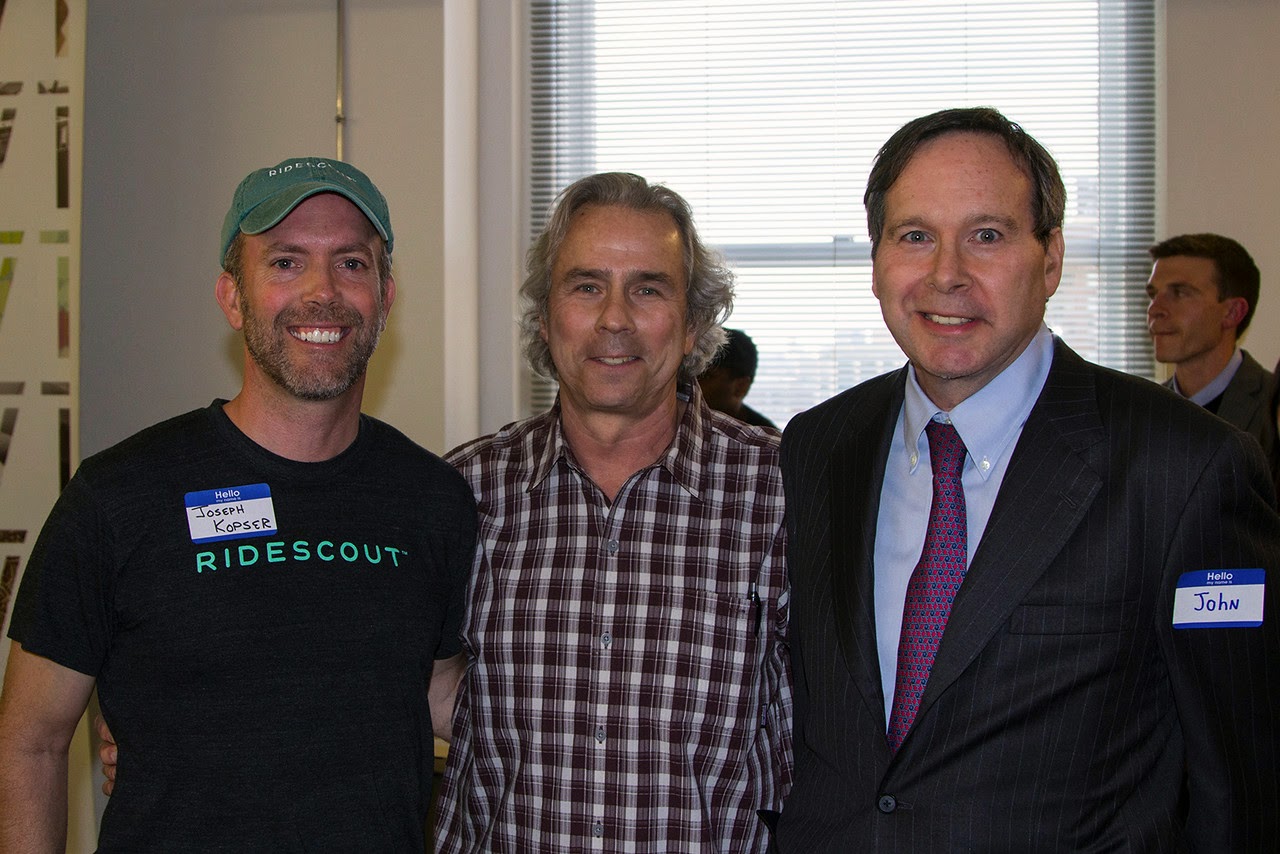
Scott is working for a company called RideScout, a mobile app that helps you navigate ground transportation. They're housed in 1871, the Chicago incubator designed to assist new business start-ups. One of its success stories is the Bunker, a firm run by veterans helping other vets start their own companies.
There's been such a demand that the Bunker is celebrating an expansion into seven other cities with significant corporate support and now, the blessings of a senator and the state's governor-elect. In the next five years, close to a million vets will leave the armed services for a return to civilian life and work.
"They make great entrepreneurs. Vets tend to hire vets, so I believe if we can help vets start companies, we're gonna have a force multiplier on the vets coming home and that's what the Bunker is committed to providing," said Todd Connor, CEO, The Bunker.
"We are willing to do the work that most won't because we have done it before. These are ingrained in our ethics, and we can't shake that," Scott said.
Scott's job search has a happy conclusion, albeit one that was a long time in the making. The reality is that military training doesn't always translate into civilian jobs or creating new companies. Illinois has, by one estimate, over 30,000 veterans who are unemployed, and many more who are underemployed.
At the same time, there are many more agencies helping vets and companies willing to hire them than there were when Scott came home in 2003.
Bunker CEO Todd Connor on veterans' 'distinctive and special' shared experience
By Kate MacArthur,Special to Blue Sky
When The Bunker incubator at 1871 launches its first startup class Nov. 1, it will realize founder and CEO Todd Connor’s ambition to translate veterans’ military experience to entrepreneurship. A U.S. Navy veteran of the Iraq War, he’s also co-founder of Flank 5 Academy, a professional-development incubator and coaching firm. His career includes stints as executive director of military programs for Chicago Public Schools and as a management consultant with Booz Allen Hamilton. He explains the common lesson on risk, failure and courage and the news that the incubator, a 501(c)(3) nonprofit, is already expanding.
Q. How many companies applied to The Bunker?
A. We’ve had 51 companies. A lot of them were out of the state and in non-technology industries. We've identified (19) companies that start Nov. 1 for six months.
We've got other venture capitalists, entrepreneurs and business school professors who happen to be veterans in other cities. So we're going to announce on Nov. 10 our national expansion into seven cities: Philadelphia, Washington, Los Angeles, Colorado Springs, Colo.; Kansas City, Mo.; Austin, Texas; and Tacoma, Wash.
We've built a model that we’re replicating in other cities almost like a franchise to enable veterans to tap the veteran entrepreneurial community where they live.
Q. So these aren’t just military companies?
A. Right. Some of the businesses do relate to a military purpose because that’s the experience of the founders. For example, Prevail Health Solutions has a behavioral health-technology platform that addresses post traumatic stress disorder as well as other discrete behavioral health conditions.
As we create the national network, we’re interested in focusing different cities on different markets. For example, at Washington D.C., we want to focus on federal procurement because that’s a really hot market with the Department of Defense. Colorado Springs has great network around aerospace because it’s the home of the U.S. Air Force Academy.
Q. One concern about specialized incubators is that they can be perceived as somehow lower than the main organization. How do you address that?
A. By way of context, there’s something fundamentally different about veterans. When civilians talk about veterans, they assume it’s an identity class. But when veterans talk about veterans, it’s a group of people that have shared an experience that’s really distinctive and special.
All of our founders have already experienced hardship circumstances through their work environment because they’ve been on active duty. We’re part of a very niche community here where there’s a language, a lingo and a way of working that is very appealing to them, and they like the idea of being surrounded by other veterans who can help create connectivity in ways they otherwise wouldn't be able to do on their own.
Q. What needs are you serving for your founders?
A. The opportunity is to help connect them to capital and the right advisers so they can grow their businesses faster than they would be able to do on their own. The average age of the CEOs in our incubator are 38 years old. Most of them, 70 percent, are already making money. Some startups need the platform to raise their profile through media attention and others to become veteran-certified to help them win federal contracts. It really depends on the business.
Q. What lessons on risk and failure will you transfer to The Bunker?
A. The self-imposed emotional barriers are always much greater than the real business barriers. The biggest challenge for most people is to convince themselves that they have the capacity to do whatever it is they want to do; the biggest challenge is never getting started. That’s the thing I’m constantly trying to role model.
Q. So how do you overcome that?
A. People over-think taking on new projects. People think about how to write a whole book, but what they need to think about is how to write the first page.
Last week, Chicago’s iconic 1871 incubator held a ribbon cutting for its 25,000 square foot expansion. This growth allows 1871 to extend what it is already great at – being an incubator of incubators, and an accelerator of accelerators. It is one of the elements that make 1871, and this expansion, unique. A goal of the expansion is to nurture vertically focused incubators in the areas of food tech, education tech, financial tech, Internet of Things, and veteran tech and WiSTEM (women-owned startups). Having industry-focused incubators in place ensures a pipeline of economic activity in the spaces that will drive growth and employment for Chicago.
Then there is this second unique element to this expansion: It will provide the space for 1871 “alumni companies” to stay on within the 1871 ecosystem. Alums will be able to continue to leverage the 1871 programming as well as the space. Further, they will be situated near offices allocated to several forward-thinking venture capital companies who want to take advantage of opportunities for investment in the Chicago market. Having VCs located near the more mature companies places the right parties together at the right time.
CEO Howard Tullman and COO Tom Alexander have many plans for additional amenities, including media recording, broadcasting space, and (of course) a choice spot for their Microsoft Perceptive Pixel. With this expansion, 1871 furthers itself down the path of being more than a center for startup activity. It is becoming an epicenter for economic development in general for the City of Chicago. To quote Todd Connor (CEO of The Bunker), it makes this “an exciting time for Chicago as we define our future as a city that believes in the dreamers, the builders, the risk takers”.
1871 2.0, the 25,000 square foot
expansion of Chicago's tech and startup hub, is finally complete and open for
business.
The ribbon cutting event is scheduled for
this morning and will feature remarks from CEO Howard Tullman and 1871 founder
J.B. Pritzker. Alumni companies will also speak about how they plan to grow
their businesses within the new space.
1871 received a $2.5
million state grant to
complete the expansion, which will increase its size by 50 percent.
1871 2.0 will be home to larger companies
that have outgrown their current space but want to continue to grow within the
startup environment. The space will also house several niche incubators that
will have a specific focus on a number of industries and demographics. The
programs include:
●The Bunker: the nation’s first veterans-exclusive
technology business accelerator, which will harness the leadership experiences
of veterans as a strategic differentiator for startup and early stage
veteran-owned, technology-enabled businesses.
●LEAP
Innovations: an
incubator that seeks to foster the development of the best learning
technologies by supporting startups that create these technology products and
programs for key learning gaps and helping pilot these technologies in
real-life learning environments.
●The DeVry EdTech Incubator: an incubator designed to help startups
develop new educational technologies to accelerate innovation in teaching and
learning by offering mentorship, coaching and access to DeVry’s network of
educational leaders.
●The
Elmspring Real Estate Incubator: an incubator supporting startups that leverage
technology to create solutions for complex challenges throughout the real
estate industry. Elmspring seeks to foster clever and innovative concepts that
disrupt traditional models in real estate and its related industries. 1871’s
real estate technology incubator space is sponsored by DTZ.
●The Good Food Business Accelerator: a fellowship program focused on
encouraging broad-based food entrepreneurship and leveraging technology in the
food industry. Operated by FamilyFarmed.org, the GFBA will be the nation’s
first business accelerator focused on building supply chains of sustainable
local food.
●WiSTEM: a program for women-owned and operated
technology businesses. In addition to its complete access to the 1871 community
and all of its resources, WiSTEM will offer a rigorous yet flexible program to
foster and support women entrepreneurs.
The expansion represents a big step for
1871, which in many ways serves as the embodiment of Chicago's thriving tech
ecosystem. Tullman frequently acknowledges that 1871 is no longer a "tech
treehouse" and startups are being told it's "up or out" when it
comes to growing their businesses. The expanded 1871 will give more resources
to startups and shows that Chicago is committed to tech and innovation.
Veterans’ start-up will help those in military save money on financial services
Jason Smartt (left) and Ceasar M. Munoz are with CreditServe, which provides financial services to active-duty personnel, steering them away from predatory lenders. | Photo courtesy of 1871
Afghanistan war veterans Ceasar M. Munoz and Jason Smartt aim to upend traditional credit scoring for junior active-duty soldiers who often have no or low credit scores.
The two alumni of West Point, along with co-founder Nitika Nautiyal, created start-up company CreditServe four months ago to match the soldiers with credible lenders who can give the soldiers more favorable, fixed terms and lower interest rates than they can get now.
The entrepreneurs are seeking angel funding totaling $1.5 million by the end of the first three months of 2015, partly to create an algorithm to show that soldiers are statistically better credit risks than their traditional scores reveal, they said. The goal is for the algorithm to take into account factors such as a service member’s deployments, awards, occupational specialty and length of service to produce the new type of credit score.
CreditServe is part of The Bunker, an incubator for startup companies created by military veterans.
The Bunker will be housed in a 25,000-square-foot addition that opened Tuesday next door to 1871’s home base on the 12th floor of the Merchandise Mart — a 50 percent increase in the much-publicized 1871 tech hub’s current size.
At an event Tuesday morning, Gov. Pat Quinn introduced representatives of the firms occupying the new space. The state of Illinois invested $2.3 million from the Illinois Jobs Now program to help get the original 1871 space started, and put in another $2.5 million for the expansion from the Illinois Department of Commerce and Economic Opportunity.
Some were clearly so excited to be there they seemed a little tongue-tied, remembering to thank the governor and 1871 but not mentioning their names or what their firms did.
After Quinn finished prompting many of the firms for details, it was J.B. Pritzker’s turn at the microphone. The technology venture capitalist billionaire was an early supporter of the 1871 hub.
Noting how focused Quinn had been on listing all the companies, Pritzker told the governor: “I know who the next CEO of 1871 should be.” But, he added, “you probably have another job you want to keep for awhile.”
The new space is part of 1871 CEO Howard Tullman’s plan to support new companies that will disrupt a variety of entrenched industries.
Other incubators to open in the space, though not all at the same time, are:
* Leap Innovations, an education-focused incubator that will engage teachers (including providing working space for them in 1871) to pilot new technologies, including coursework tailored to individual students’ abilities and needs.
* Good Food Business Accelerator, a program for food tech entrepreneurs aimed at expanding the availability of sustainable, locally grown food throughout Chicago.
* The DeVry EdTech Incubator, designed to help startups develop new educational technologies. It offers mentorship, coaching and access to DeVry’s network of educational leaders.
* The Elmspring Real Estate Incubator, supporting startups that leverage technology to create solutions for complex challenges throughout the real estate industry. 1871’s real estate technology incubator space is sponsored by DTZ.
* Impact Engine, an accelerator program to support companies that aim to deal with societal and environmental challenges by providing dedicated programming, including one-on-one mentorship, guest speakers, business workshops and team building exercises.
* WiSTEM, a program for women-owned and operated technology businesses.
The new space will also house four venture-funding firms and companies that have outgrown the 1871 shared space, including OptionsAway and Learnmetrics.
The companies are part of a growing network of resources for Chicago’s entrepreneurs.
For example, Munoz and Smartt came up with their startup idea as part of their coursework in entrepreneurship while pursuing MBAs at the University of Chicago’s Booth School of Business. They also take advantage of resources at the university’s Polsky Center for Entrepreneurship and Innovation. They are set to graduate in June 2015. Munoz, 30, served as a senior communications officer for the U.S. Army’s 2nd battalion, 1st Special Forces mission in southern Afghanistan, while Smartt, 29, served as a U.S. Army tactical and effects coordinator for the 5th Brigade, 2nd Infantry division, based in Spin Boldak on the Afghanistan-Pakistan border.
A beta trial with a soldier who needed a $17,000 loan resulted in the soldier saving $400 a month with a halved interest rate (18 percent, instead of 35 percent) and a three-year loan instead of several loans due over three- or six-month periods.
CreditServe’s target audience likely will realize negotiated interest rates from 10 to 25 percent, the co-founders said.
CreditServe won third place at the Booth School’s “New Venture Challenge” startup competition in May, along with a $10,000 seed-funding prize. The co-founders also have raised $70,000 from friends and family.
Todd Connor, CEO of the Bunker, said Tuesday that the idea is for the 10 to 14 veteran-run companies in the new space to generate revenue, hire people and grow to a point where they will move out after six months of meeting with mentors, strategic advisors and otherwise getting traction in the Bunker.
The first group of 14 startups at the Bunker were chosen from 51 applicants because most were already making money and attracting customers, said Connor, a Northfield native who earned his MBA from the Booth School after serving as a lieutenant in the U.S. Navy aboard the USS Bunker Hill as part of the “Shock and Awe” campaign on Baghdad, Iraq.
Indeed, the startups will be expected to show results quickly because the Bunker “is not a co-working space or a space to hang out,” Connor said. The companies will be evaluated based on their growth in jobs, revenues, capital investments and ability to remain going concerns that continue to exist for three years or are sold on terms favorable to the founders, he said.
The Bunker’s motto, “Come, Create and Conquer,” is aimed at appealing to veterans’ sense of mission and empowerment, rather than focusing on images of veterans as homeless and unemployed, he said. “We don’t want a pity party. We’re trying to recapture a sense of community. This is a place where you can build a business.”