Showing posts with label founders' stories. Show all posts

Monday, January 26, 2015

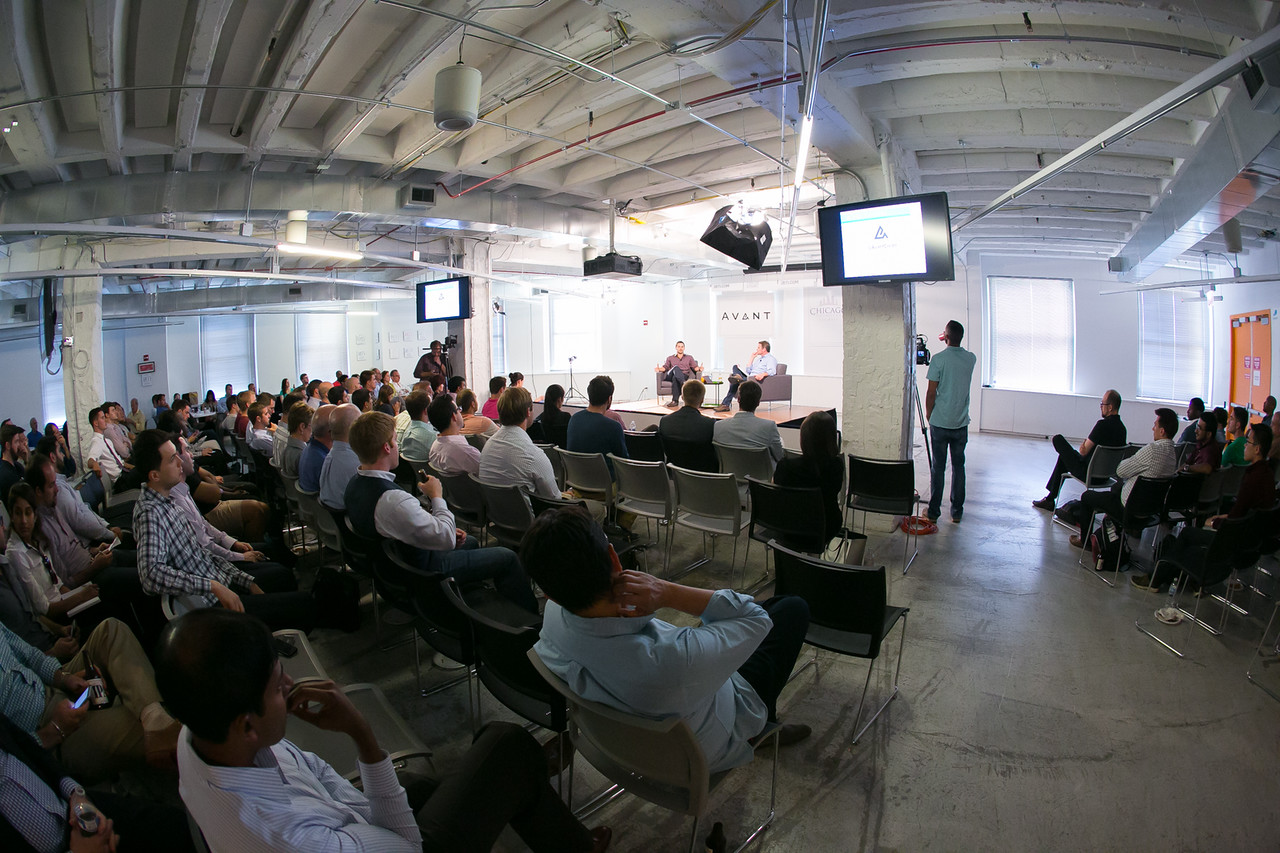
1871 CEO Howard Tullman with Pat Ryan on Founders' Stories

1871 CEO Howard Tullman

–December 2013 Founders’ Stories—

The vastly talented entrepreneur has spent his life creating companies. Here’s why 1871 is the next place to take his heart.


Our December 2013 guest was Howard Tullman, the new CEO of 1871 and an accomplished entrepreneur and venture capitalist. He’s held the title of CEO of a number of companies, including Tunes.com, CCC Information Services, and Cobalt Group — and that’s just the beginning of the list. And believe it or not, his first ten years in the professional world years were actually spent practicing law.
In this edition of Chicago Founders’ Stories, we spent some time learning about some of his early startups, Cobalt Group (which recently sold to ADP for $400M) and Tunes.com, and hearing what brought him to 1871 and why Chicago is a great place for startups.
Don’t miss his thoughts on how to implement grand “whiteboard ideas”, the importance of hard work and passion over anything else, and why he believes Chicago’s premier tech incubator is a very special place.
Howard Tullman of 1871 at Chicago Founders' Stories with Pat Ryan

Content Breakdown:

0:00 Howard’s backstory
15:45 How Howard moved from being a lawyer to working in the auto insurance technology industry
22:40 What to do when a perfect whiteboard idea doesn’t work out
36:06 On Cobalt and managing the vertical chain
44:08 On founding Tunes and finding the future in digital music
49:15 Q+A

Essential Quotes:

“When you raise money, if things go super well it will cost you 10x more money.” @tullman with @patryanchicago http://bit.ly/1b9xgeE Tweet this
“Tunes was one of the worst adventures and best adventures of my life.” @Tullman at @ChiFounders with @PatRyanChicago http://bit.ly/1b9xgeE Tweet this
“You think it’s easy to construct 30 years of reviews, photographs, etc. No one can do that.” @Tullman on Tunes http://bit.ly/1b9xgeE Tweet this
“Hard work wins over just about everything, including native brilliance and fabulous ideas.” @Tullman at @ChiFounders http://bit.ly/1b9xgeE Tweet this
“We may not outsmart everybody, but we will outwork them.” @Tullman to @PatRyanChicago at @ChiFounders http://bit.ly/1b9xgeE Tweet this
“You can train people to do things, but you can’t train them to care.” @Tullman at @ChiFounders with @PatRyanChicago http://bit.ly/1b9xgeE Tweet this
What @Tullman looks for in promising entrepreneurs: “Work ethic and passion.” @ChiFounders @PatRyanChicago http://bit.ly/1b9xgeE #startups Tweet this
“I couldn’t be more excited about #Chicago. I think both of the coasts suck.” @Tullman on #startups at @ChiFounders http://bit.ly/1b9xgeE Tweet this
“I don’t think there’s a better place you could be right now to start a company [than #Chicago]” @Tullman on #startups http://bit.ly/1b9xgeE Tweet this
“Everything in the world is an iterative process.” @Tullman to @PatRyanChicago at @ChiFounders http://bit.ly/1b9xgeE Tweet this
“I think @1871chicago is a completely special place.” @Tullman at @ChiFounders with @PatRyanChicago #startups http://bit.ly/1b9xgeE Tweet this

Saturday, July 19, 2014

The story of how WyzAnt started connecting students with tutors

The story of how WyzAnt started connecting students with tutors

The story of WyzAnt Tutoring begins with two young entrepreneurs without a mentor or an ecosystem.
“People often ask us why we didn’t raise capital,” said WyzAnt co-founder Andrew Geant, referring to the company’s founding in 2005. “We didn’t know we could raise capital. We didn’t know that was a thing.”
Geant spoke Wednesday at Chicago Founders’ Stories @1871, the monthly series in which coordinator Pat Ryan Jr. questions entrepreneurs on methods, philosophies and histories, including missteps, to gain insight into operations.
1871 CEO Howard Tullman says the events typically draw 200 to 300 attendees, about half of them 1871 members, and that Ryan makes it a point to draw out the problems entrepreneurs have met along the way, not just the successes.
“The trick is, what were the hiccups along the way?" Tullman said. "He makes it his business to make those sessions more instructive and informational.”
Geant said he and his co-founder, Mike Weishuhn, both Princeton University graduates, ran the tutoring company by themselves until it got too big. Today, their company connects students online to 74,000 tutors offering in-person private lessons in various subjects. It raised its first capital — $21.5 million from Accel Partners — last year.
The average session runs $40-$50 an hour, he said, and eases the way for students and tutors to connect.
“With the marketplace approach, we’ve drastically improved the traditional economics in the industry,” Geant told Ryan, founder of Incisent Labs.
Geant said he came up with the idea after college when he had been headed for a career in investment banking in New York but found he didn’t like working in the field. He bowed out two weeks into job training, moved in with his parents in Maine and began tutoring, but found it difficult to market himself.
Figuring that college students made great tutors for high school students, he paired with Weishuhn, moved to northern Virginia and started working on the concept.
They recruited tutors from college campuses during the day. During high school football games at night, they talked with parents seeking tutoring services for their kids. Six months into their project, by March 2006, they hit $3,000 in monthly revenue, which gave them $600 in monthly profit, he said.
“We said, ‘We made it. We can live off of this,’” he said.
They expanded to other markets, including New York, and eventually moved their headquarters to Chicago, where they had friends.
Geant said he and Weishuhn established a payment process that appealed to both tutors and their clients.
“Tutors aren’t business people,” Geant said. “They don’t want to hassle with that. And the parents can just put a credit card on file, and they don’t have to worry about cutting a check or having the right amount of cash.”
Geant said they wanted to remain a two-person operation as long as possible.
“We had this vision where we could just automate everything, sit back and watch the money roll in,” Geant said. “We pushed it really far. In 2009, we were doing like $4.5 million gross sales with just the two of us. And the phones are blowing up and the books are a mess. The site is breaking. We’re like … ‘We need help.’”
Great said WyzAnt now has 70 employees and is hiring engineers, product managers and visual designers. The next goal: virtual tutoring.
"I don’t think the in-person experience is ever going to go away,” he said. “But, we are cognizant of the fact that there are a lot of benefits to the virtual experience.”
He added: “For us, matching is crucial. The right tutor might be in Alaska, and the right student might be in Florida.”

Friday, January 31, 2014

1871 CEO Howard Tullman at Chicago Founders’ Stories @ 1871 (VIDEO)


1871 CEO Howard Tullman at Chicago Founders’ Stories @ 1871 (VIDEO)
01/30/2014

We had a great time sitting down with Howard Tullman, the new CEO of 1871 and an accomplished entrepreneur and venture capitalist. He’s held the title of CEO or Chairman of a number of companies, including Tunes.com, CCC Information Services, and The Cobalt Group — and that’s just the beginning of the list. And believe it or not, his first ten years in the professional world years were actually spent practicing law.

Though we wouldn’t have argued if Howard spent the whole evening telling us the intricate details about every one of his ventures, we did keep it to a select few, and he regaled us with stories of brilliant success, monumental challenges, and his endless love for big ideas. You can see the video of the whole evening below.

Chicago Founders Stories: Howard Tullman from Chicago Founder's Stories on Vimeo.

To give you a taste, here are five tips straight from the source. It’s why we love Founders’ Stories: you just can’t get great ideas like these anywhere else.

1. You don’t need to invest capital to have “skin in the game”.
As Howard broke into the auto insurance technology business, he was asked to give a lot — his time, his “sweat equity”, and, later, his cash. But he doesn’t think that you need all three in order to have a stake in a company. “It was a huge and very important thing to say, ‘I’m just not doing that. I don’t think I have to mortgage my future and everything else to start a business.’”

2. Don’t underestimate the value of hard work.
When asked what Howard looks for as a sign of success in young entrepreneurs, he believes that endless passion and a strong work ethic are most important. “Hard work eventually wins over just about everything, including native brilliant and fabulous ideas. We always say ‘we may not have outsmarted everybody, but we can outwork them.”

3. Reach further.
Howard’s move to 1871 seems fitting with his serial enterprises. But the buck doesn’t stop here. Even a community as innovative as the one that hosts our Founders’ Stories events has room to grow.  “I think 1871 is one of the most important things that Chicago can be focused on right now. We’ve become an attraction, we’ve become a place, and I really feel…that if we stopped, if we rested on our laurels…that we’d lose our primacy and we wouldn’t be a special place. And I think that 1871 is a completely special place.”

Be a great storyteller. Push the market. And “if you don’t think things should get better, then you shouldn’t be an entrepreneur.”

4. Look ahead.
One of the interesting aspects of Howard’s time at Tunes.com, is that it started as one idea (a source for concert webcasts) and ended up as something completely different (a provider of online digital music). “The real content was not the webcast. The real content was the digital music and all the information associated with that.”

When an idea starts to move in a different direction, move with it. Seek out demand. “The real magic of being an entrepreneur is you barely remember yesterday because you’re so focused on tomorrow.”

5. There is no such thing as ‘failure’.
In some ways, Howard Tullman has never failed (nor have any of us). “Whatever mistakes we made – as long as we learn from them, and as long as we didn’t take advantage of people or treat people poorly, I don’t think it’s a failure. It’s an analytical process and you learn from every single thing, every single day.” Even failures bring us new sets of applications that we can use for future ideas. Hungry for more words of wisdom?

Check out the recording of the video here:
Chicago Founders Stories: Howard Tullman from Chicago Founder's Stories on Vimeo.

Chicago Founders Stories: Howard Tullman from Chicago Founder's Stories on Vimeo.

We hope you enjoyed this interview with Howard, and look forward to the next Chicago Founders’ Stories@1871 with BigMachines founder Godard Abel, TONIGHT (January 30)! Click here to sign up for the event now. We’ll learn about his rise to success as he recently sold the company to Oracle for a pricetag of almost $500 million.

Pat Ryan is a business and social entrepreneur who has created several high growth software companies as well as several innovative urban education initiatives as a social entrepreneur. Pat’s first company, FirstLook, was recognized by Inc Magazine in 2008 as the #4 fastest growing software company in the U.S. in its Inc 500 rankings – the highest ranking ever for a Chicago based software company. Pat is also the Founder of MAX as well as the Founder and CEO of INCISENT Labs, a platform and incubator for innovative, industry-changing technologies that spin out into high growth companies. MAX was created in INCISENT Labs where Pat and a team are currently incubating their latest start-up. Pat blogs at Coolerbythelake.com and can be reached on Twitter @PatRyanChicago.

Total Pageviews

GOOGLE ANALYTICS

Blog Archive