Monday, August 05, 2019

Boomer Cafe


A boomer’s belief: Music is the Great Democratizer


Music, we’ve heard it said, is the great equalizer. But here’s a different take: Music, (not might!), is the great democratizer. This comes from Chicago’s Howard Tullman, an entrepreneur all his life and now executive director of the Illinois Institute of Technology’s Kaplan Family Institute for Innovation and Tech Entrepreneurship, as well as author of a weekly series called The Perspiration Principles at Inc. Magazine. But that entrepreneurial spirit carried this baby boomer into the world of music, and he has seen and felt things he wishes all of us could see and feel.
Music has been an important part of almost everyone’s life from our earliest days.
From soothing parental lullabies and sing-song nursery school rhymes, to painful music lessons and the insufferable strains of the high school band, right up thru graduations, weddings, and funerals, music has provided the “soundtrack” of our lives and accompanied virtually every important and memorable passage and touchpoint as we’ve grown up.

Howard Tullman.
Photo: Monica Kass Rogers
In some especially fortunate cases like mine, it’s been a constant social companion, an important emotional support, and provided a series of exciting and challenging business experiences as well. From my early days as an owner of Rainbow Records, then the record store in my neighborhood north of Chicago, to building and launching some of the most important music content sites on the web including RollingStone.com and TheSource.com, and then on to help line up the talent for 1999’s The Concert of the Century at the White House, I’ve had a chance to see and be a small part of every side and aspect of the music business.
And believe me when I say, it’s always been mainly a business that’s all about making money which just incidentally happens to create a little great music in the process. Or, as one old-timer used to remind me, “We sell records, not music.”

Hunter S. Thompson
But whatever you want to say about how awful and exploitive the music business has been, and no one ever said it better than Hunter S. Thompson, the music that eventually does get made has a consistent power and a seductive sway over our minds and our hearts that no other form of media can claim.
Maybe you vaguely remember a classic movie scene or two, or an old episode of some TV show, but probably only vaguely. Deeply embedded in your brain though are the melodies and lyrical phrases to hundreds of songs which leap from your subconscious memory the moment you hear a familiar riff or a certain chord. You can’t start it with a switch, and you can’t kill it with a gun.

The Brill Building at 1619 Broadway in New York.
And we also can’t predict it, duplicate it, or determine what piece of magic will do the trick. There’s a world of difference between a jingle and a hit single, but nobody (since the days of the musically iconic Brill Building and the Beatles) has been able to figure out what exactly it is or how to recreate it on a consistent basis.
But I think that music doesn’t really get anywhere near the credit that it should for a much greater and more important contribution to all our lives. The truth is that music (and not Coca-Cola) is how we taught the entire world to sing. And more importantly, to sing in English. And, even in an increasingly globalized world (with the possible recent exception of the K-Pop kids), it’s been almost exclusively a one-way street. Sure, we had Danke Schoen which wasn’t really a U.S. hit until it was recorded with English lyrics by Wayne Newton (and then reborn 20+ years later in Ferris Bueller’s Day Off), but basically— much like the Internet and computer coding— music has mainly been about English.
One of the most interesting things about attending a Springsteen or Eagles concert anywhere else in the world where English isn’t the first language is watching what happens during the audience participation parts where tens of thousands of fans in the crowd sing whole choruses verbatim and never miss a beat, a key line, or a special phrase. Not only are they singing in unison and singing about things they’ve typically never seen or imagined, they’re bound together in a very interesting and almost spiritual way as a single organism composed of thousands of individual and highly diverse parts. Everyone is a part of the same and special moment. And they’re all connected at the same time to worlds far away from them, and yet a part of their shared experience as well.
In these moments, there’s a common feeling and warmth among the participants which is palpable and reflected back to the performers on stage. If you haven’t been in the crowd or, better yet, stood on one of those stages as the whole structure pulses and shakes with the soaring sounds and the pounding feet of the crowd, the feeling is impossible to describe and unlike any other experience except maybe those at a few major sporting events… although the singular sense of unity is usually missing there.
And in that crush of hot, sweaty, and often drunk bodies, everyone is also remarkably forgiving and patient because no one really wants to kill the good vibrations or the buzz. It’s hard to be angry when you’ve “gotta peaceful, easy feeling,” or a “hungry heart.”
All thanks to music.

Gotta Go for Joe


Loop North News - You Mean You're Still on Facebook?

Loop North News
75 °Sunny
Howard Tullman
You mean you’re still on Facebook?

Given the number of zombie accounts that I’m seeing, it sure seems like we’ve reached peak FB. What can Zuck do to slow Amazon’s ascent?

4-Aug-19 – Here’s a quick experiment. Using your phone, go to your profile page on Facebook and scroll down to the listing for your Friends. Take a moment to congratulate yourself on the vast number of friends you have – sadly, the list is limited to 5,000 – and then click on the See All Friends button and start scrolling down again.

Pretty soon you’ll see names without the accompanying Friends indicator. When you click on any of those names, you’ll get a popup notice headed Account Inactive that goes on to say that this account has been deactivated, although you can choose to still stay friends.

Only the friendly folks at Facebook would suggest that you remain friends with a zombie account, so their overall account numbers can continue to be ginormous, grossly inaccurate, and clearly over-inflated – even before counting the bots. Who but the gnomes at Facebook knows where those accounts really went?

If your experience is similar to mine, it will become obvious after a little scrolling and a few clicks that some “friends” are people you’ve never heard of, could care less about, or are happy to be rid of, while a fair number are real people, acquaintances, or even friends IRL.

It’s a little disconcerting to think that, although you’re not sure why, you’re no longer connected to them in the big blue FB blob. This is probably not your doing or fault and it’s highly unlikely that FB decided to shut them off. The reality is that Facebook might have disappointed them so much that they finally checked out, signed off, and bagged the whole thing. And yet, clicking that nasty, red-colored unfriend button is difficult because – although it seems like simple good housekeeping and frees up slots for more friends – abruptly unfriending people, even knowing their accounts are inactive or long gone, seems so final and even a bit draconian.

Then again, do they know something that you don’t? Have they woken up while you’re still in the weeds? Keep in mind, as you see more and more of these dearly departed and inactives scroll by, that these aren’t mopes; they’re a bunch of people that you know and like.


Photo by Kaspars GrinvaldsWhat’s the deal? Could it be that FB has become a blemish rather than the blessing that it used to be? Not too many heavy-duty influencers are bragging about their Facebook pages these days. It’s a little bit like still using an AOL or Yahoo email address.


Are all your friends fleeing Facebook without telling you? Did you miss the memo? Have the unwritten rules been re-written? It used to be so simple and now it’s so hard to keep up. And then there’s always FOMO to boot – what if everyone who’s anyone is hanging out elsewhere? After all, as in the bar in Cheers, we all want to be where everyone knows our name. And that, of course, is the absolute genius of Mark Zuckerberg’s invention.

Give the Zuck his due, he’s one clever dude. Just think about how far he’s come. One of his greatest early accomplishments was to reposition the Facebook origin story – until that pesky Social Network movie came along – to wrap it in the comforting concept of serendipitous social connections rather than promoting its initial and much creepier implementation as a snarky collegiate vehicle for comparing and designating which women on campus were hot and which were not.

It’s clear, by the way, that version 1.0 would have never gotten out of that shabby dorm room in today’s #MeToo climate, even with the superpowered shield of Sheryl Sandberg running interference and making constant apologies. What began as a crass but cunning tool for sharing purloined view book images – so that the bros and nerds could taunt and shame women otherwise beyond their reach – quickly morphed into a socially-acceptable service that cloaked itself in the finery of finding “friends” and forging closer “family” bonds.


Not too many heavy-duty influencers are bragging about their Facebook pages these days. It’s a little bit like still using an AOL or Yahoo email address.


As soon as FB opened the floodgates, we all jumped into the pool. Aggregating friends quickly became an acceptable activity and soon morphed into somewhat of an adrenaline-driven addiction. If anything, likes upped the ante even more. It was all about more. Before we knew it – and often before we knew them – many of us had “friends” galore. Facebook’s founders created a system that successfully and consistently exploited some of our most basic and basest behaviors.

We always knew that status mattered. But in the past, status was largely controlled and conferred upon a limited number of the carefully anointed by a small coterie of gatekeepers – from their own select silos – and each beholden only to their own tribes. The web, and the advent of social networks, blew that cloistered world apart and suddenly anyone and everyone had new digital power to create status for themselves and others, to confer status on anyone they chose, and to publish status, rankings, ratings, etc., across the globe.

Entire industries emerged focused exclusively on the care and curation of one’s social status – friends, followers, likes, clicks, Klout and Kred scores, etc. The foundation under virtually all of it was the unavoidable and irreplaceable Facebook platform. If you weren’t there, you were nowhere. And Facebook’s masters were glad you were there.


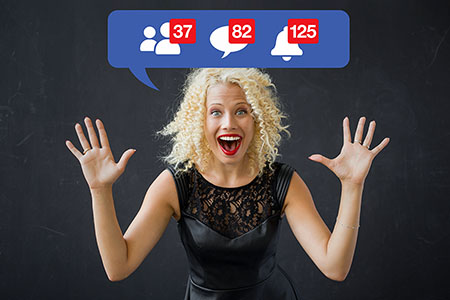
But maybe there’s increasingly less “there” there these days. The question for several years now has been, how long can Facebook retain even a semblance of that initial cachet despite being associated with some of the most manipulative and devious behavior and foreign intrigue that we’ve ever seen?Adobe Stock


In the new, capital-light, digital economy, Facebook has become one of the two absolute masters of manufacturing and delivering massive, high-margin virtual ad viewers to marketers and advertisers rather than manufacturing anything as pedestrian as a car or a movie. As for the rest of us, if you’re not being paid for your time, attention, and personal data – and no one is – you’re more likely to be the product that’s being sold. As a result, Facebook and Google own the digital advertising space, which recently blew past television in terms of total ad spending, and they both continue to print money.

Google no saint, either
If Facebook is the queen of digital media marketing, Google has been the undisputed king for quite a while and employs a very similar scam. Google consistently claims to be doing us all the favor of organizing the world’s information rather than admitting that its fundamental focus and primary business model is aggregating and then selling minute slices of our attention and mindshare to the highest-bidding advertisers. Just like Facebook. They don’t sell products and services to consumers. They provide those for free. What they sell are audiences to advertisers.

Now Amazon is making a serious run at both. The past revenues of the social media and search channels have been mainly data-driven and they haven’t been successfully converted into direct sales channels. This is beginning to change and it’s where Amazon’s ultimate advantage lives. While your best friends and family may be fleeing Facebook, no one’s about to stop shopping on Amazon any time soon.

Amazon’s two-track take is slightly different and more sustainable over the long run. It’s not just a growing advertising conduit based on increasingly fickle folks. Amazon is the actual sales, storage, and delivery channel as well, acting both as a distributor/wholesaler and for its own account. Amazon uses the same types of aggregated data along with individual purchase histories to increasingly improve its ability to precisely identify what products to directly offer and sell to you, in addition to deciding what ads to show you. By year end, Amazon should be selling more than 80 of its own private label brands and products to shoppers.

I’m not sure how we will solve the mystery of Facebook’s living dead. I’m not going to call these folks up and ask them if they quit FB, although the numbers about rapidly falling user engagement with Facebook are clear. I’d say that without the volumes and activity of Messenger and Instagram, the growing cracks in the Facebook facade would start to become increasingly obvious and the end might well be in sight.

As the Zuck is fond of saying, “if we don’t create the thing that kills Facebook, someone else will.”

Or maybe they won’t need to. Could it be that that boat has already sailed?


Howard TullmanHoward Tullman is General Managing Partner for G2T3V, LLC – Investors in Disruptive Innovators, and for Chicago High Tech Investors, LLC. He is also executive director of Ed Kaplan Family Institute for Innovation and Tech Entrepreneurship at Illinois Institute of Technology. And the author of You Can’t Win a Race With Your Mouth: And 299 Other Expert Tips from a Lifelong Entrepreneur.
By Howard Tullman | Loop North News | h@g2t3v.com

Total Pageviews

GOOGLE ANALYTICS

Blog Archive