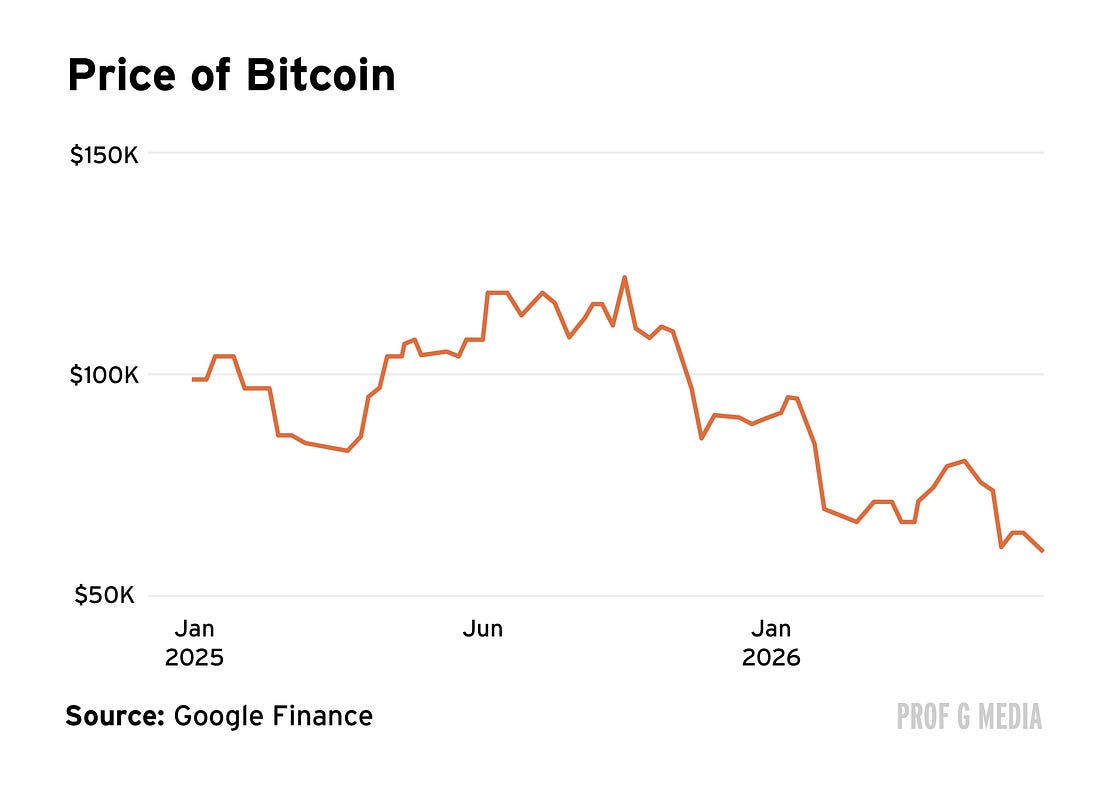
I want you to cast your mind to 2024. Donald Trump has just won the Presidential Election. America prepares for an era of “anti-wokeness” and “no foreign wars.” Heard faintly in the background, the celebrations of a newer sect of the MAGA coalition: crypto-bros. Trump was supposedly going to be America’s first crypto President, which meant Bitcoin was “going to the moon.” To the moon Bitcoin went. It started with a promise to fire the “anti-crypto” SEC Chair. Later, Trump spoke at the Bitcoin conference. Each of Trump’s pro-crypto actions sparked another rally. Soon enough, Trump had his own cryptocurrency: TRUMP Coin. He even hosted pay-to-play crypto dinners (where Presidential pardons went to the highest bidders). By October 2025, the price of Bitcoin had risen to $126,000, an all-time high. Trump had made America the “crypto capital of the world,” and as President, he’d “never let crypto down.” Fast-forward to today: Bitcoin trades at less than $60,000 — down more than 50% in the past eight months. The coin is now less valuable than before Trump was elected. Fifty-three percent of all Bitcoin in circulation is currently held at a loss. The crypto markets have erased nearly $9 billion worth of value per day for 261 days straight. More than $2 trillion … vanished overnight, and the crypto-bros are eerily silent. What the f**k happened?
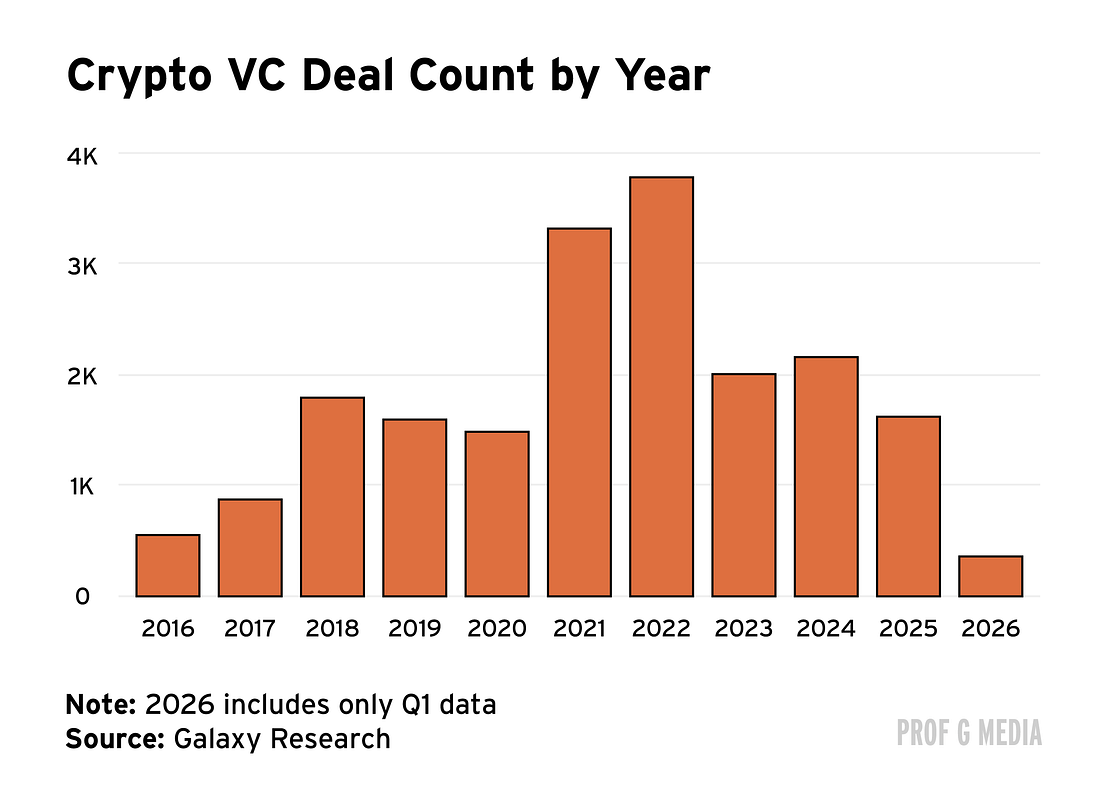
Red HerringsThere are several stories that supposedly explain Bitcoin’s downfall: interest rate uncertainty, a more hawkish Fed, a strengthening dollar, etc. Those sound plausible, but anyone who understands crypto markets knows they’re red herrings. The reality is there’s only one thing that moves the needle for Bitcoin, and it’s the same thing that moved the needle in late 2024: vibes. Here’s how it works: When vibes are good, the line goes up. When vibes are bad, the line goes down. Different forces create different vibes. For example, “the President likes crypto” = good vibes. On the flip side, “Sam Bankman-Fried goes to prison” = bad. Did SBF’s arrest change anything about the fundamental nature of Bitcoin? No. But it was bad vibes, so Bitcoin tanked. Well, the line’s going down again … which means the vibes are off. The question is why. You can never nail a vibe with 100% certainty, but I have a theory I’m pretty confident about. The Great BrotationIf markets were a high-school, Bitcoin would be the cool kid: mysterious, rebellious, futuristic, and hard to define — all the things that make a person (or asset) cool. But it’s hard to be cool when you’re also the teachers’ pet, and with the President’s embrace, Bitcoin’s lost its punk rock feel. The more damaging event for Bitcoin, however, was the arrival of a new cool kid. A cool kid who’s not only cool … but cooler. So much cooler that Bitcoin looks like a nerd by comparison. I’m talking, of course, about AI. It started with the VCs, who abandoned their BFF more quickly than Regina George. Crypto went from attracting $12 billion in venture funding in the first quarter of 2022 to $4 billion in the first quarter of this year — a 70% drop in just four years. Nothing summarizes Silicon Valley’s change of allegiance better than investor Jason Calacanis’s now-legendary 2023 tweet: “If you’re in crypto pivot to AI.”
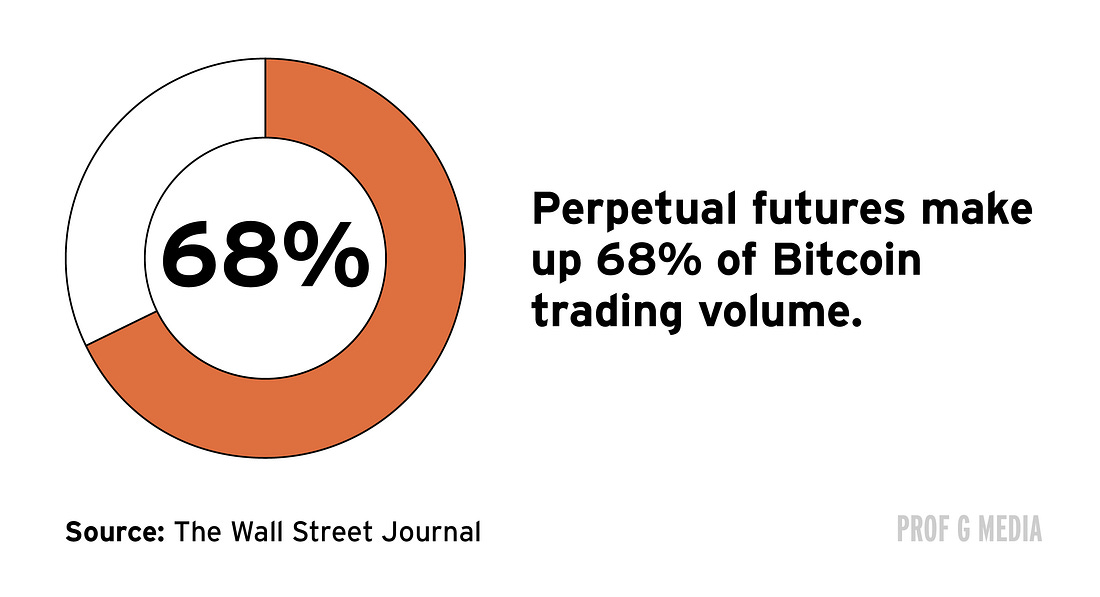
Then came Bitcoin’s real fallout: the retail investors. For years, BTC was the go-to investment for “degen” traders around the globe, the ultimate “bro asset.” However, as soon as once-obscure AI names started putting up triple-digit quarters that put Bitcoin’s returns to shame (SK Hynix, Sandisk, Seagate, etc.), crypto started to fall by the wayside. The bros started rotating out of the old shiny object, and into the new one. The excellent Financial Times commentator (and my friend) Robert Armstrong and his readers have a name for this dynamic, which I’m now borrowing: The Great Brotation. To add insult to injury, Bitcoin had also engaged repeatedly with a cool-but-highly-addictive substance known as leverage. As with cocaine, leverage made the highs a lot higher and the lows a lot lower. The most extreme variant was a “perpetual future” (also known as a “perp”), an options contract with no expiration date and almost no leverage cap. Perps quickly became the most popular way to trade Bitcoin, accounting for nearly 70% of all trading volume last year. This is extremely unusual and not talked about nearly enough. It also explains why the price of Bitcoin swung so violently up, and then, so violently down.
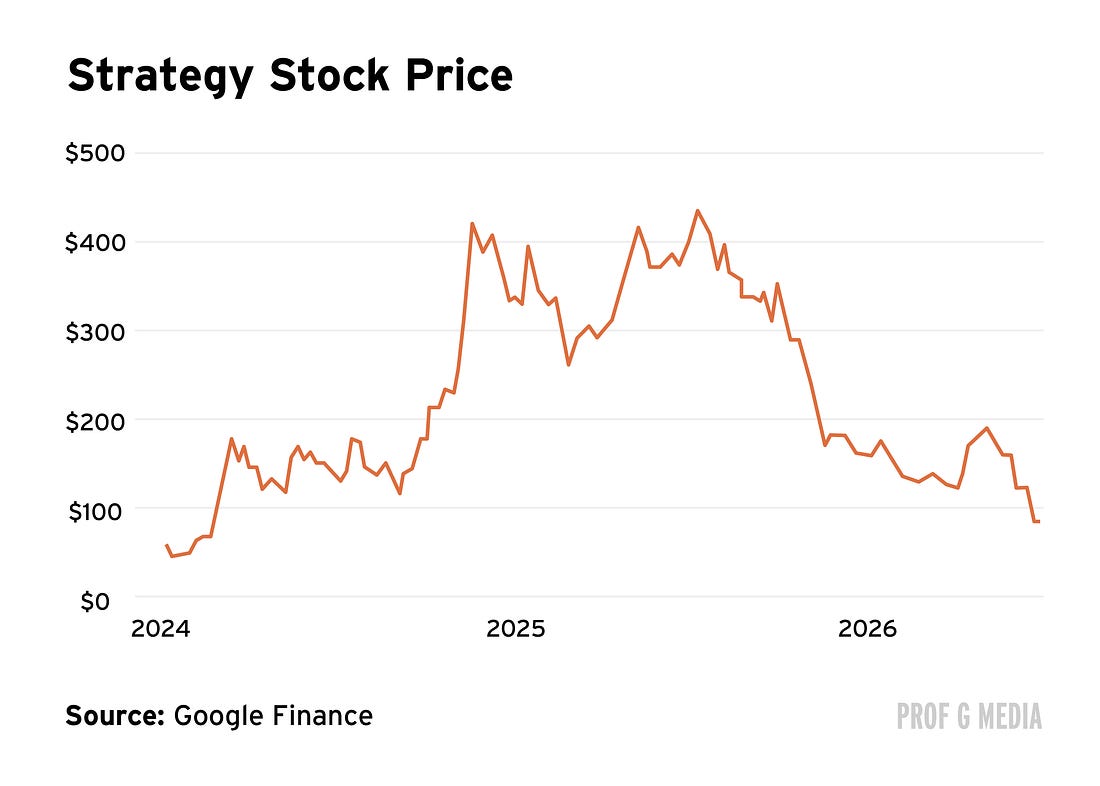
The result was a giant sucking sound in the vibes department. The most interesting person in the room was no longer Bitcoin, but AI. And the longer that remained true, the darker the vibes became. Bitcoin’s ProblemWe all have years where we’re cool and years where we’re not. My coolest year was age 11, as I was on the A-Team for football and was surprisingly good at magic. (My least cool year was 14, as I was no longer on the A-Team and still surprisingly good at magic.) I was taught early on, however, that what mattered most wasn’t others’ perception of me, but who I was at my core. This was a corny but useful framework that helped me ride the ups and downs. Strangely, this same philosophy applies to the stock market. Stocks have years where they’re “cool” (Micron today) and years where they’re not (Micron ten years ago). If all an investor cared about was the stock price, they’d be miserable. Fortunately there are more important things to care about — specifically, fundamentals. Companies create goods and services, which they sell for profits. If a company can figure out how to grow those profits and turn them into free cash flows, it’s investable. Wonderfully, this is the only thing that really matters, and once you realize it, the price (i.e. “what other people think”) becomes background noise. However, the same cannot be said about crypto. Why? Because there are no fundamentals. Without profits and cash flows, a floor of value cannot be set. When the vibes are up, the vibes are up. When the vibes are down, the vibes are down. This is Bitcoin’s problem: The only thing that matters is what other people think. In many ways, Bitcoin is an investing nightmare. “Interesting”I’m reminded of an interview I did in 2024 with Michael Saylor, the Godfather of Bitcoin. At the time, Saylor’s “bitcoin treasury” company, Strategy, was on a tear. The stock had exploded more than 300% in a matter of months. I, however, was extremely bearish, as there was nothing to back up the sexiness of the price other than .. its own sexiness. “A lot of people are going to lose a lot of money,” I said on Prof G markets. I even called it a Ponzi scheme. Since then, Strategy has lost roughly 80% of its value.
But the most important moment in that interview came when I asked Saylor what would happen if investors stopped finding Bitcoin “interesting.” (Saylor had mentioned multiple times how “interesting” the asset was.) He balked at my question. “If you want to spend a few hours studying it,” he (wrongly) assumed of me, “you’ll find it is the most interesting thing in the world.” He soon doubled down: “I don’t even think it’s debatable. I don’t think there is a second-most interesting thing. It’s interesting in the same way that electricity and clean water and steel and airplanes and fire and nuclear power are interesting, because it’s the single biggest way to improve your quality of life.” (Many people now say the same thing about AI, crypto’s problem in a nutshell.) Since then, Bitcoin has become considerably less interesting: Google search volume for the cryptocurrency has fallen more than 40% since Trump’s election. “Sell a kidney if you must, but keep the Bitcoin” was long Saylor’s mantra — that was until last month when he … sold his Bitcoin. The price of Bitcoin may go up tomorrow, or it may go down. Frankly, I don’t care, as England will be playing Congo at the World Cup, Djokovic will be attempting to make history at Wimbledon, and I will be celebrating my best friend’s birthday at the Clemente Bar. In sum, there are more interesting things. |